Sourdough Hydration: 65 vs 75 vs 85 Percent Guide

Sourdough hydration is the weight of water divided by the weight of flour, written as a percentage: 65 percent dough is firm and beginner-friendly, 75 percent is the open-crumb sweet spot, and 85 percent is a slack, expert-only dough that rewards skill and punishes shortcuts. The number you choose decides how the dough handles, how the crumb opens, and how forgiving the whole bake is.
I bake my standard loaf at 72 percent — 800 grams bread flour, 200 grams whole wheat, 720 grams water, 20 grams salt, 200 grams active starter — and I have run the same recipe up and down the hydration scale enough times to know exactly what each 5 percent costs in handling. This guide is that scale: what 65, 75, and 85 percent actually feel like in the hands, and how to climb it without wrecking your confidence. The full bake method lives in the complete sourdough guide; this is the hydration decision underneath it.
Disclosure: FermentFoundry is reader-supported. As an Amazon Associate I earn from qualifying purchases made through links in this article, at no extra cost to you. I only point to gear I actually use or would buy for my own kitchen.
The Hydration Math, Done Right
Hydration percentage is total water weight divided by total flour weight, times 100 — and the word “total” is where beginners trip. A dough with 1000 grams flour and 750 grams water is 75 percent hydration. But your starter is also flour and water, so a proper calculation folds the levain’s flour and water into both totals, or the real hydration drifts a few points from what you intended.
Worked example with my 72 percent recipe: 1000 grams flour in the dough plus 720 grams water gives 72 percent on its own, and because my 200 grams of starter is itself roughly 100 grams flour and 100 grams water (a 100 percent hydration starter), the true totals become 1100 grams flour and 820 grams water — about 74.5 percent. For everyday baking that drift is small, but at the high end it matters, which is why exact weighing on a 0.1-gram digital scale is the foundation of every consistent loaf. Hydration is a number game first and a feel game second.
One more variable rewrites the whole table: flour absorption. Whole-grain and high-protein flours drink more water, so 75 percent with whole wheat feels stiffer than 75 percent with white. That is why your flour choice and your hydration are linked decisions — the same reason I cover the best flour for a sourdough starter as its own topic. Match the two, and the dough behaves.
65 Percent: The Beginner’s Firm Dough
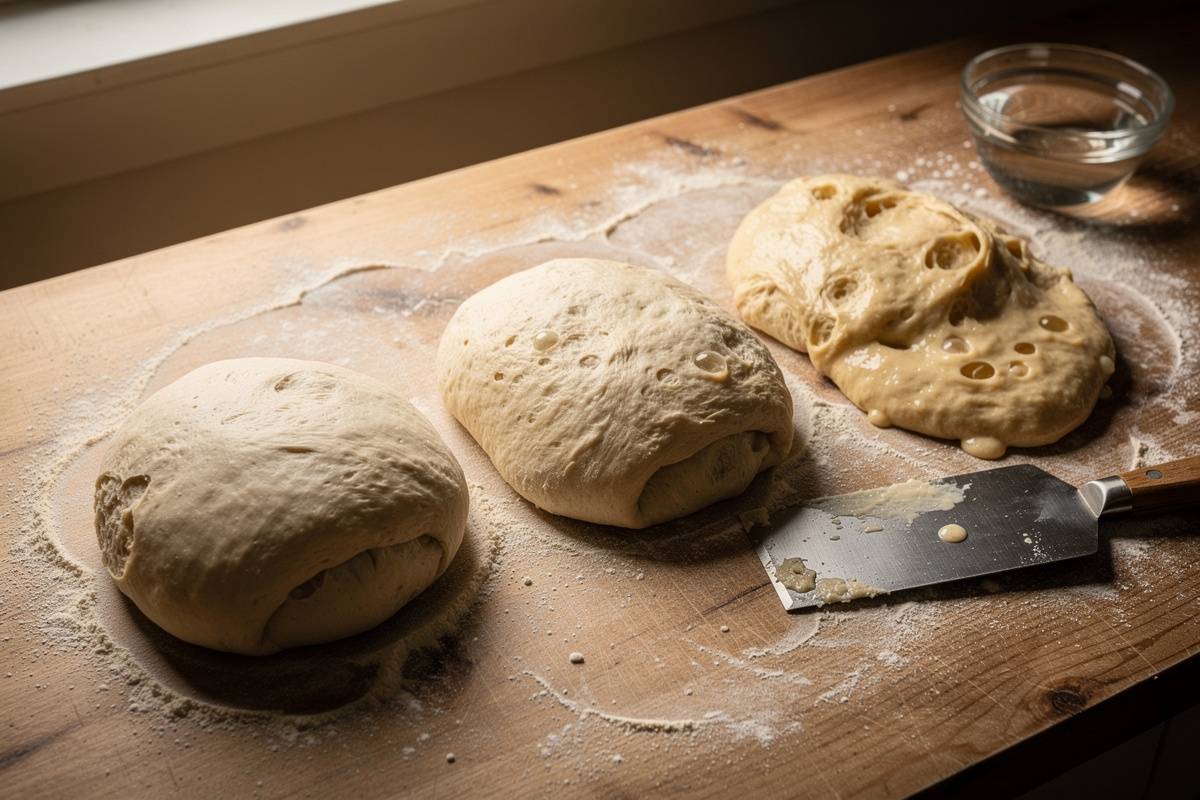
At 65 percent hydration the dough is firm, smooth, and almost claylike — it holds a shape, peels cleanly off your hands, and is the most forgiving dough in sourdough. This is where every beginner should start, because it lets you learn shaping and bulk timing without fighting a sticky mess.
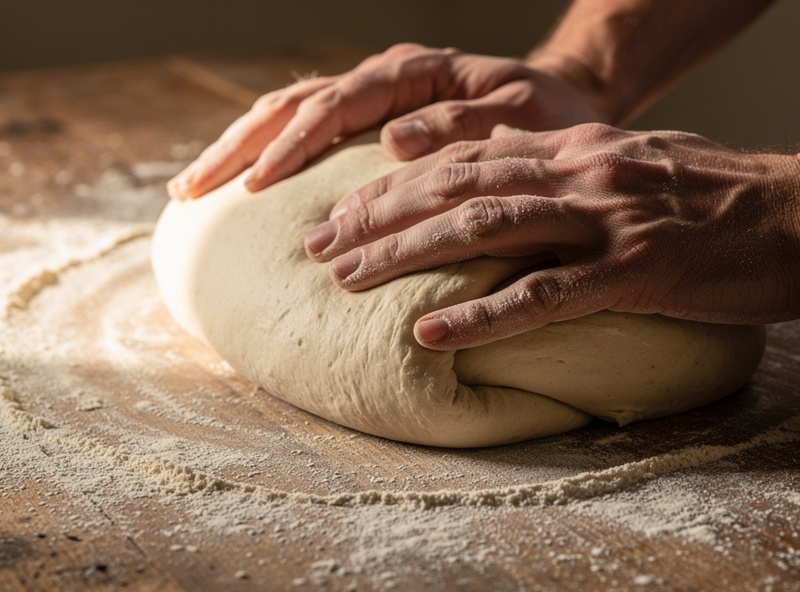
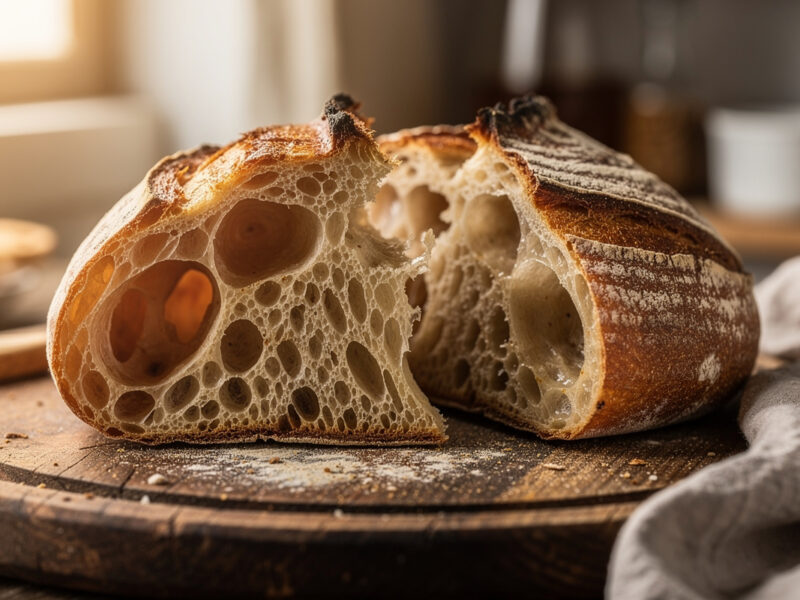
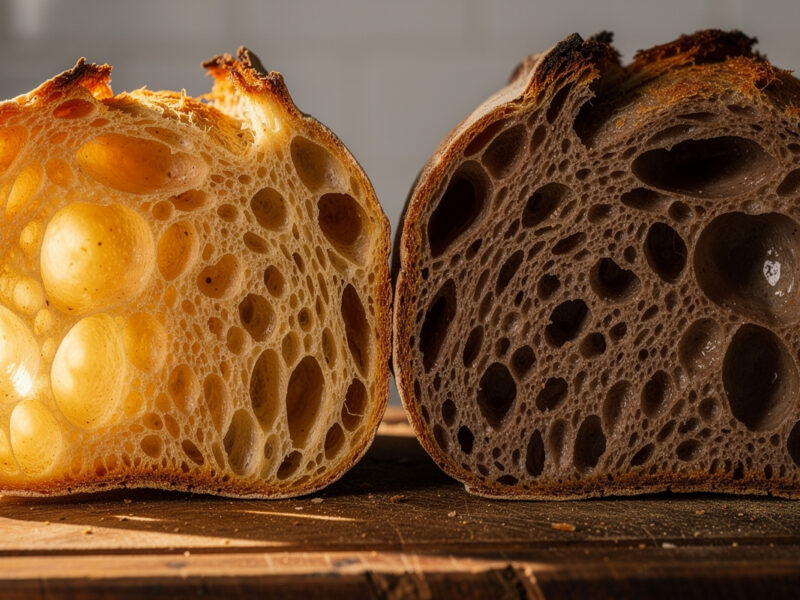
The trade-off is crumb: 65 percent gives a tighter, more even, sandwich-style interior rather than the wide glossy holes of artisan bakery loaves. That is a feature, not a failure — a firmer dough makes superb everyday bread, toast, and sandwich loaves, and it bakes reliably in a home oven. Many experienced bakers deliberately work at 65-68 percent for tin loaves and bagels where structure matters more than open crumb.
If your first loaves are coming out dense even at this safe hydration, the problem is almost never the water — it is starter activity or bulk timing. A firm dough that bakes dense points straight at an under-ripe starter or a short bulk, both of which I diagnose in why sourdough bread turns out dense. Master the loaf at 65 percent before you add water; chasing hydration to fix a timing problem only makes things harder.
75 Percent: The Open-Crumb Sweet Spot
At 75 percent hydration the dough turns soft, tacky, and alive — it spreads slightly, needs stretch-and-folds to build structure, and produces the open, irregular crumb most home bakers are chasing. This is the intermediate target, and the point where technique starts to matter as much as the recipe.
A 75 percent dough cannot be kneaded conventionally; it is too slack. Instead you develop gluten with 3-4 sets of stretch-and-folds in the first two hours of bulk, letting the wild yeast work between sets. Done right, the dough transforms from a sticky puddle into a smooth, billowy mass that holds a dome and shows big bubbles under the surface — the structure that becomes open crumb in the oven. This is the hydration where the techniques in the main guide’s fold-and-bulk section stop being optional and start being the whole game.
Wetter dough also needs more support after shaping, which is exactly what a flour-dusted proofing basket provides — the dough holds its shape against the basket wall instead of spreading flat. I shape every 70-plus percent loaf into a banneton proofing basket and cold-retard overnight; the cold firms the slack dough and makes a 75 percent loaf far easier to score and load. Without the basket, high-hydration dough simply puddles.
85 Percent: The Expert’s Slack Dough
At 85 percent hydration the dough is barely cohesive — wet, sticky, and slack to the point of pourable before gluten develops. It is the realm of dramatic wide-hole crumb and also of flat, gummy failures, and it should only be attempted once you can reliably nail 75 percent. This is not beginner territory and there is no shame in never going here.
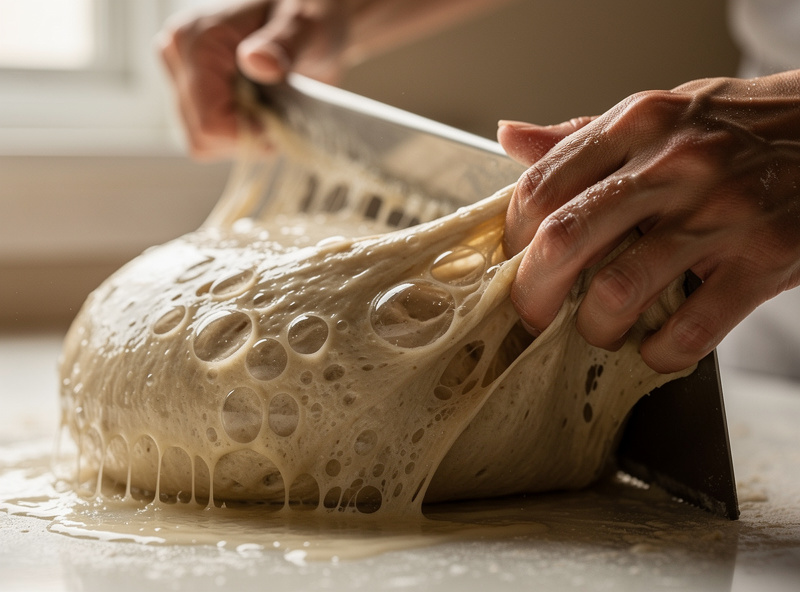
High hydration at this level demands strong, high-protein bread flour to hold the water — weak flour at 85 percent collapses into soup. The standard professional move is bassinage: mix the dough at a manageable 70 percent, develop gluten, then add the remaining water gradually in stages so the flour has time to absorb it. Wet hands and a stainless bench scraper are non-negotiable; you handle this dough by lifting and folding with the scraper, never by gripping it.
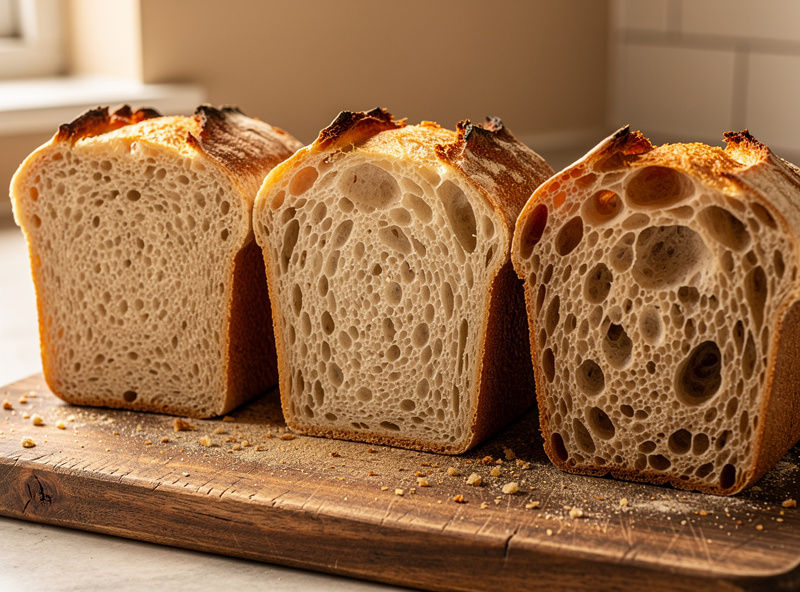
The honest truth about 85 percent: the spectacular open crumb in competition photos is as much about flour strength, fermentation precision, and shaping skill as it is about water, and pushing hydration alone without those will give you a flat, holey, gummy loaf rather than an artisan one. Climb to it slowly — add 2-3 percent per bake over many weeks — and you will find the ceiling your flour and hands can actually handle, which for most home kitchens sits around 78-82 percent, not 85.
65 vs 75 vs 85 Percent Compared
Each tier is a different bread, not just a wetter version of the last. The table is how I think about which hydration to run for a given loaf and a given skill level.
| Hydration | Dough Feel | Crumb Result | Skill Level | Best For |
|---|---|---|---|---|
| 65% | Firm, claylike, easy to shape | Tight, even, sandwich-style | Beginner | First loaves, tin breads, bagels, toast |
| 70-72% | Soft but manageable | Moderately open, reliable | Beginner to intermediate | Everyday boules and batards |
| 75% | Tacky, slack, needs folds | Open, irregular, glossy | Intermediate | Artisan open-crumb loaves |
| 80% | Very wet, billowy | Wide holes, dramatic | Advanced | Show loaves with strong flour |
| 85% | Barely cohesive, pourable | Wild holes or gummy failure | Expert | Competition crumb, high-protein flour only |
My standing advice: live at 70-72 percent until it is automatic, push to 75 percent when you want more open crumb, and only flirt with 80-plus if you genuinely enjoy the challenge. Higher hydration is not better bread — it is harder bread with a different texture. The best loaf is the one your technique can support, not the wettest one you can mix.
How to Climb the Hydration Ladder Safely
The reliable way to raise hydration is to change one variable at a time across consecutive bakes: add 2-3 percent water per batch, keep flour, starter, timing, and shaping identical, and judge each loaf before going wetter. This single-variable discipline is the difference between learning and flailing.
This is the exact controlled-experiment approach I use on every ferment in the kitchen — adjust one dial, hold the rest, read the result. The same logic governs a vegetable lacto-ferment where salt percentage is the dial, or a starter where the feeding ratio is. Bread is just another controlled process, and hydration is one of its cleanest dials to study because the effect is so visible in the crumb.
As you climb, lean on the tools that make wet dough manageable: a proofing basket for shape, a bench scraper for handling, wet hands instead of flour-caked ones, and a cold retard to firm the dough before scoring. The full kit that supports high-hydration work — baskets, scrapers, scales, lames — is laid out in my fermentation equipment guide. Get the gear right and 75 percent stops feeling like a fight.
Frequently Asked Questions
What hydration should a beginner use for sourdough?
Start at 65-70 percent. A 65 percent dough is firm, smooth, and forgiving, so you can learn shaping and bulk timing without fighting sticky dough. It gives a tighter sandwich-style crumb rather than wide artisan holes, but it bakes reliably. Master the loaf at this hydration before adding water, since wetter dough multiplies every handling mistake.
How do you calculate sourdough hydration?
Divide total water weight by total flour weight and multiply by 100. Include the flour and water inside your starter in both totals. For example, 1000 grams flour plus 720 grams water plus a 200-gram starter (about 100 grams flour and 100 grams water) gives 1100 grams flour and 820 grams water, which is about 74.5 percent hydration.
Why is higher-hydration sourdough harder to make?
Wetter dough is slack and sticky, cannot be kneaded conventionally, and spreads instead of holding shape. It needs stretch-and-folds to build gluten, strong high-protein flour to hold the water, wet hands and a bench scraper to handle, and a proofing basket plus cold retard for support. Each of those is a skill, so failures multiply as hydration rises.
Does higher hydration give more open crumb?
It helps, but it is not the whole story. Open crumb at 75-85 percent depends just as much on flour strength, precise fermentation, and good shaping. Pushing water alone without those gives a flat, gummy, holey loaf rather than an artisan one. Raise hydration gradually, 2-3 percent per bake, while keeping technique tight.
What hydration is best for open crumb?
Around 75-80 percent is the practical open-crumb range for most home bakers, paired with strong bread flour and good gluten development. The 85 percent doughs behind competition photos need expert handling and bassinage. For reliable open crumb without constant failures, 75 percent is the sweet spot to target once you are comfortable at 70.
Does flour type change hydration?
Yes, significantly. Whole-grain and high-protein flours absorb more water, so 75 percent with whole wheat feels stiffer than 75 percent with white flour. That means flour choice and hydration are linked decisions. If you switch to a wetter-feeling flour, you can often add a few points of water; if you switch to a thirstier one, hold or reduce it.
Related Articles on FermentFoundry
- Home Sourdough Bread: The Complete Starter-to-Loaf Guide
- Best Flour for Sourdough Starter: Rye, Wheat, and White
- Why Is My Sourdough Bread Dense? 10 Causes and Fixes
- Sourdough Starter Feeding Schedule: Counter and Fridge
- Fermentation Equipment: The Complete Home Brewer Toolkit

About Kenny Nyhus Fadil
A home fermenter documenting brines, bubbles, and the occasional moldy tragedy.