Best Flour for Sourdough Starter: Rye, Wheat, and White

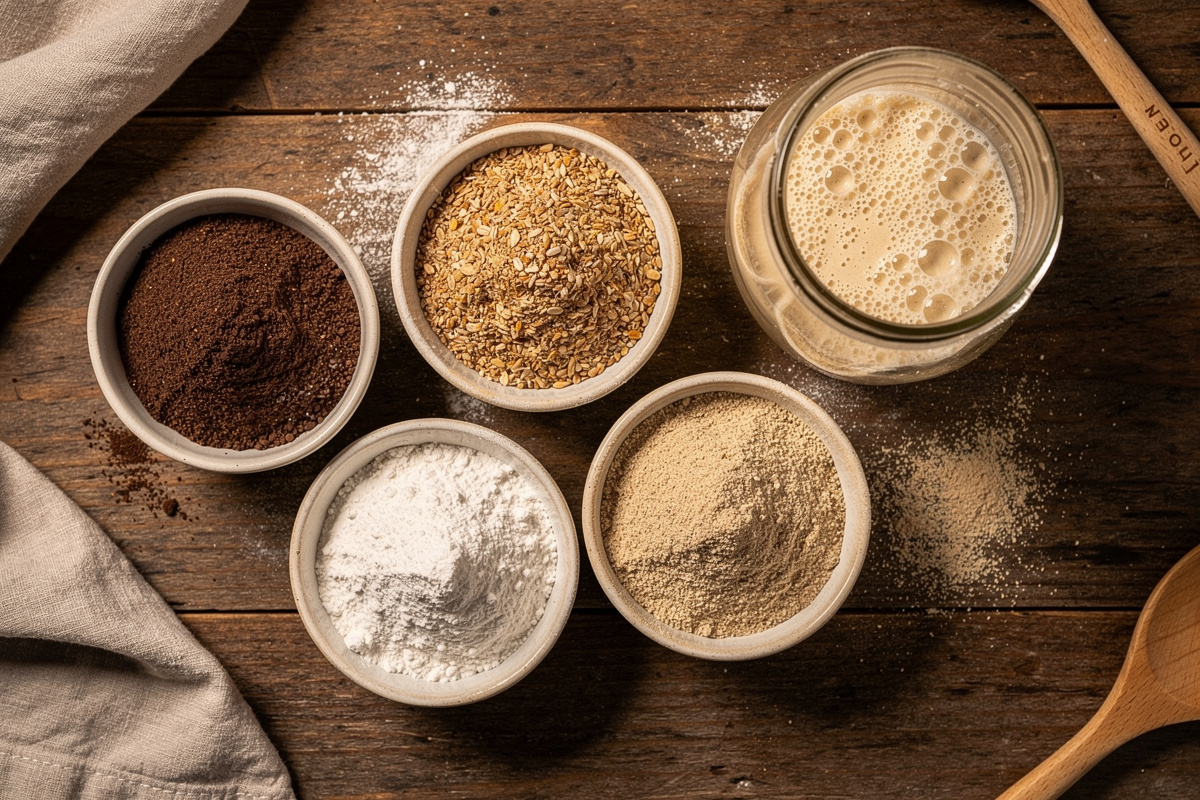
The best flour for building and reviving a sourdough starter is whole-grain rye, because its bran carries the densest population of wild yeast and the mineral load that feeds them fastest. For day-to-day maintenance, unbleached all-purpose or bread flour keeps an established starter mild and predictable. The flour you choose changes how fast your starter climbs and how sour it tastes.
I have fed my starter Inkbird — continuously alive since 2020 — on rye, whole wheat, unbleached white, and blends of all three, and the differences are not subtle. This is what each flour actually does in the jar, which one to reach for when a starter stalls, and how to blend them for the result you want. The complete sourdough guide covers the build from scratch; this article is the flour decision underneath it.
Disclosure: FermentFoundry is reader-supported. As an Amazon Associate I earn from qualifying purchases made through links in this article, at no extra cost to you. I only point to gear I actually use or would buy for my own kitchen.
What Actually Matters in Starter Flour
Three properties decide how a flour performs in a starter: how much wild yeast and bacteria it carries, how much mineral (ash) it supplies as microbial fuel, and how much of the grain is intact whole bran versus stripped white endosperm. Whole grains win on all three, which is why they build and rescue starters fastest, while refined white flour is cleaner-tasting but slower to wake.
Wild yeast and lactobacillus live primarily on the bran and germ of the grain, not in the white starchy core. Stone-ground whole flours keep that bran and its resident microbes intact, so a fresh rye or whole wheat feed inoculates the jar with a new wave of organisms every time. Refined white flour has the bran sifted out, so it tastes milder and ferments slower — fine for maintaining an already-thriving starter, weak for getting one going.
The other non-negotiable is bleaching. Bleached flour is treated with chlorine or peroxide that can inhibit the very yeast you are trying to grow, so always buy unbleached. Chlorinated tap water does the same thing from the liquid side — I use filtered or overnight-stood water for the same reason, the dechlorination habit that also keeps a vegetable lacto-ferment from stalling. Get unbleached flour and dechlorinated water right and most “dead starter” problems never happen.
Rye: The Wild-Yeast Powerhouse
Whole rye is the single most reliable flour for building a starter from nothing or for jump-starting a sluggish one. It carries the highest wild-yeast and enzyme load of any common flour, ferments visibly faster than wheat, and reaches active doubling a day or two sooner during a from-scratch build.
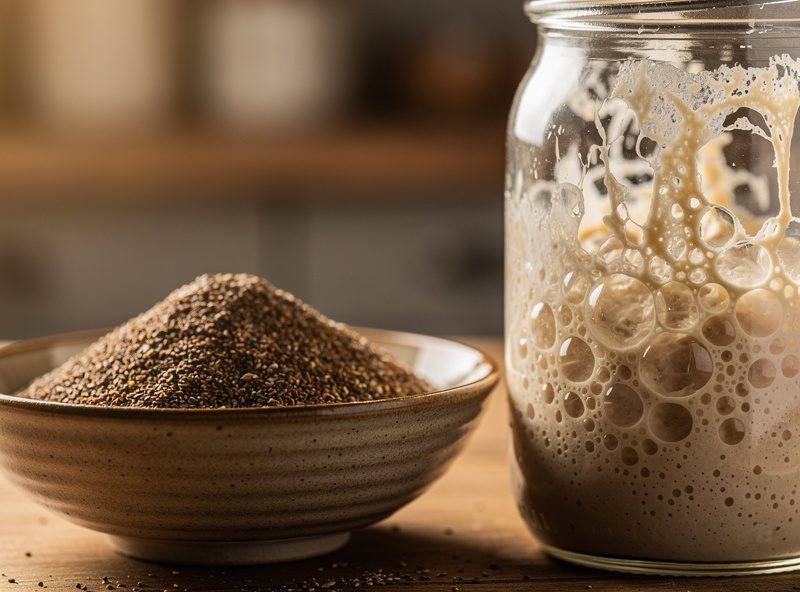
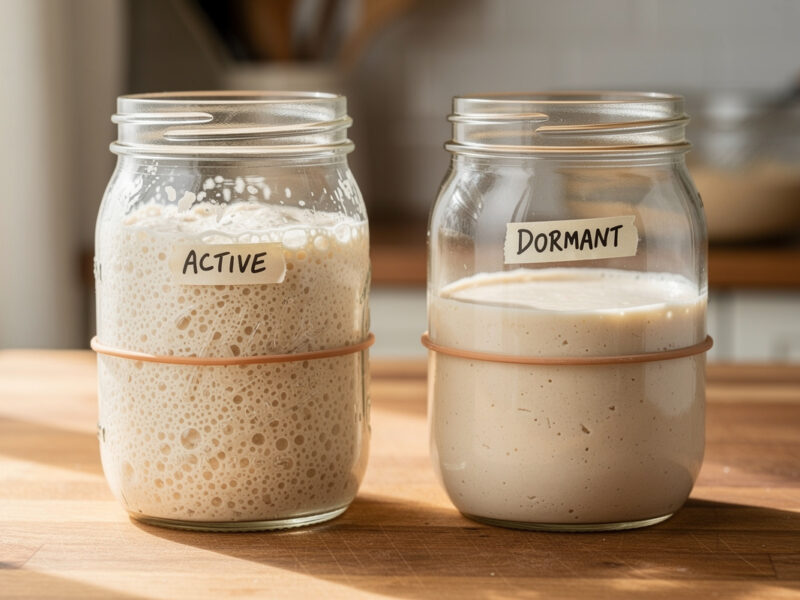
Rye’s high enzyme (amylase) activity breaks starch into sugars the yeast can eat immediately, which is exactly why it works as a rescue feed. When Inkbird gets sluggish after travel, a couple of feeds with 25-50 percent whole rye flour mixed into the usual white wakes it up faster than anything else. The same enzymatic punch that revives a starter is the reason it is the first move in the rescue guide for a weak or dead starter.
The catch is that rye is sticky and low in gluten, so a 100 percent rye starter is dense, paste-like, and harder to read for rise. Most bakers, myself included, build on rye for the first week then transition to a wheat-based maintenance flour for a starter that visibly doubles and is easy to judge. Rye stays in the cupboard as the boost flour, not the everyday feed.
Whole Wheat: The Balanced Workhorse
Whole wheat sits between rye and white: plenty of bran-borne wild yeast and minerals, but with the gluten structure that lets a starter rise tall and readable. It is the best single flour if you want to keep one bag for both building and maintaining, giving fast fermentation without rye’s gluey texture.
A whole wheat starter is more active and more sour than a white one because the extra bran feeds more bacteria. I often run a 50/50 whole wheat and bread flour feed as a middle path — lively and flavourful, but still climbing the jar in a clean dome I can read at a glance. If your kitchen runs cold and your starter is sluggish, shifting the blend toward more whole wheat (or a spoonful of rye) is the easiest fix before you start fiddling with temperature.
Stone-ground whole wheat is better than commodity whole wheat for starter purposes because it retains more of the germ oils and intact bran. The trade-off is that whole-grain flours go rancid faster than white, so buy them in smaller bags and store them cool. The same logic applies to whole wheat bread flour as to rye — freshness matters because you are buying the live germ as much as the starch.
White, Bread, and All-Purpose: The Maintenance Flours
Unbleached white flours — all-purpose and bread flour — are the right everyday feed for an established starter. They ferment cleanly, produce a milder and more yeasty flavour, and let the starter rise in a clear, easy-to-read dome. They are weak for building a starter from scratch but ideal for keeping a strong one strong.
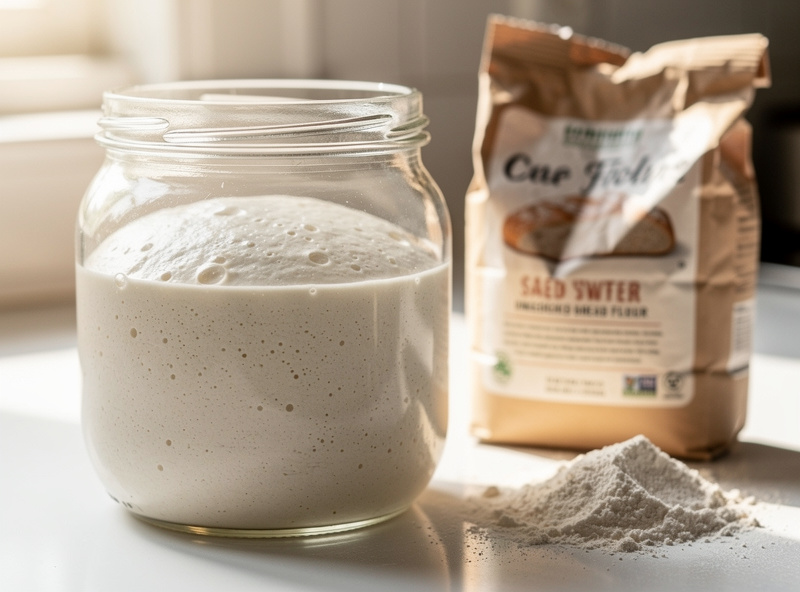
The difference between all-purpose and bread flour is protein: bread flour runs 12-14 percent protein, all-purpose 10-12. For feeding a starter that distinction barely matters — both work fine — but bread flour’s extra gluten gives a slightly taller, stronger rise that is easier to judge for peak. I keep unbleached bread flour as Inkbird’s default maintenance feed, with rye and whole wheat as the boosters.
If you want the mildest possible starter for delicate breads, feed pure unbleached white and keep it on the counter, baking young — the flavour stays gentle and yeasty rather than sharp. The full counter-versus-fridge rhythm and ratios that pair with these flour choices are in my sourdough starter feeding schedule; flour and schedule together are the two dials that set how your starter behaves.
Flour Comparison for Sourdough Starter
No single flour is best for every job — building, maintaining, and flavour each favour a different choice. The table below is how I actually use each one, from the fastest wild-yeast builder to the mildest maintenance feed.
| Flour | Protein | Wild-Yeast Vigour | Flavour Tendency | Best Use |
|---|---|---|---|---|
| Whole rye | Low (~8-10%) | Highest | Earthy, tangy, robust | Building from scratch, rescuing a stalled starter |
| Whole wheat | Medium (~12-14%) | High | Nutty, lively, sour-leaning | One-flour build and maintain, cold-kitchen boost |
| Bread flour (unbleached) | High (~12-14%) | Moderate | Mild, clean, yeasty | Everyday maintenance, readable tall rise |
| All-purpose (unbleached) | Medium (~10-12%) | Moderate | Mild, gentle | Everyday maintenance, delicate breads |
| Einkorn / spelt | Variable | High | Sweet, distinctive, soft gluten | Flavour experiments, ancient-grain starters |
| Bleached white | Varies | Lowest (avoid) | Flat | None — chlorine inhibits yeast |
The practical takeaway: build and rescue on rye, maintain on unbleached white or bread flour, and reach for whole wheat when you want one bag to do both. Never feed bleached flour. Blending is normal — a default white feed with a rye or whole wheat boost when the starter needs energy is the system most experienced bakers settle into.
Einkorn, Spelt, and Gluten-Free Notes
Ancient grains like einkorn and spelt make excellent, vigorous starters with distinctive sweet flavour, but their softer gluten means the starter and the dough are stickier and rise differently than modern wheat. They are worth experimenting with once your basic starter is solid, not as a first build — the handling quirks add a variable beginners do not need.
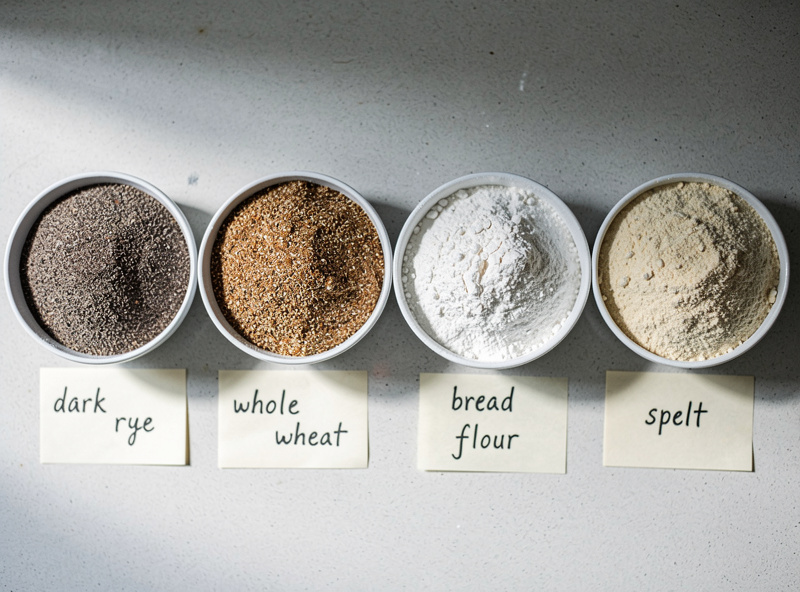
Gluten-free starters are a genuinely different animal. Brown rice flour, sorghum, and buckwheat all ferment well and build active wild-yeast cultures, but they behave nothing like wheat in the loaf and need their own recipes built around binders. If you are gluten-free, build the starter on whole-grain brown rice or buckwheat and follow gluten-free-specific bread methods rather than adapting a wheat recipe — that is a hedge I will flag clearly because gluten-free baking is its own craft I treat separately, not a swap.
For most home bakers the decision stays simple: a whole-grain flour to build and boost, an unbleached white to maintain, and the freedom to blend. Keep the flours fresh, keep the water dechlorinated, and the starter does the rest. The full kit that supports all of this — scales for weighing feeds, jars, thermometers — is in my fermentation equipment guide.
Frequently Asked Questions
What is the best flour to start a sourdough starter?
Whole-grain rye is the best flour for building a starter from scratch. Its bran carries the highest wild-yeast and enzyme load of any common flour, so it reaches active doubling a day or two faster than wheat. Build on rye for the first week, then transition to unbleached white or bread flour for an easy-to-read maintenance feed.
Can I feed my sourdough starter with all-purpose flour?
Yes. Unbleached all-purpose flour is a fine everyday maintenance feed for an established starter, producing a mild, clean, yeasty flavour. It is weaker than whole grains for building a starter from scratch, but ideal for keeping a strong one strong. Just make sure it is unbleached, since chlorine bleaching inhibits the yeast.
Why does rye flour make a starter more active?
Rye carries the densest population of wild yeast and bacteria on its bran, plus high amylase enzyme activity that breaks starch into sugars the yeast can eat immediately. That combination makes rye ferment visibly faster than wheat, which is why it is the go-to flour for both building a new starter and rescuing a sluggish one.
Is bleached flour bad for sourdough starter?
Yes, avoid it. Bleached flour is treated with chlorine or peroxide that can inhibit the wild yeast you are trying to grow, slowing or stalling a starter. Always buy unbleached flour, and use filtered or dechlorinated water for the same reason, since chlorine from either source sets a starter back.
Can I switch flours when feeding my starter?
Yes, freely. Starters adapt to a new flour within a feed or two. Many bakers run a default unbleached white feed and add 25-50 percent rye or whole wheat as a boost when the starter is sluggish or after travel. Blending flours is normal and is the system most experienced bakers settle into.
What flour makes the least sour starter?
Pure unbleached white flour, all-purpose or bread, kept on the counter and baked young, makes the mildest and most yeasty starter. Whole grains like rye and whole wheat feed more bacteria and lean sour, while cold fridge storage pushes flavour further toward sharp acetic tang. For gentle flavour, feed white and bake before the starter over-acidifies.
Related Articles on FermentFoundry
- Home Sourdough Bread: The Complete Starter-to-Loaf Guide
- Sourdough Starter Feeding Schedule: Counter and Fridge
- Sourdough Starter Not Rising? Rescue a Dead or Weak Starter
- Why Is My Sourdough Bread Dense? 10 Causes and Fixes
- Fermentation Equipment: The Complete Home Brewer Toolkit

About Kenny Nyhus Fadil
A home fermenter documenting brines, bubbles, and the occasional moldy tragedy.