Sourdough Discard Recipes: 12 Uses Beyond Bread

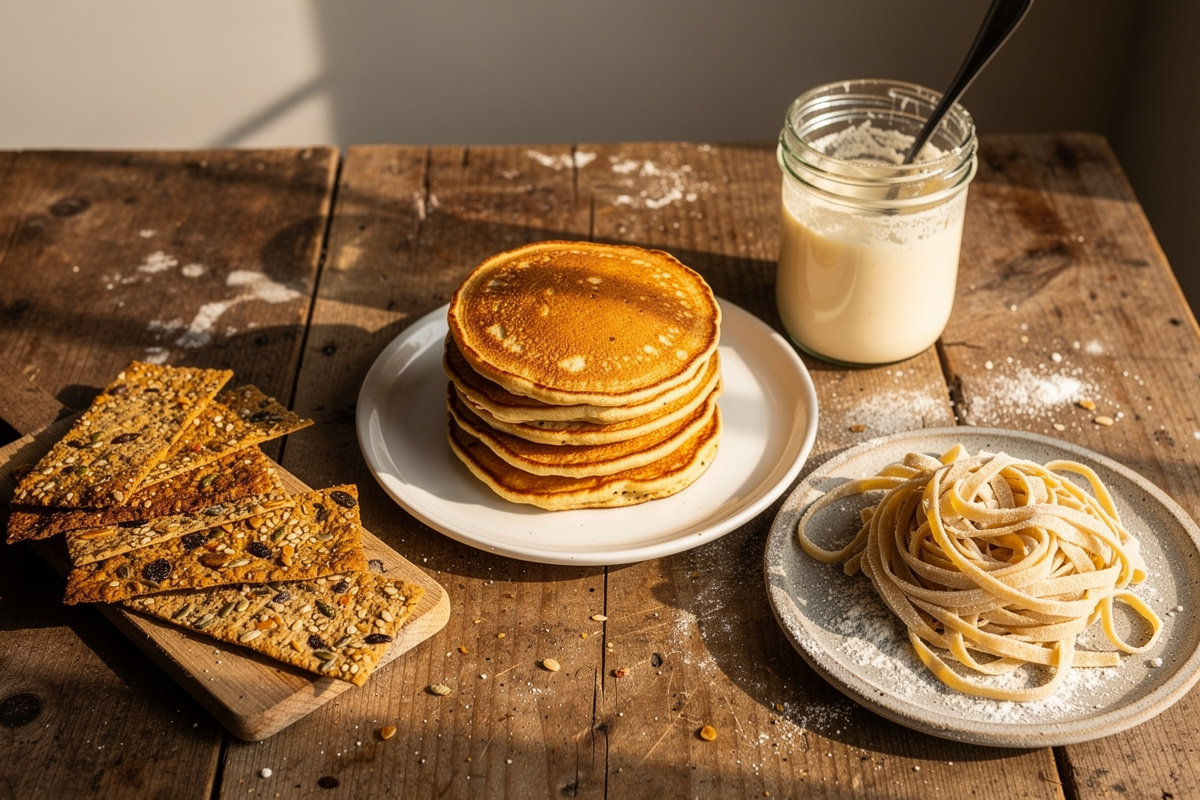
Sourdough discard — the portion you remove before each feed — is not waste. It is a tangy, pre-fermented flour-and-water batter that makes better pancakes, crackers, waffles, crumpets, pasta, and tortillas than any from-scratch version, and none of these uses require a rising loaf. A counter-fed starter produces discard daily, and once you stop binning it you will look forward to it.
I keep a dedicated discard jar in the fridge alongside my starter Inkbird, topping it up at every feed and emptying it once or twice a week into something cooked. This is the working list of what I actually make with it, how much discard each takes, and the one food-safety rule that matters. The daily discard problem comes straight from the counter feeding schedule; this article is what to do with the result.
Disclosure: FermentFoundry is reader-supported. As an Amazon Associate I earn from qualifying purchases made through links in this article, at no extra cost to you. I only point to gear I actually use or would buy for my own kitchen.
What Discard Is and When It Is Safe
Discard is the mature starter you remove to keep your feeding ratio manageable — fully fermented flour and water with live yeast, lactobacillus, and the lactic and acetic acids that give it a pleasant sour tang. It is perfectly safe to cook with as long as it smells sour and yeasty, not foul, and shows no fuzzy, pink, orange, or black mold.
The safety rule is simple and non-negotiable: discard must be cooked or baked, never eaten raw, because raw flour itself carries a contamination risk regardless of fermentation. A sour, hooch-topped, slightly grey discard is normal and good. A discard with raised fuzzy spots, pink or orange streaks, or a genuinely rotten (not sour) smell goes in the bin — the same mold-versus-safe judgement I apply across every ferment, laid out in detail for vegetables in my lacto-fermentation guide. Trust your nose; sour is fine, putrid is not.
Store discard in a sealed jar in the fridge and use it within one to two weeks. Older discard gets sharper and more acidic, which is wonderful in crackers and pancakes but can over-tenderise doughs that rely on gluten. I collect discard in wide-mouth glass storage jars so I can see exactly what is in there and how old it is — visibility is half of food safety.
Quick Discard Recipes: Pancakes, Waffles, Crumpets
The fastest, highest-reward uses for discard are griddle batters: pancakes, waffles, and crumpets come together in minutes and turn the discard’s tang into a feature. These need no rise and no planning — just stir discard into a batter and cook.
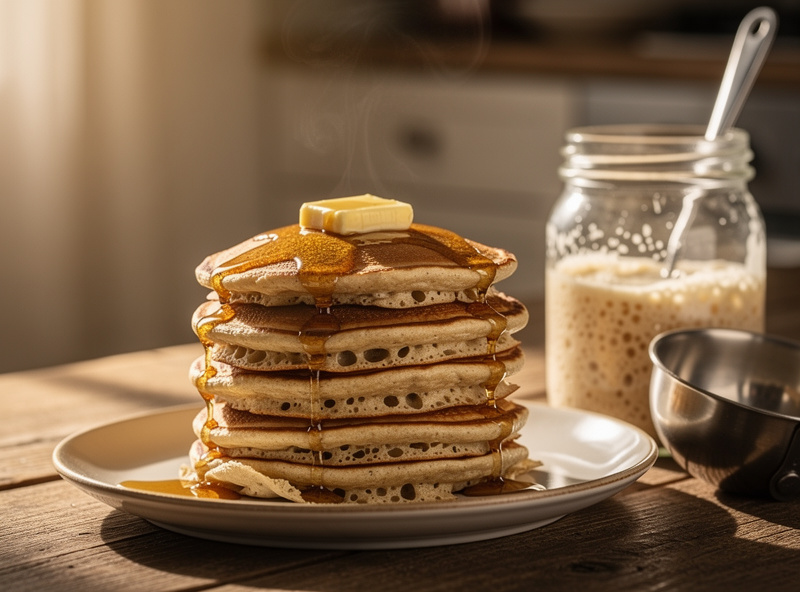
My weekend default: 200 grams of discard, one egg, a splash of milk, a teaspoon of sugar, half a teaspoon each of baking soda and salt. The baking soda reacts with the discard’s acidity to give an immediate lift, so the pancakes are light despite no yeast rise — and they cook up tangy, tender, and faster than conventional batter. The same base, thinned, makes crepes; thickened and poured into ring molds on a low griddle, it makes crumpets with the classic open holes.
Waffles are even better than pancakes because the high heat of a waffle maker crisps the fermented batter into a shatteringly crisp exterior. For waffles I add a little melted butter to the pancake base for richness. An overnight version — discard, flour, and milk left to ferment on the counter for 8-12 hours before adding egg and soda in the morning — deepens the flavour further and uses up larger discard volumes.
Crackers, Flatbreads, and Savoury Bakes
Discard crackers are the single best way to use a large or older discard, because the long bake dries the batter into crisp, sour, snappable crackers that keep for weeks. Spread discard thin on parchment, brush with oil, scatter salt and seeds, and bake at 175 C until crisp and golden.
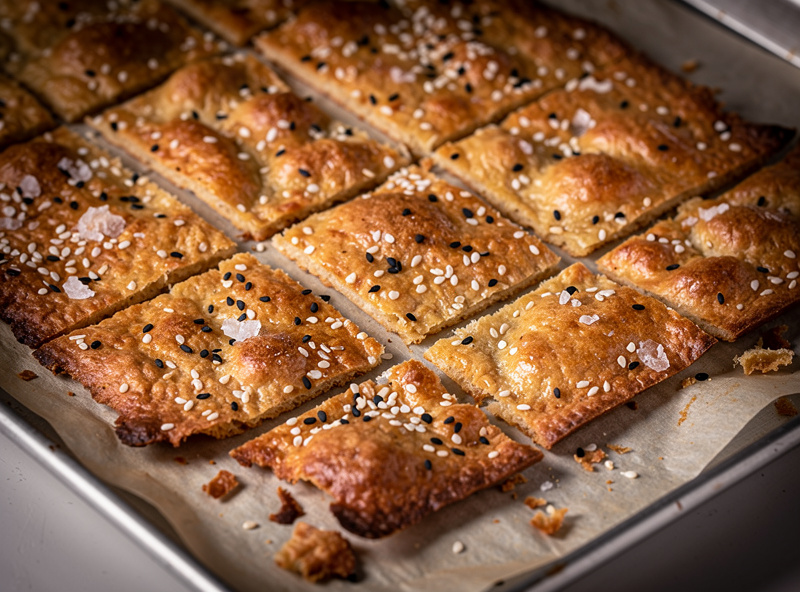
The cracker formula is forgiving: roughly equal weights of discard and flour, a couple of tablespoons of oil, salt, and any seasoning — rosemary, sesame, cracked pepper, grated hard cheese. Roll it thin, score into squares before baking, and watch the edges, which crisp first. Older, sharper discard makes the best crackers because the acidity reads as a deliberate tang rather than a flaw. This is my go-to when the discard jar is overflowing.
Beyond crackers, discard enriches savoury flatbreads, socca-style pancakes, onion fritters, and the batter for crispy fried vegetables, where the fermented flour adds both flavour and a crisp coating. It also makes excellent tortillas and wraps — discard, flour, a little fat and salt, kneaded and griddled — which is a genuinely non-bread use that turns daily discard into lunch. The flavour discard brings is the same fermented depth I chase in a fermented hot sauce, just applied to dough instead of chili.
Discard Recipe Comparison
Different recipes suit different discard amounts, ages, and how much effort you want to put in. The table is how I decide what to make based on what is in the jar.
| Recipe | Discard Used | Effort | Best Discard Age | Why It Works |
|---|---|---|---|---|
| Pancakes | 150-250 g | Low (10 min) | Fresh to 1 week | Baking soda lifts the acidic batter instantly |
| Waffles | 200-300 g | Low (15 min) | Fresh to 1 week | High heat crisps the fermented batter |
| Crumpets | 200 g | Medium (rings needed) | Fresh, active | Residual yeast plus soda makes the holes |
| Crackers | 200-400 g | Medium (long bake) | Older, sharper | Long bake dries out the tang into crisp snap |
| Tortillas / wraps | 150-250 g | Medium (knead) | Any | Fat and flour turn discard into pliable dough |
| Fresh pasta | 100-200 g | Higher (roll/cut) | Any | Discard replaces some water and adds flavour |
The pattern across all of these: fresh, lively discard suits anything that benefits from a little residual lift (pancakes, crumpets), while older, sharper discard is best in long-baked items (crackers) where the bake mellows and concentrates the tang. Almost nothing wastes discard — even a tablespoon stirred into a batter adds flavour.
Pasta, Tortillas, and Doughs Without a Rise
Discard shines in unleavened doughs where it replaces some of the liquid and adds a subtle sour depth: fresh pasta, tortillas, dumplings, and pie crusts all take discard happily. Because these do not depend on the discard for rise, the age and activity of the discard barely matter — it is pure flavour and tenderness here.
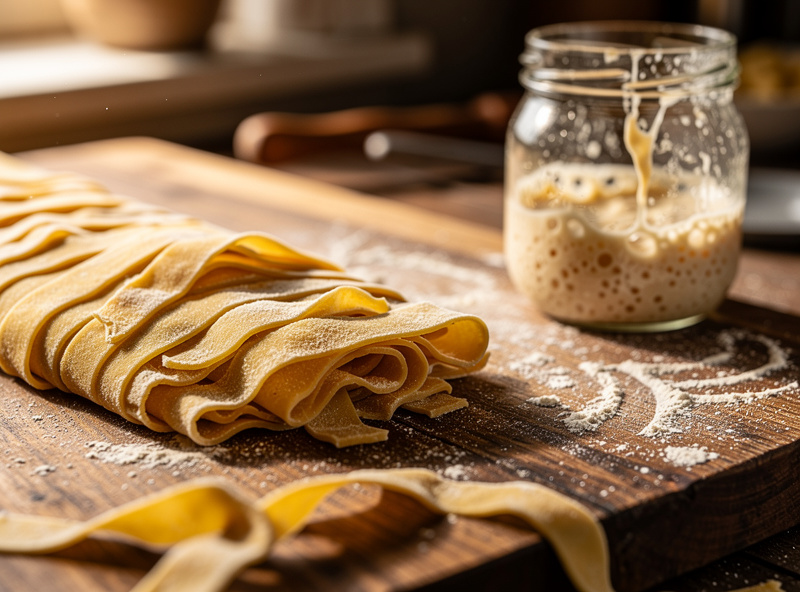
For discard pasta, I work roughly 100-150 grams of discard into about 200 grams of flour with an egg, knead until smooth, rest 30 minutes, then roll and cut. The discard’s acidity slightly relaxes the gluten, making the dough easier to roll thin, and the fermented flavour gives the finished pasta a faint, pleasant complexity that store-bought never has. The same dough logic gives soft tortillas if you swap the egg for a little oil and griddle instead of boil.
Precision helps these doughs, because the discard is carrying both flour and water into a recipe that may also call for both. Weighing everything on a digital kitchen scale keeps the hydration sensible — the same scale that handles starter feeds and brine math. Treat discard as roughly half flour and half water by weight (for a 100 percent hydration starter) and adjust the recipe’s own flour and water down to compensate.
Building a Discard Habit
The trick to never wasting discard is a system: keep a dedicated jar in the fridge, add every feed’s discard to it, and commit to emptying it once a week into one batch of something. That rhythm turns an annoying byproduct into a reliable second product from the same starter.
If you bake infrequently and keep your starter in the fridge, you generate little discard and can use it fresh each time. If you keep a counter starter on a daily feed, the discard piles up fast — that is when the weekly crackers-or-waffles habit earns its keep. The choice between those two patterns is exactly the counter-versus-fridge decision in my feeding schedule guide, and your discard volume is one more reason to pick the schedule that matches how you bake.
One last note on flavour: the flour you feed your starter carries straight into the discard, so a rye-fed starter makes earthier crackers and a white-fed one makes milder pancakes. If you want to steer your discard’s character, steer your feed — the full breakdown is in best flour for sourdough starter. Discard is just your starter in a different role, and everything you know about feeding it applies to cooking with it too.
Frequently Asked Questions
What can I make with sourdough discard besides bread?
Pancakes, waffles, crumpets, crackers, tortillas, wraps, fresh pasta, pie crust, and the batter for fried vegetables are all excellent non-bread uses. Griddle batters like pancakes and waffles are the fastest and highest-reward, since baking soda reacts with the discard’s acidity for instant lift. Crackers are the best way to use a large or older discard.
Is sourdough discard safe to eat?
Yes, when cooked. Discard is fully fermented flour and water, safe to bake or cook as long as it smells sour and yeasty, not foul, and shows no fuzzy, pink, orange, or black mold. Never eat it raw, because raw flour itself carries a contamination risk regardless of fermentation. Trust your nose: sour is fine, putrid is not.
How long does sourdough discard last in the fridge?
One to two weeks in a sealed jar. It gets sharper and more acidic over time, which is great in crackers and pancakes but can over-tenderise gluten-dependent doughs. Discard a jar that develops fuzzy raised spots, pink or orange streaks, or a rotten rather than sour smell. A grey liquid layer of hooch on top is normal and safe.
Do I need to feed discard before using it?
No. Discard is used as-is, straight from the jar, in recipes that do not depend on it for rise such as pancakes, crackers, pasta, and tortillas. Feeding it would turn it back into active starter. For recipes wanting a little lift, like crumpets, fresher and more active discard performs best, but it still does not need a dedicated feed.
Why do my sourdough discard pancakes need baking soda?
Because discard provides flavour, not lift. Baking soda reacts with the lactic and acetic acid in the discard to release carbon dioxide immediately, giving light, fluffy pancakes despite no yeast rise. Use about half a teaspoon of soda per 200 grams of discard. Without it, discard pancakes turn out dense and flat.
Can I use old or sharp-smelling discard?
Yes, as long as it smells sour rather than rotten and has no mold. Older, sharper discard is actually best in long-baked recipes like crackers, where the bake mellows and concentrates the tang into a deliberate flavour. Save your fresh, lively discard for pancakes and crumpets that benefit from residual lift.
Related Articles on FermentFoundry
- Home Sourdough Bread: The Complete Starter-to-Loaf Guide
- Sourdough Starter Feeding Schedule: Counter and Fridge
- Best Flour for Sourdough Starter: Rye, Wheat, and White
- Lacto-Fermentation for Vegetables: The Complete Home Guide
- Fermentation Equipment: The Complete Home Brewer Toolkit

About Kenny Nyhus Fadil
A home fermenter documenting brines, bubbles, and the occasional moldy tragedy.