Fermented Hot Sauce pH: Safe Levels for Shelf Stability

A fermented hot sauce is shelf stable when its pH sits at or below 4.0, and genuinely retail-grade stable at 3.4 or lower — well under the pH 4.6 line where Clostridium botulinum can grow. A proper lacto ferment drops below 4.0 on its own from lactic acid; the pH meter is how you prove it instead of guessing.
This is the one number in hot sauce making I never eyeball. I check every batch on a calibrated meter before it goes near a bottle, and this guide walks through the safe ranges, why 3.4 is the target for anything stored at room temperature, and exactly how to test and adjust. It sits underneath my complete fermented hot sauce guide as the safety layer.
Disclosure: FermentFoundry is reader-supported. As an Amazon Associate I earn from qualifying purchases made through links in this article, at no extra cost to you. I only point to measurement gear I actually use on my own bench.
Why pH Is the Only Number That Matters for Safety
pH measures acidity on a 0–14 scale, and for preserved foods the critical threshold is 4.6. Below pH 4.6, Clostridium botulinum cannot grow or produce toxin, which is why every shelf-stable acidic food — from pickles to hot sauce — is built around staying under that line. Hot sauce clears it with a wide margin.
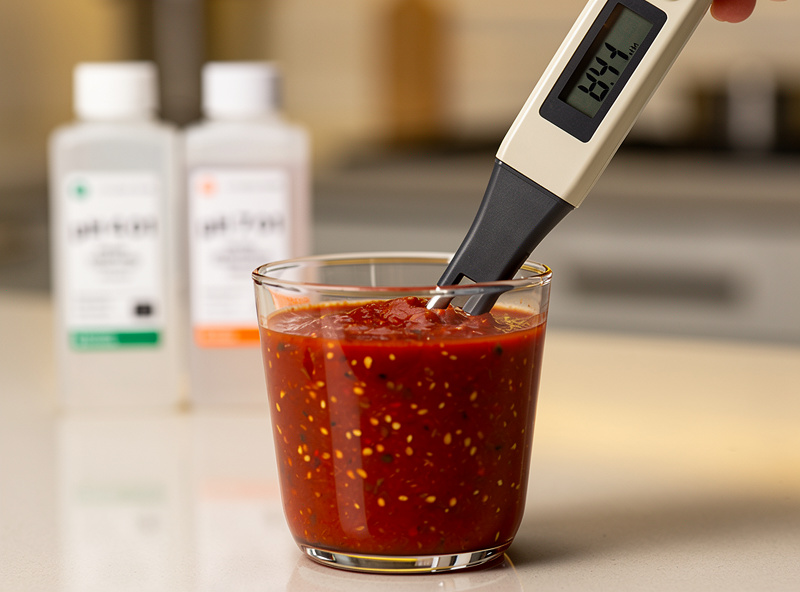
What makes fermented hot sauce safe is that lactobacillus converts the natural sugars in the peppers into lactic acid, dropping the pH steadily as it ferments. A finished mash typically lands between pH 3.2 and 3.8 from fermentation alone. The reason I still measure rather than assume is that under-salted, sluggish, or short ferments can stall higher than that — and a batch sitting at pH 4.3 looks and smells identical to one at 3.4. Only the meter tells them apart, which is the same measurement-first logic I apply to kombucha pH and every brine I run.
The Safe pH Ranges, Explained
Think of three lines. Above pH 4.6 is unsafe for room-temperature storage — botulism risk. Below 4.0 is shelf stable, the minimum I will bottle at for any sauce that leaves the fridge. At or below 3.4 is the retail-grade target, the extra margin commercial producers use so a slightly off batch never drifts into the danger zone.
For my own kitchen, a sauce headed for the fridge only needs to be comfortably under 4.0, because cold storage suppresses growth anyway. Anything I want to keep on a shelf, give away, or store long term, I push to 3.4 or below before bottling. That extra 0.6 of margin costs nothing and removes any doubt. The numbers nest cleanly: 3.4 is safer than 4.0, which is safer than the 4.6 floor — you are never gambling, you are deciding how much margin you want.
Fermented Hot Sauce pH: What Each Reading Means
This is the chart I keep in my head when a meter reading comes back. The values assume a standard pepper mash fermented at roughly 3% salt and 20 °C, the same parameters used throughout this cluster.
| pH Reading | Status | What It Means | Action |
|---|---|---|---|
| Below 3.0 | Very stable | Aggressively acidic, fully fermented | Bottle; may taste sharp — balance with sugar/fruit |
| 3.0–3.4 | Retail-grade stable | Ideal target for any storage | Bottle for shelf, fridge, or gifting |
| 3.4–4.0 | Shelf stable | Safe, slightly less margin | Bottle; acidify to 3.4 if storing long term |
| 4.0–4.6 | Marginal | Safe only refrigerated; ferment likely stalled | Acidify with vinegar or refrigerate only |
| Above 4.6 | Unsafe (room temp) | Botulism risk if stored warm | Acidify below 4.0 before bottling, or discard |
How to Test pH Properly
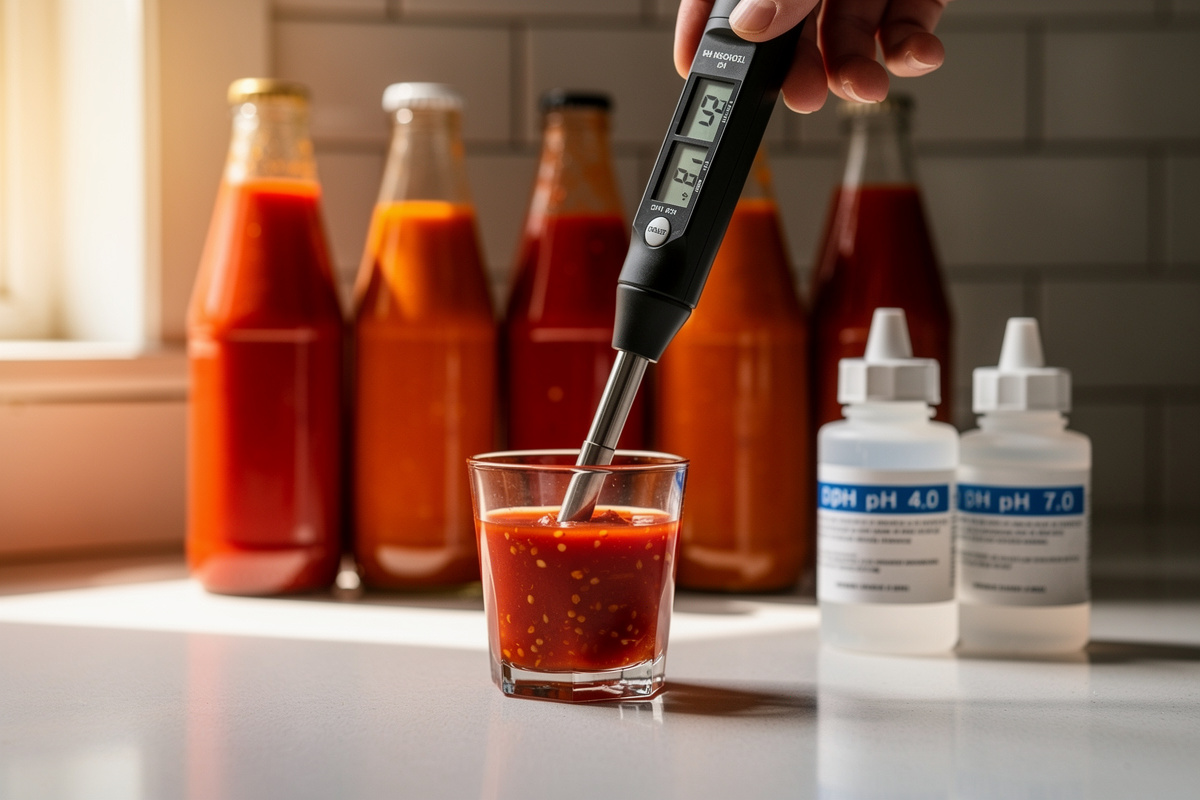
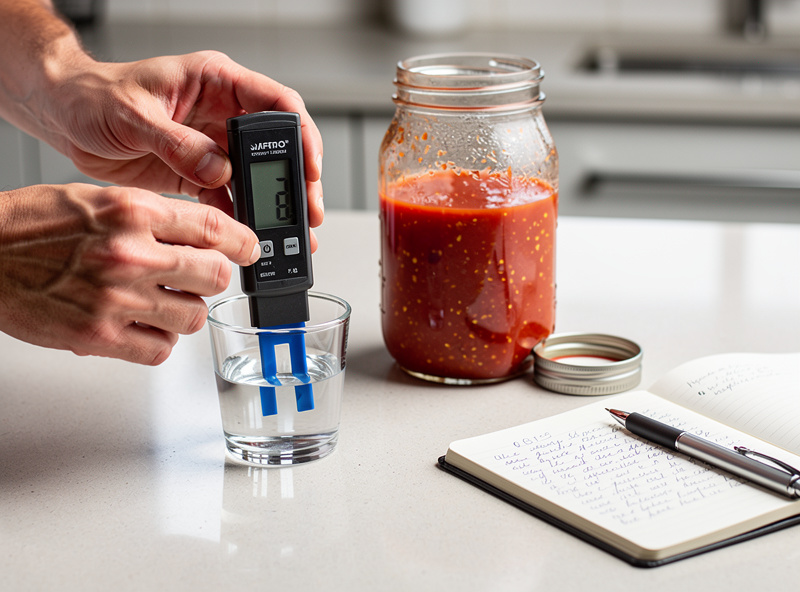
Use a digital pH meter, not paper strips, for anything you intend to store at room temperature. Strips are fine for a rough check, but their colour-matching resolution is about 0.5 pH units — far too coarse when the difference between 3.4 and 4.0 decides your storage method. A meter reads to 0.01 and removes the guesswork.
The non-negotiable step is calibration. A meter that has not been calibrated against buffer solutions can drift half a point and read a dangerous batch as safe. I calibrate mine with pH 4.01 and 7.01 buffer solutions before every bottling session, blend a small sample of the finished sauce smooth, let it come to room temperature, and dip the probe into that — not into the chunky mash, which gives an unstable reading. A reliable digital pH meter is the single most important tool in hot sauce making, more than the crock or the blender.
How to Lower pH Before Bottling
If a finished sauce reads above your target, lower it by adding acid at the blend stage. White vinegar (5% acidity) or food-grade citric acid both work; vinegar is what I use because it also brightens the flavour. Stir in 2–4% vinegar by volume, re-blend, and re-measure — a small amount moves the pH more than you would expect.
Add acid gradually and test between additions rather than dumping it in, because over-acidified sauce tastes harsh. I work in increments: blend, add a tablespoon of vinegar per cup of sauce, re-blend, re-read, repeat until I hit 3.4 or below. This is also the safety net for a ferment that stalled high — vinegar guarantees the pH regardless of how far the fermentation went, which is the same brightening-plus-safety role vinegar plays in my home vinegar guide. Never try to lower pH with more salt or longer fermenting once it has stalled; acid is the direct, reliable fix.
pH and Storage: Shelf vs Fridge
Once your sauce is verified below 4.0, storage is straightforward. Refrigerated, a sealed glass bottle keeps two-plus years with the flavour actually improving for the first several months. At room temperature, a sauce verified at 3.4 or below in a clean, well-sealed bottle out of direct sunlight is shelf stable, exactly the way a commercial bottle is.
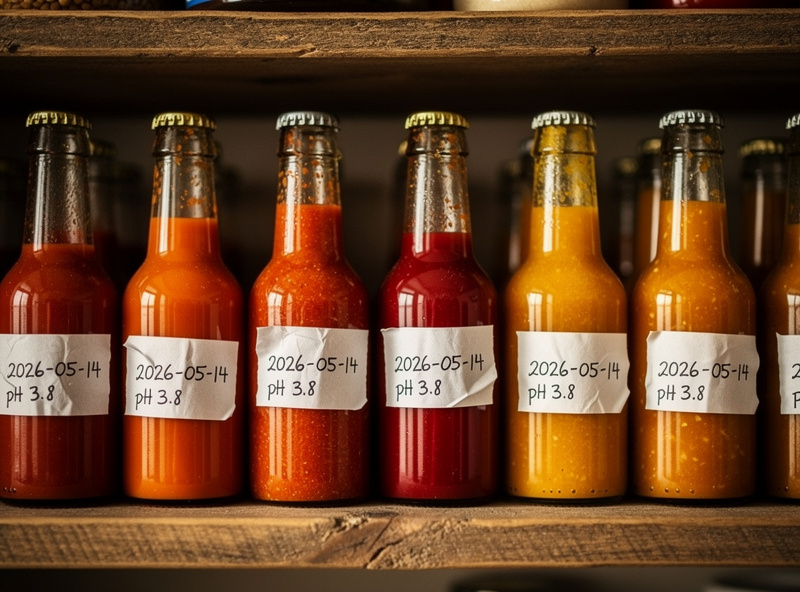
The practical rule I follow: anything below 3.4 can live in the pantry, anything between 3.4 and 4.0 goes in the fridge, and anything I cannot verify with a meter goes in the fridge by default. I label every bottle with the date, peppers, and final pH so I always know which rule a given bottle is living under. If you ever see mold inside a sealed bottle or smell sulphur, discard it — those signal contamination regardless of the pH reading. The exact bottling sequence is covered in my bottling guide.
Why a Ferment Stalls High — and How to Avoid It
A fermented hot sauce that refuses to drop below 4.0 almost always points to one of four causes, and all of them are preventable. The most common is too little salt: under about 2% by weight, the wrong microbes get a foothold and the lactic acid never builds properly. The fix is precision — weigh the salt against the pepper weight every time rather than measuring by the spoon.
The other three are chlorinated tap water (chlorine inhibits lactobacillus — use filtered or dechlorinated water), too cold a fermentation spot (below about 16 °C the culture crawls; my mashes run best around 20 °C), and simply not waiting long enough. A mash that reads 4.2 at day 10 may well be at 3.5 by day 21 — pulling it early is a frequent mistake. If a batch has genuinely stalled despite correct salt and temperature, do not try to rescue it by fermenting longer; acidify it with vinegar to a verified safe pH and move on. The underlying microbiology is the same lactic-acid drop that protects sauerkraut and kimchi, just concentrated into a hotter, lower-volume jar.
Frequently Asked Questions
What pH should fermented hot sauce be for shelf stability?
Aim for pH 3.4 or below for room-temperature shelf storage. Any reading under 4.0 is technically shelf stable, but 3.4 gives extra margin below the 4.6 botulism threshold, which is why commercial producers target it. Verify with a calibrated meter.
Is hot sauce at pH 4.0 safe to store at room temperature?
It is safe but with less margin. pH 4.0 is below the 4.6 botulism line, so it will not grow toxin, but I push anything stored warm down to 3.4 for security. A reading between 4.0 and 4.6 should be refrigerated, not shelved.
Why test pH if fermentation lowers it naturally?
Because a stalled or under-salted ferment can stop higher than expected, and a batch at pH 4.3 looks and smells identical to one at 3.4. Only a calibrated meter distinguishes a safe sauce from an unsafe one, so guessing is not an option for room-temperature storage.
Can I use pH strips instead of a digital meter?
Strips work for a rough check but resolve to about 0.5 pH units, too coarse when the difference between 3.4 and 4.0 changes your storage method. Use a calibrated digital meter reading to 0.01 for anything you plan to store at room temperature.
How do I lower the pH of my hot sauce?
Add white vinegar or food-grade citric acid at the blend stage. Stir in 2 to 4% vinegar by volume, re-blend, and re-measure, adding gradually until you reach 3.4 or below. Vinegar also brightens flavour, so it is my preferred acidifier.
Does refrigeration change the safe pH?
Cold storage suppresses microbial growth, so a refrigerated sauce only needs to be comfortably under 4.0. Room-temperature storage demands the tighter 3.4 target. When in doubt or unable to measure, refrigerate the bottle by default.
Related Guides on FermentFoundry
- Fermented Hot Sauce: The Complete Home Brewer Guide
- Best Peppers for Hot Sauce: Jalapeño to Ghost
- How to Make Fermented Hot Sauce (Beginner Pepper Mash)
- Fermented Hot Sauce Mold: Scrape vs Toss
- Home Vinegar Making: The Complete Guide

About Kenny Nyhus Fadil
A home fermenter documenting brines, bubbles, and the occasional moldy tragedy.