Hot Sauce Separation: Why It Happens and How to Fix It

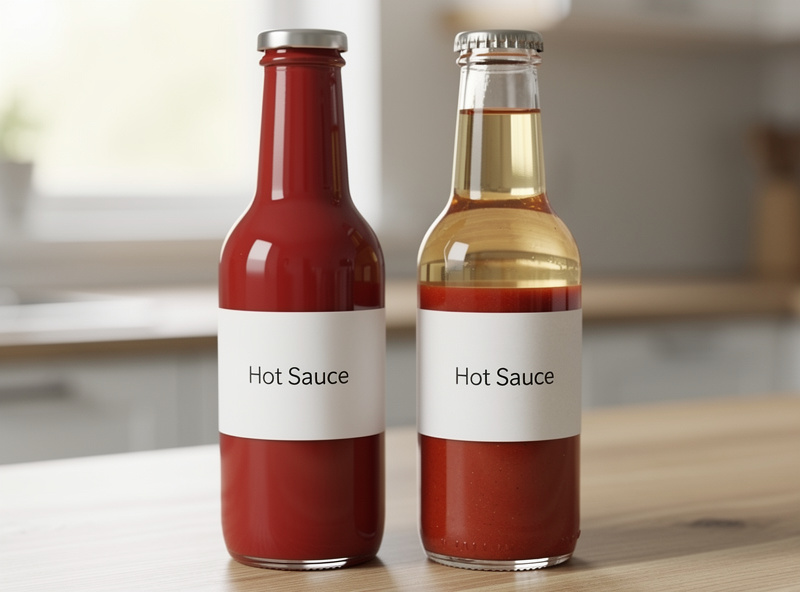
Hot sauce separates because it is mostly water held loosely around pepper solids, with nothing to keep them suspended — so the solids settle and a thinner layer rises to the top. It is a cosmetic issue, not a spoilage one, and the permanent fix is a tiny amount of xanthan gum blended in, which holds everything in suspension for good. A good shake before each use is the no-additive answer.
Almost every raw fermented hot sauce separates to some degree, mine included, and learning to tell normal separation from an actual problem is part of the craft. This guide explains exactly why it happens, the spectrum of fixes from “just shake it” to a permanent stabiliser, and how to be sure a separated sauce is still good. It builds on the texture work in my complete fermented hot sauce guide.
Disclosure: FermentFoundry is reader-supported. As an Amazon Associate I earn from qualifying purchases made through links in this article, at no extra cost to you. I only point to gear I actually use in my own kitchen.
Why Hot Sauce Separates
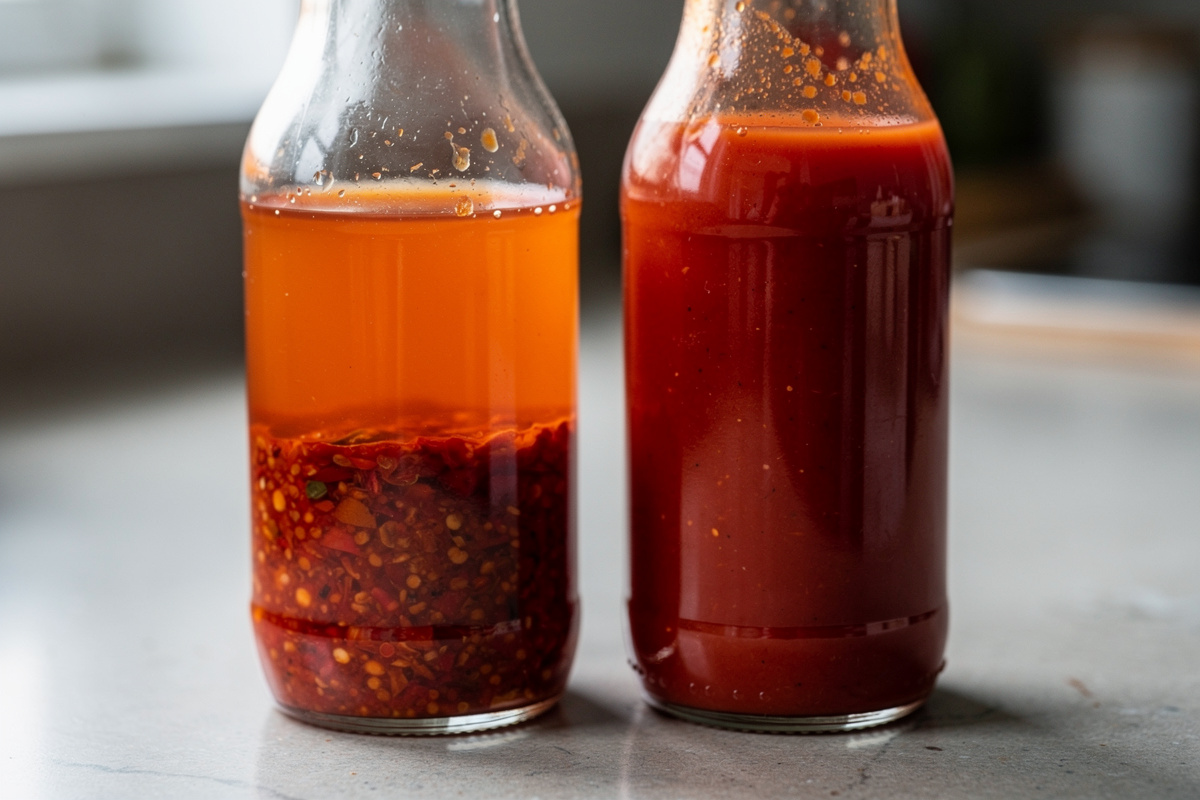
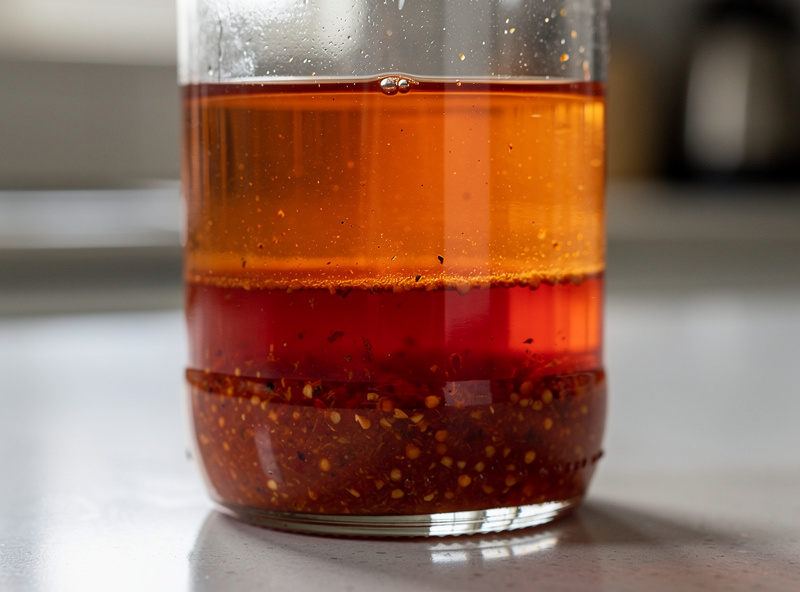
Separation happens because a blended hot sauce is a suspension, not a true solution. The pepper solids — skin, pulp, fibre — are denser than the surrounding liquid, so over hours or days gravity pulls them down and the watery brine floats up. Without an emulsifier or stabiliser holding the particles in place, this settling is simply physics doing its job.
Three things make it worse. Coarse blending leaves bigger, heavier particles that sink faster, so an under-blended sauce separates more. A thin, watery sauce separates more than a thick one because there is more free liquid to rise. And any oil in the recipe will float to the top as a distinct layer, because oil and a water-based sauce do not mix without an emulsifier. None of these is a fault in the ferment — a perfectly safe, well-made sauce at the right pH from my hot sauce pH guide will still separate if nothing holds it together.
Separation vs Spoilage: How to Tell
This is the question that worries people, and the answer is reassuring: separation is almost always harmless. A watery or slightly lighter layer on top of a sauce that smells and tastes normal is just settling — shake it and use it. Separation is about physics, not microbes, and a properly acidified sauce below pH 4.0 is not a place spoilage organisms can grow anyway.
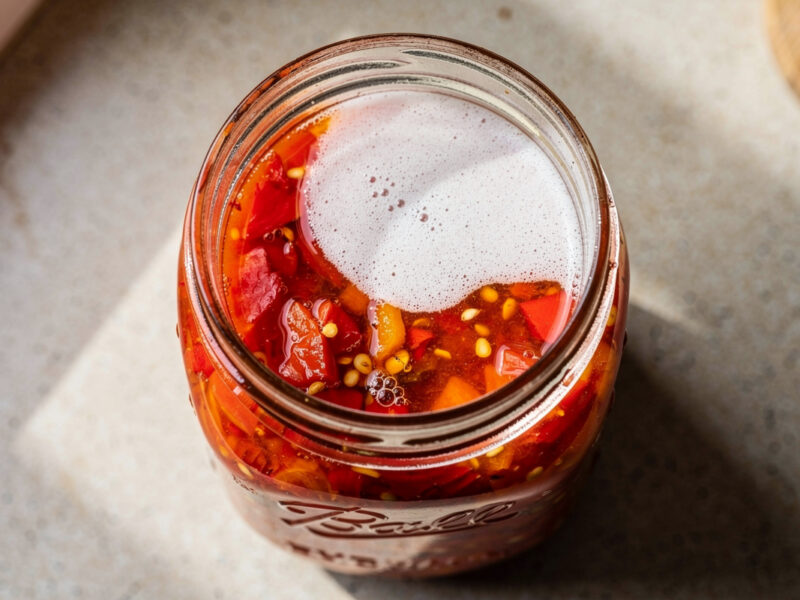
Real problems look and smell different. Mold inside the bottle — fuzzy, raised, coloured patches — means discard, not shake. A sauce that smells of sulphur, yeast, or rot, or one that has gone fizzy and is building pressure in a bottle you did not intend to be live, is telling you something is wrong. Clear liquid on top is fine; fur on the surface or an off smell is not. The same visual ID skill I use for surface films across all my ferments, detailed in my hot sauce mold guide, applies here — separation is the boring, safe version of “something is on top of my sauce.”
The Simplest Fix: Just Shake It
For most home sauces, separation needs no fix at all. A few seconds of shaking re-suspends the solids completely, and the sauce performs identically. Commercial sauces that say “shake well before use” on the label are simply being honest that they have no stabiliser, or only a light one. There is nothing wrong with a sauce that needs a shake.
If shaking is enough for you, the only thing worth doing is making the separation less dramatic. Blending the sauce finer and longer at the start produces smaller particles that settle more slowly and re-mix more easily, so the sauce looks more uniform between shakes. A thicker sauce also separates less, which is why the texture methods in my how to thicken hot sauce guide double as separation control. For a sauce you keep in your own fridge, shaking is genuinely the right answer.
The Permanent Fix: Xanthan Gum
When you want a sauce that never separates — for gifting, for a uniform pour, or just because you prefer it — xanthan gum is the answer. It is a stabiliser that holds the pepper solids in permanent suspension, so the sauce stays homogeneous in the bottle indefinitely. This is exactly what most commercial sauces with a smooth, never-separating pour are using.
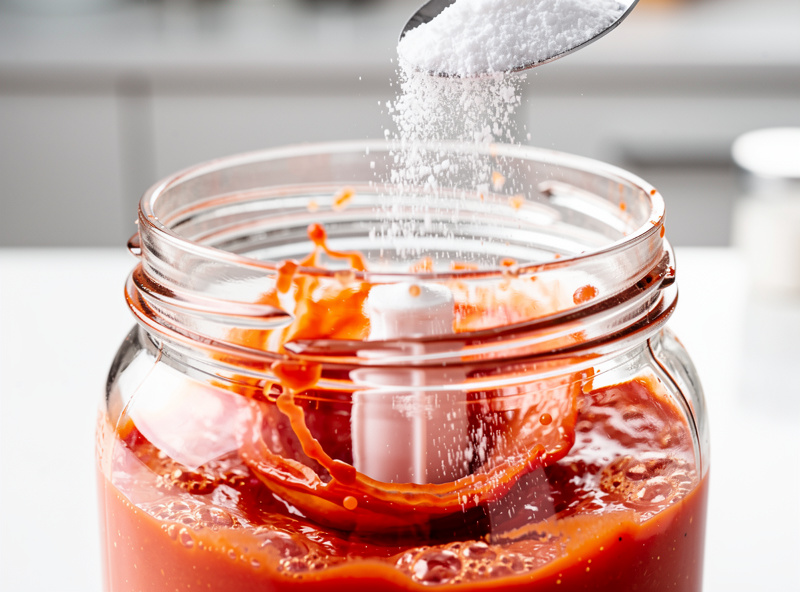
The dose is tiny — about 0.1 to 0.3% of the sauce weight, roughly a quarter teaspoon per cup — and the technique matters: add the xanthan gum with the blender running so it disperses instead of clumping. Start with less than you think; too much makes a slimy texture. A high-speed blender does the best job of both fine-blending the solids and dispersing the gum. The full method, including doses and mistakes, is in the thickening guide above — stabilising and thickening are the same tool doing two jobs.
Reduce the Free Water
The other structural fix is to remove the excess water that does the separating in the first place. A sauce with less free liquid simply has less to rise to the top. You can strain off some of the brine after blending through a fine-mesh strainer, reserving it as a stand-alone splashing brine, or gently reduce the sauce to drive water off.
Reducing has the bonus of concentrating flavour, but it lightly cooks the sauce and softens the fresh ferment character — a trade-off worth it for some sauces and not others. Straining keeps the sauce raw and is the cleaner route for a live sauce. Both make the sauce thicker, which inherently slows separation even before any stabiliser. Between fine-blending, removing free water, and a pinch of xanthan, you have full control over how uniform the bottle stays. In practice I pick the lightest fix that suits the batch: a shake for everyday fridge sauces, fine-blending plus a touch of xanthan for anything I bottle to give away, and reduction only when I am after concentrated flavour anyway.
Separation Fixes Compared
Here is the full spectrum of options, from doing nothing to a permanent stabiliser, with what each one costs you.
| Fix | Effort | Keeps Sauce Raw? | Result | Best For |
|---|---|---|---|---|
| Shake before use | None | Yes | Re-mixes fully, temporary | Personal-use sauces |
| Blend finer/longer | Low | Yes | Slower, less obvious settling | Any sauce |
| Strain off liquid | Low | Yes | Thicker, less free water | Live sauces |
| Reduce on stove | Medium | No (light cook) | Thicker, deeper flavour | Cooked sauces |
| Xanthan gum | Low | Yes | Never separates again | Gifting / uniform pour |
A Note on Oil-Based Sauces
If your recipe includes oil — a chilli-oil-style sauce or one with added oil for richness — separation is guaranteed without an emulsifier, because oil and a water-based sauce never stay mixed on their own. For these, you either embrace the separation (chilli oil is meant to have a settled crunchy layer and a clear oil top) or you emulsify deliberately.
To hold an oil-and-water sauce together, you need an emulsifier such as a small amount of xanthan gum combined with hard blending, or a natural emulsifier like a little mustard. Even then, an oil emulsion is less stable than a plain water-based sauce and may eventually break. My honest advice: if you want a sauce that never separates, keep it water-based and skip the oil, and make a separate chilli oil when you want that. Trying to force a permanent oil-water emulsion at home is more trouble than it is worth for most sauces, and it has nothing to do with the quality of your ferment.
Frequently Asked Questions
Is it safe to use hot sauce that has separated?
Yes. Separation is physics, not spoilage — the solids settle and a watery layer rises because nothing holds them suspended. If the sauce smells and tastes normal and is at a safe pH, just shake it and use it. Only mold or an off smell means discard.
How do I stop my hot sauce from separating permanently?
Blend in a tiny amount of xanthan gum, about a quarter teaspoon per cup, with the blender running. It holds the pepper solids in permanent suspension so the sauce never separates again. This is what most smooth, uniform commercial sauces use.
Why does my homemade hot sauce separate but store-bought doesn’t?
Most commercial sauces include a stabiliser like xanthan gum, or are cooked and finely processed. A raw homemade sauce with no stabiliser separates naturally. Add xanthan gum or simply shake before use; both are normal, legitimate approaches.
Does separation mean my ferment failed?
No. Separation has nothing to do with fermentation quality or safety — a perfectly fermented sauce at the right pH still separates if nothing holds it together. It is purely a suspension settling out under gravity, fixed by a stabiliser or a shake.
Will blending longer stop separation?
It helps but does not fully stop it. Finer blending makes smaller particles that settle more slowly and re-mix more easily, so the sauce looks more uniform. For a sauce that never separates at all, you still need a stabiliser like xanthan gum.
Why does the oil separate out of my hot sauce?
Oil and a water-based sauce do not mix without an emulsifier, so any added oil floats to the top. Either accept it like a chilli oil, or emulsify with xanthan gum and hard blending. The simplest fix is to keep the sauce water-based and oil-free.
Related Guides on FermentFoundry
- Fermented Hot Sauce: The Complete Home Brewer Guide
- How to Thicken Hot Sauce: 3 Proven Methods
- Fermented Sriracha Recipe: Homemade Rooster Sauce
- Fermented Hot Sauce Mold: Scrape vs Toss
- Fermented Hot Sauce pH: Safe Shelf-Stable Levels

About Kenny Nyhus Fadil
A home fermenter documenting brines, bubbles, and the occasional moldy tragedy.