Pepper Mash Fermentation Method: The No-Brine Way

The pepper mash fermentation method ferments chopped or blended peppers in their own salt-drawn liquid, with no added brine — you salt the mash to about 3% of its weight and let osmosis pull the peppers’ own moisture out to cover them. It produces a thicker, more concentrated, more intensely pepper-forward sauce than the brine method, and it is how most craft and commercial hot sauce is fermented.
This is a technique deep-dive, not a beginner recipe — if you want a first step-by-step batch, start with my beginner pepper mash walkthrough. Here I am breaking down why the mash method works, how to manage its one real challenge (keeping a thick mash submerged), and exactly how it differs from fermenting peppers in brine. It expands the mash-versus-brine section of my complete fermented hot sauce guide.
Disclosure: FermentFoundry is reader-supported. As an Amazon Associate I earn from qualifying purchases made through links in this article, at no extra cost to you. I only point to gear I actually use in my own kitchen.
What the Mash Method Actually Is
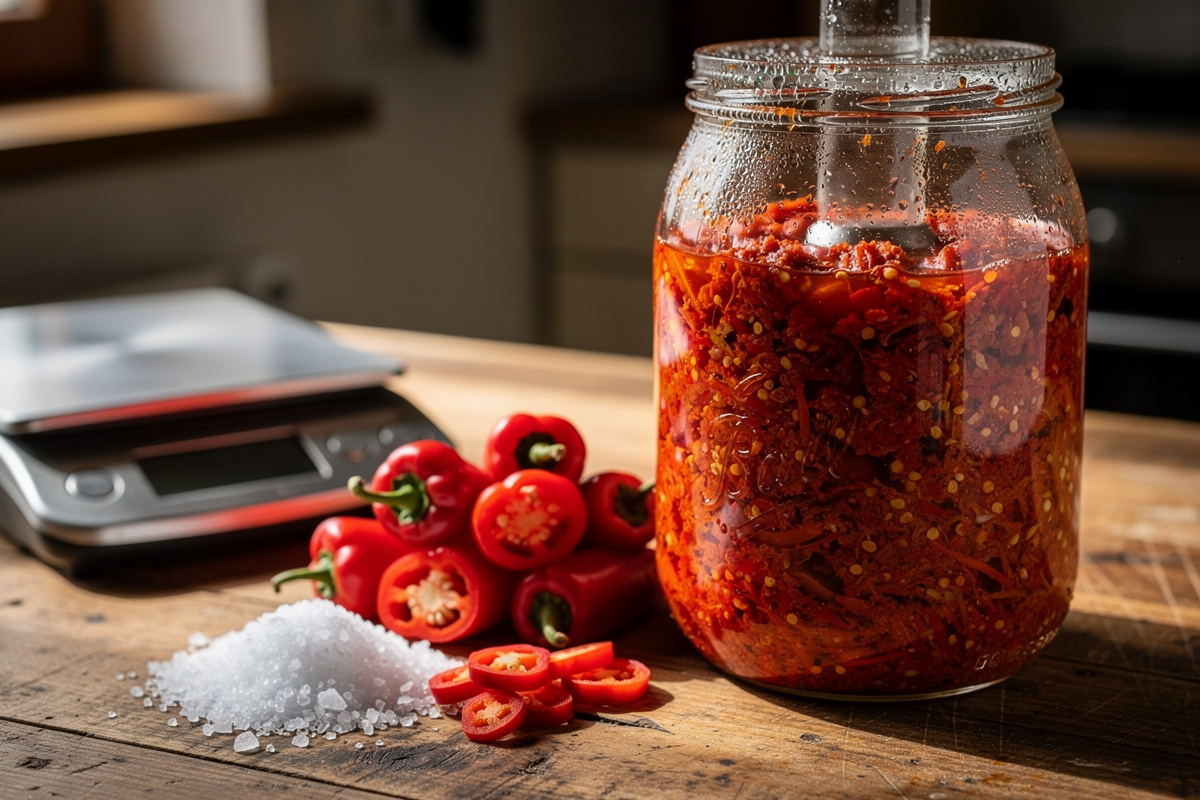
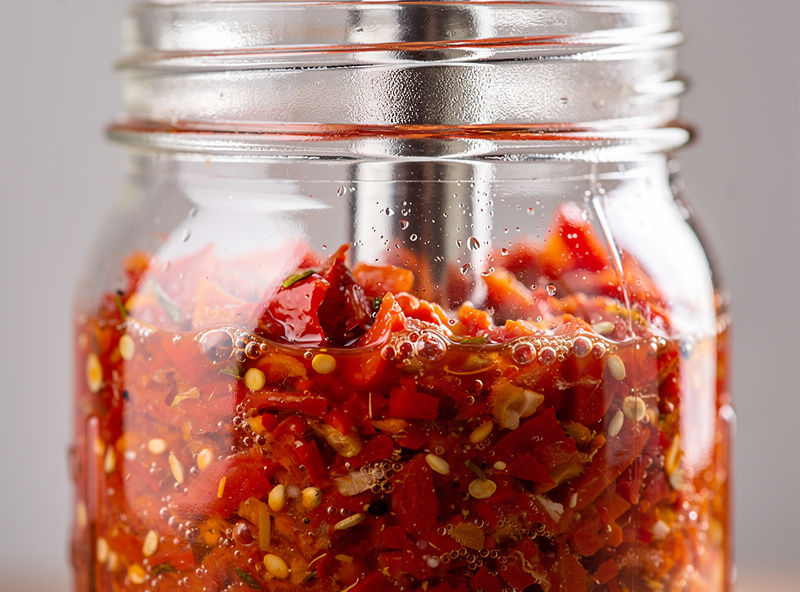
In the mash method, peppers are chopped or coarsely blended and mixed directly with salt — typically 3% of the pepper weight — then packed into a vessel to ferment with no water added. The salt draws moisture out of the pepper cells by osmosis, and within a day or two that liquid pools and covers the mash, creating an anaerobic, self-brining environment where lactobacillus thrives.
This is fundamentally different from a brine ferment, where whole or halved peppers sit submerged in a separately mixed salt-water solution. With a mash, the brine is the pepper liquid, so nothing dilutes the flavour — every bit of liquid in the jar is pepper essence. That concentration is the whole point of the method, and it is why a mash-fermented sauce tastes deeper and more pepper-forward. The salt-by-weight precision matters more here than anywhere, because the mash has no added water to buffer a mistake, so I weigh every batch on a 0.1-gram scale.
The Salt Math for a Mash
Salt is calculated at 3% of the total pepper weight, weighed precisely. For a 1,000 g batch of peppers, that is 30 g of non-iodised salt. This range — roughly 2.5 to 3.5% — is high enough to suppress unwanted microbes and drive osmosis hard enough to pull the liquid out, while still letting lactobacillus do its work.
Why weight and not volume? Because pepper density varies and salt crystals vary, so a “tablespoon” is not a reliable measure when there is no added water to dilute an error. Too little salt in a mash risks a soft, mushy, or unsafe ferment; too much stalls it. The 3% figure is the same backbone ratio I use across the cluster, and it is non-negotiable in a mash precisely because the self-brine concentrates everything, including any salt mistake. Use a non-iodised salt — pickling, kosher, or sea salt without anti-caking agents — since iodine and additives can inhibit the culture.
The One Real Challenge: Keeping the Mash Submerged
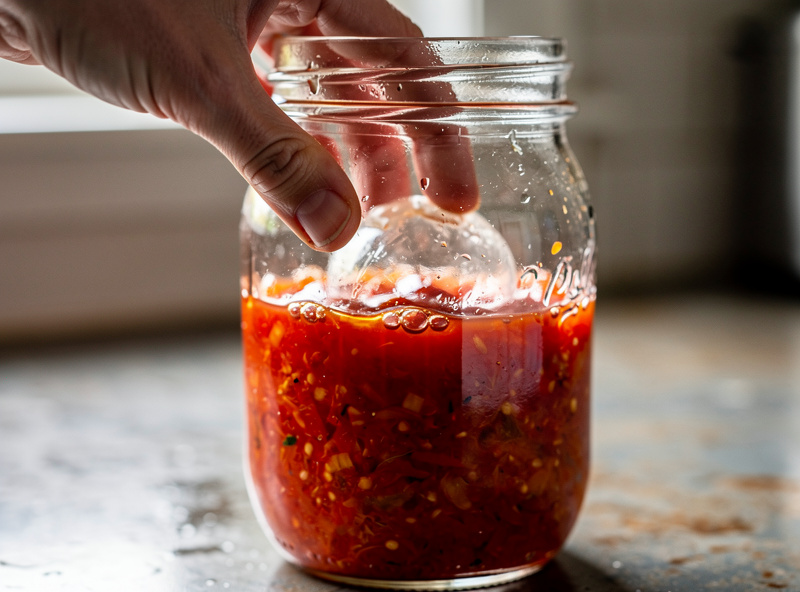
The mash method’s only genuine difficulty is that a thick mash does not stay under its own liquid as easily as whole peppers stay under brine. Pepper solids are buoyant and trap fermentation gas, so the mash tends to rise and float, exposing the top to air where kahm yeast and mold can take hold. Managing this is the skill that separates a clean mash ferment from a fuzzy one.
The fix is a firm weight and a daily push-down, especially in the first week of vigorous fermentation. I use a glass fermentation weight sized to the jar mouth to hold the mash down, and I press it back under each day until the bubbling calms. A silicone airlock lid helps enormously here by letting gas escape without lifting the mash. Any solids that do poke above the liquid should be pushed back under or skimmed — surface exposure is the number-one cause of problems in a mash, and telling harmless kahm from real mold is a core skill covered in my hot sauce mold guide.
When to Add a Little Water
Strict mash purists add nothing but salt, but in practice some peppers — older, drier, or low-moisture varieties, and especially super-hots with thin walls and little flesh — do not release enough liquid to self-submerge. In that case, adding a small amount of dechlorinated water to just cover the mash is the right call, not a failure of technique.
The key is to keep it minimal and to recalculate. If you add water, you are nudging toward a hybrid mash-brine and slightly diluting the concentration, so add only what you need to cover, and account for the added water when you think about salinity. A splash to rescue a too-dry mash is far better than leaving solids exposed to air. Chlorinated tap water is the one thing to avoid — chlorine inhibits lactobacillus and can stall the ferment, the same reason it matters across every ferment in my kitchen.
Mash vs Brine: The Full Comparison
Both methods make excellent sauce; they make different sauce. Here is how they compare across the factors that decide which to use for a given batch.
| Factor | Mash Method | Brine Method |
|---|---|---|
| Setup | Chop/blend peppers + salt, no water | Whole/halved peppers in salt brine |
| Flavour | Concentrated, deep, pepper-forward | Brighter, fresher, single-pepper clarity |
| Texture | Thick, less straining needed | Thinner, blend with brine at end |
| Submersion | Harder — mash floats, needs weight | Easier — peppers stay under brine |
| Byproduct | No spare brine | Leftover hot brine to use |
| Best for | Daily-use concentrated sauces | Showcasing single-pepper varieties |
Timeline and Finishing a Mash
A mash ferments at around 20 °C for roughly 14 to 21 days, sometimes longer for a deeper, more integrated flavour. It bubbles actively in the first week, then settles; the mash darkens, the smell shifts from raw and sharp to sour and rounded, and the liquid clarifies slightly. There is no single “done” moment — taste it from about day 10 and bottle when the flavour satisfies you, longer for more depth.
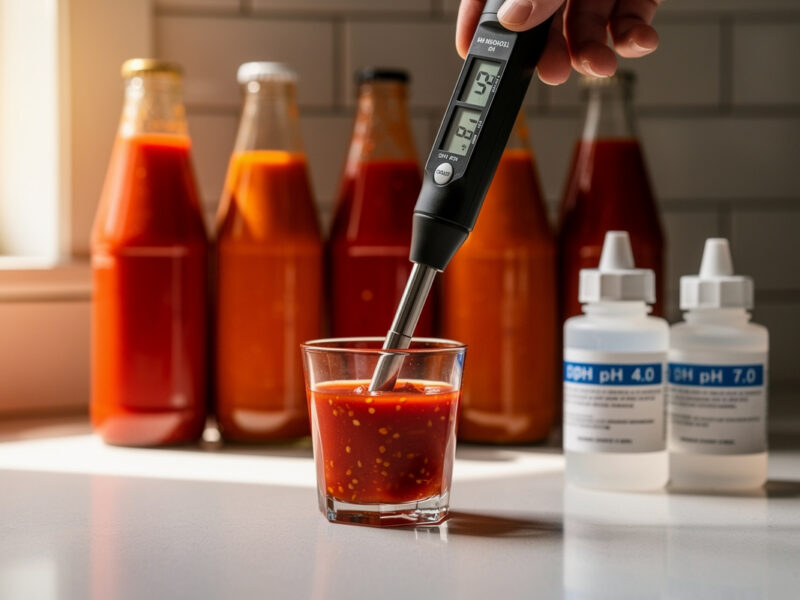
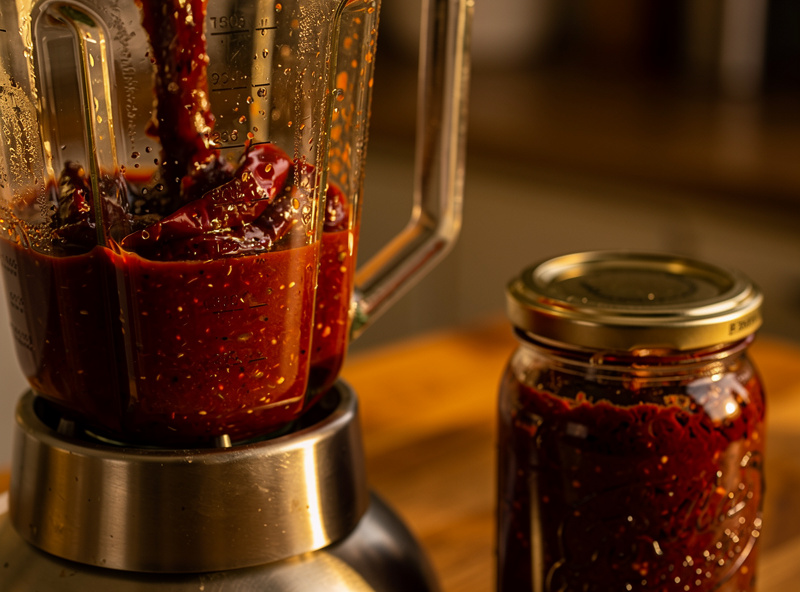
To finish, scrape the whole mash into a blender, add any vinegar you want for brightness and pH margin, and blend smooth. Because a mash is already thick, you often need little or no thickening, though you may strain it for a smoother pour. Always verify the final pH sits at or below the shelf-stable target in my hot sauce pH guide before bottling. A mash’s concentration also means it tends to separate less than a thin brine sauce, though the methods in my separation guide still apply if you want a perfectly uniform bottle.
Scaling a Mash Up
The mash method scales beautifully, which is another reason it dominates commercial production. For a big harvest, a food-grade bucket with a follower and an airlock lets you ferment several kilos of mash at once. The salt stays at the same 3% of pepper weight no matter the batch size — the percentage is what carries over, not any fixed quantity.
At larger volumes the submersion challenge grows, so a proper follower plate or a heavy weighted plate becomes essential to keep a deep mash compressed under its liquid. A food-grade fermentation bucket with an airlock lid is the home version of the barrels craft producers age their mash in for months or years. This is where the home mash and the commercial mash are genuinely the same process at different scales — the dial is volume, the method is identical.
Frequently Asked Questions
What is the pepper mash fermentation method?
It ferments chopped or blended peppers mixed with about 3% salt and no added water. The salt draws the peppers’ own liquid out by osmosis to cover the mash, creating a self-brining anaerobic environment. It makes a thicker, more concentrated sauce than brining.
Do you add water to a pepper mash?
Usually no — the salt pulls enough liquid from the peppers to submerge the mash on its own. Only add a small amount of dechlorinated water if dry or thin-walled peppers fail to release enough liquid to cover the mash, and add just enough to cover.
How much salt for a pepper mash?
Use 3% of the pepper weight, weighed on a scale — about 30 grams of non-iodised salt per 1,000 grams of peppers. Precision matters more in a mash than a brine because there is no added water to buffer a salt error. Roughly 2.5 to 3.5% is the safe range.
Why does my pepper mash float?
Pepper solids are buoyant and trap fermentation gas, so the mash rises and exposes its top to air. Hold it down with a glass fermentation weight or follower and push it back under daily during the first vigorous week. Surface exposure invites kahm yeast and mold.
Is mash or brine better for hot sauce?
Neither is better; they make different sauces. Mash produces a thicker, deeper, more pepper-forward sauce and is what most craft producers use. Brine gives a brighter, fresher result and leftover hot brine, and keeps peppers submerged more easily. Try mash first.
How long does a pepper mash ferment?
About 14 to 21 days at 20°C, longer for deeper flavour. It bubbles hard the first week, then settles and darkens as the smell turns sour and rounded. Taste from day 10 and bottle when the flavour satisfies you; always verify a safe pH first.
Related Guides on FermentFoundry
- Fermented Hot Sauce: The Complete Home Brewer Guide
- How to Make Fermented Hot Sauce (Beginner Pepper Mash)
- Best Peppers for Hot Sauce: Jalapeño to Ghost
- Fermented Hot Sauce pH: Safe Shelf-Stable Levels
- Hot Sauce Separation: Why It Happens and the Fix

About Kenny Nyhus Fadil
A home fermenter documenting brines, bubbles, and the occasional moldy tragedy.