Best Salt for Sauerkraut: Sea vs Kosher vs Pickling vs Iodized

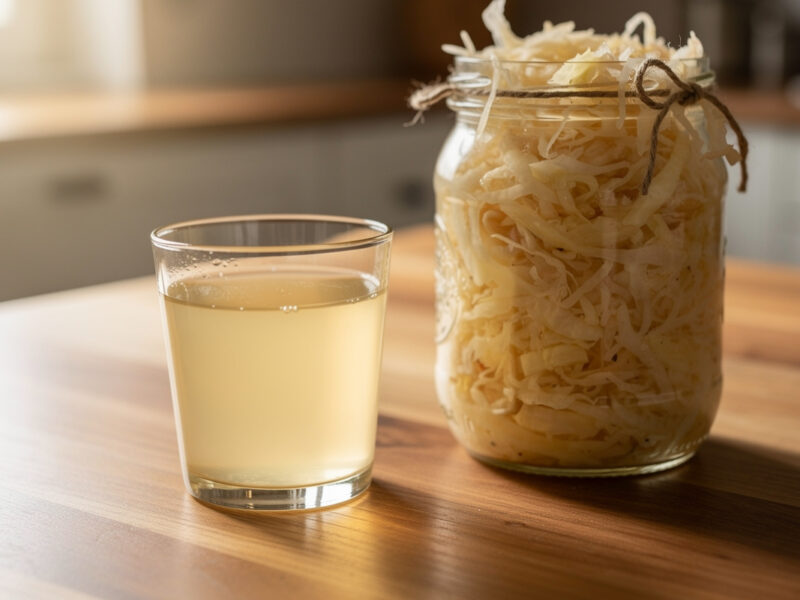
The best salt for sauerkraut is any pure, additive-free salt — fine pickling salt, plain kosher salt, or unrefined sea salt all make excellent kraut. What actually matters is not the type but the weight: you want 2 to 2.5% salt by the weight of your cabbage, full stop. Iodized table salt is the one I steer people away from, and the anti-caking agents in cheap table salt are the real culprits behind cloudy, off-tasting batches — not the sodium itself.
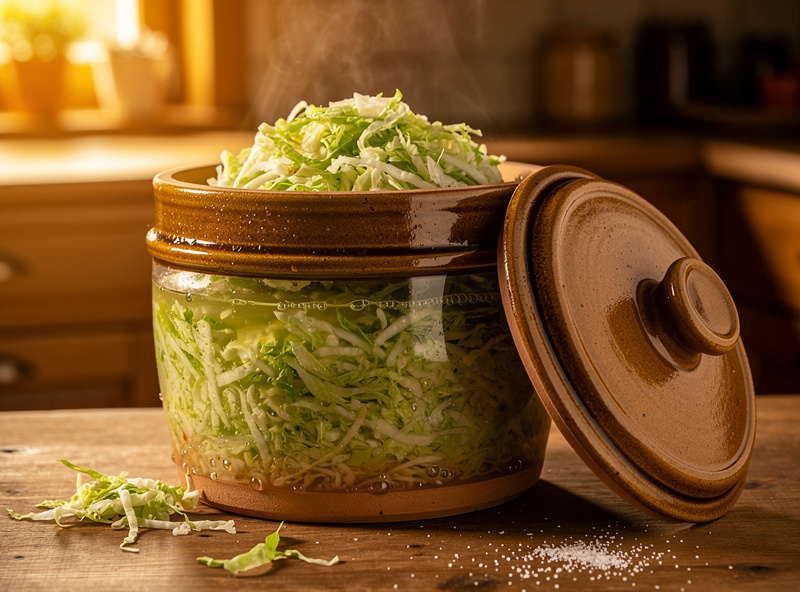
I have a shelf of salts in my fermentation room that exists almost entirely because of sauerkraut. Over the years I have packed the same green cabbage into the same water-sealed crock with sea salt one week and pickling salt the next, weighing every gram on a 0.1 g scale, just to settle for myself whether the salt choice changes the kraut. The short version: the cabbage cannot tell the difference between a kosher flake and a pickling granule once they have dissolved into brine. What it can tell the difference between is the right amount of salt versus the wrong amount, and whether that salt arrived clean or dragged additives in with it.
So this is not really a “which brand wins” article. It is a guide to ignoring the marketing on the box and getting the one number that matters — grams of salt per gram of cabbage — correct every single time.
Why the type of salt barely matters (and weight matters enormously)
Sauerkraut works because salt does two jobs at once. It pulls water out of the cabbage by osmosis to create the brine that submerges everything, and it sets a salinity that favors the Lactobacillus bacteria you want while holding back the spoilage organisms you don’t. Both of those jobs are about the concentration of sodium chloride in the brine, which is a function of mass — not crystal shape, not mineral content, not what the package calls it.
Here is the trap that catches almost everyone: salts measure wildly differently by volume. A tablespoon of fine pickling salt weighs nearly twice what a tablespoon of flaky sea salt weighs, because the flakes trap air. So a recipe that says “1 tablespoon of salt per head of cabbage” is borderline meaningless — follow it with flaky salt and you under-salt, follow it with dense pickling salt and you over-salt. This is exactly why every batch I run gets weighed. Cabbage on the scale, note the grams, multiply by 0.02 to 0.025, and that is my salt. No measuring spoons, no guessing, no salt-brand asterisks.
Once you internalize that, the “best salt” question mostly dissolves. The real selection criterion is narrow: is the salt pure sodium chloride with nothing else added? Everything else is preference and texture.
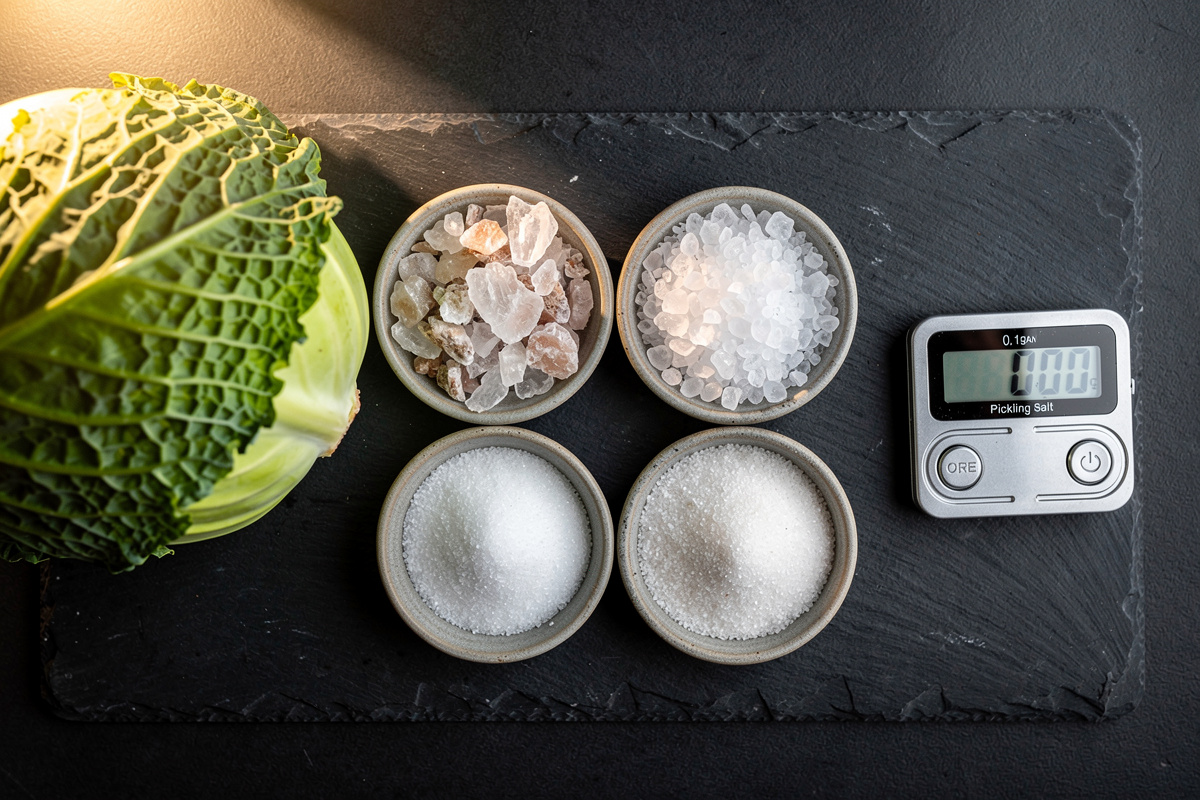
The salts, head to head
I have run kraut with every one of these. Here is how they actually behave in the crock, not on the marketing copy.
| Salt type | Additives? | Dissolves | My verdict for kraut |
|---|---|---|---|
| Fine pickling / canning salt | None — pure NaCl | Fast, fully | My default. Cheap, clean, dense, no surprises. |
| Kosher salt (plain) | Usually none* | Fast | Excellent. Just check the box for anti-caking agents. |
| Unrefined sea salt | Trace minerals only | Fine, slightly slower | Great. Minerals are flavor, not a problem. |
| Himalayan / rock salt | Trace minerals | Slower, coarse | Works, but grind it or weigh extra carefully. |
| Iodized table salt | Iodine + anti-caking | Fast | Skip it. The additives, not the iodine, cause cloudiness. |
*Some kosher brands add an anti-caking agent and some do not — this is the one place where “kosher salt” is not a single ingredient. Read the back of the box.
Pickling salt — my everyday choice
Pickling salt (also sold as canning salt) is fine-grained pure sodium chloride with deliberately nothing else in it, because anything else would cloud a canning jar. That is exactly the property you want in a ferment. It dissolves almost instantly into the cabbage’s own juices, it is dense so it weighs predictably, and it is usually the cheapest salt in the store by weight. For big cabbage runs in the crock, this is what I reach for nine times out of ten. If you want one bag of salt that does everything fermentation-related, a sack of plain fine pickling salt is the honest answer.
Kosher salt — fine, with one caveat
Plain kosher salt is excellent kraut salt. Its coarse flakes dissolve readily and it carries no iodine. The single catch is that one of the two big kosher brands includes an anti-caking agent and the other does not — and the flake sizes differ enough between brands that they weigh very differently per cup. None of that matters if you ignore volume entirely and weigh your salt, which you should be doing anyway. Grab a box of plain coarse kosher salt with no additives listed and you are set.
Sea salt — minerals are flavor, not a flaw
Unrefined sea salt carries trace minerals — magnesium, calcium, potassium — that give it a faintly different taste and sometimes a grey or pink cast. Fermentation forums occasionally claim these minerals “interfere” with the ferment. Across the brines I have run, I have never seen it: the kraut sours on schedule and tastes, if anything, a touch rounder. The only practical note is that very flaky sea salt is low-density, so weigh it rather than scooping. A coarse unrefined sea salt is a perfectly good, slightly more characterful kraut salt.
Disclosure: the product links above are Amazon affiliate links. If you buy through them I may earn a small commission at no extra cost to you — it helps keep this fermentation bench running. I only point at salt I would actually pack a crock with.
The case against iodized table salt
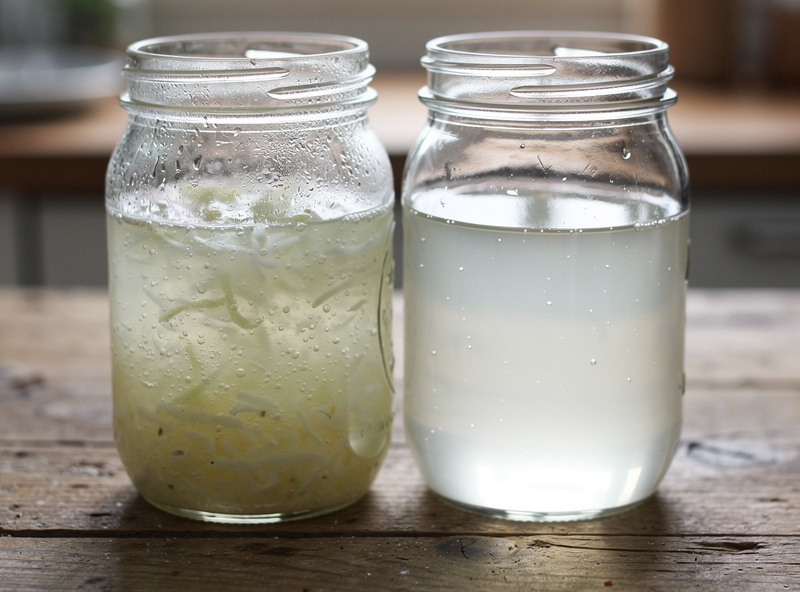
This is the one salt I genuinely avoid, and it is worth understanding why, because the usual explanation is half wrong. The common claim is that iodine kills the ferment. In practice, the small amount of iodine in table salt does not stop a healthy cabbage ferment — your kraut will still sour. The bigger problem is the anti-caking agents, typically sodium aluminosilicate or a similar compound added to keep the salt free-flowing. These do not dissolve cleanly. They leave the brine cloudy and can carry a faint metallic or chemical edge into the finished kraut.
I have run the side-by-side: same green cabbage, same 2.2% by weight, one batch with pickling salt and one with iodized table salt. Both fermented. But the iodized batch threw a persistently murky brine and tasted subtly off — flat, with a chemical note at the back. Life is too short to import that into a crock when a bag of pickling salt costs almost nothing. If table salt is genuinely all you have on hand, it will make edible kraut; it just will not make your best kraut.
How to get your salt amount exactly right
Forget recipes that count heads of cabbage or tablespoons. Here is the method I use on every batch, and it never drifts:
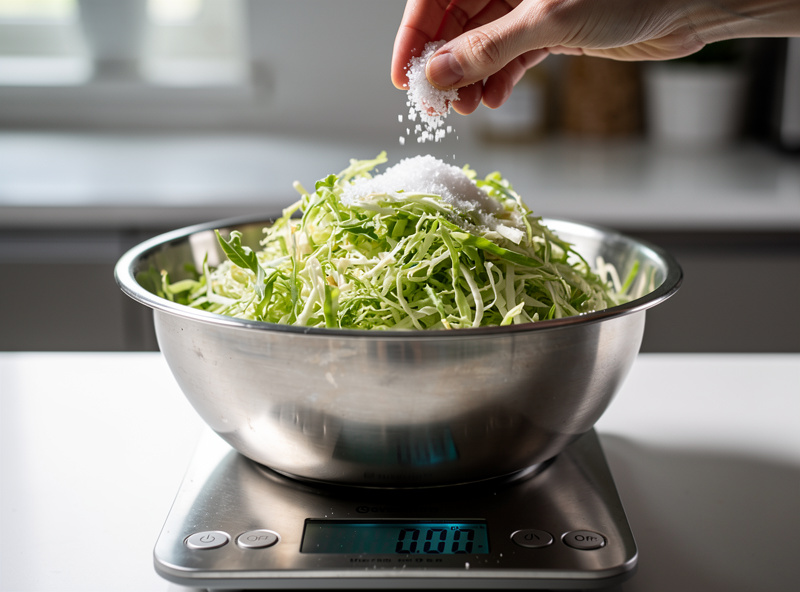
- Shred your cabbage and put it in a bowl on the scale — tare the bowl first.
- Read the weight of the cabbage in grams.
- Multiply by 0.02 for a 2% kraut, or by 0.025 for a 2.5% kraut. (Example: 1,000 g cabbage × 0.02 = 20 g salt.)
- Weigh out that salt on the scale, no measuring spoons.
- Massage it in and wait — the salt will pull enough liquid out of the cabbage to make the brine.
A reliable 0.1 g digital kitchen scale is the single best fermentation purchase you can make — it makes the salt-brand question irrelevant and turns “guessing” into a controlled process. The full walkthrough of how that 2 to 2.5% gets you a safe, crisp batch lives in my complete sauerkraut guide, and the choice of which head of cabbage to shred in the first place is covered in best cabbage varieties for sauerkraut.
Can you use less salt, or no salt?
You can ferment cabbage at lower salinity, and some recipes push toward 1.5% for a faster, tangier kraut. I treat 1.5% as the practical floor and would not go lower for a slow countertop ferment: salt is your margin of safety in the early days before the Lactobacillus has dropped the pH far enough to protect the batch. Below about 1.5%, you lean harder on temperature control and cleanliness to keep spoilage organisms in check, and on a warm counter that is a gamble I do not take. No-salt “kraut” exists, but it is a different, riskier, mushier product, and it is not what I make. Stay in the 2 to 2.5% band and you get crisp, safe, reliably sour cabbage every time.
The bottom line
Pick any pure salt with no anti-caking agents — pickling, plain kosher, or unrefined sea salt — and you have made the right choice. Pickling salt is my default for cost and consistency, sea salt if I want a little mineral character, kosher if it is what is in the cupboard. Avoid iodized table salt for the additives, not the iodine. Then ignore the box entirely and weigh your salt to 2 to 2.5% of the cabbage’s weight. Do that and your kraut will be excellent regardless of which clean salt is in your hand.
Does the type of salt really change sauerkraut?
Not in any way you will taste, as long as the salt is pure sodium chloride. Pickling salt, plain kosher salt, and unrefined sea salt all make excellent kraut. What changes the result is the amount of salt by weight (aim for 2 to 2.5%), not the brand or crystal shape.
Can I use iodized table salt for sauerkraut?
It will still ferment, but I avoid it. The issue is less the iodine and more the anti-caking agents in most table salt, which do not dissolve cleanly and tend to leave the brine cloudy with a faint off-taste. Pure pickling or kosher salt is a far better and cheaper choice.
How much salt do I use per pound of cabbage?
Work by percentage, not per pound. Weigh your shredded cabbage and use 2 to 2.5% of that weight in salt. For 1,000 grams of cabbage that is 20 to 25 grams of salt. A 0.1 gram kitchen scale makes this foolproof and removes all the guesswork around salt brands.
Do trace minerals in sea salt harm the ferment?
No. Across the brines I have run, the trace magnesium, calcium, and potassium in unrefined sea salt have never interfered with souring. They add a faint rounder flavor if anything. The only practical note is that flaky sea salt is low-density, so weigh it rather than measuring by volume.
What is the lowest salt I can use for sauerkraut?
I treat about 1.5% by weight as the practical floor for a countertop ferment. Salt is your safety margin in the first days before the bacteria drop the pH. Below 1.5% you rely much more on cool temperatures and scrupulous cleanliness, which is a gamble on a warm counter. Staying at 2 to 2.5% is the reliable sweet spot.
Why is my sauerkraut brine cloudy?
A little cloudiness from lactic acid bacteria is normal and harmless. Persistent murkiness, though, often traces back to iodized table salt and its anti-caking agents, which do not fully dissolve. Switch to pure pickling, kosher, or sea salt and the brine usually runs much clearer.

About Kenny Nyhus Fadil
A home fermenter documenting brines, bubbles, and the occasional moldy tragedy.
Keep Bubbling
How Long to Ferment Sauerkraut: 1 Week vs 4 Weeks (and Beyond)
Flavored Sauerkraut: Caraway, Juniper, and Garlic Pairings