Red Cabbage Sauerkraut: A Recipe for Color, Crunch, and Caraway

Red cabbage sauerkraut is made exactly like the green kind — shred, salt to 2 to 2.5% by weight, massage, submerge, and wait — but it ferments a touch slower, holds its crunch longer, and rewards you with an electric magenta-purple color that green kraut can never match. The purple comes from anthocyanin pigments that act as a natural pH indicator, so the kraut actually shifts color as it sours. Caraway and juniper are its classic partners.
Red cabbage is my favorite cabbage to ferment for looks alone. There is a moment, three or four days into a jar, when the brine goes from dull violet to a glowing ruby as the acidity climbs — and that color shift is not decoration, it is chemistry you can read with your eyes. I keep red kraut going almost continuously through the winter because it brightens a plate of heavy Swedish food like nothing else, and because the denser leaves stay crunchy weeks after a green batch has softened.
If you have made green sauerkraut before, you already know how to make this. If you haven’t, the method below is complete and beginner-safe. The only real differences with red cabbage are in the details — color, timing, and a slightly firmer bite.
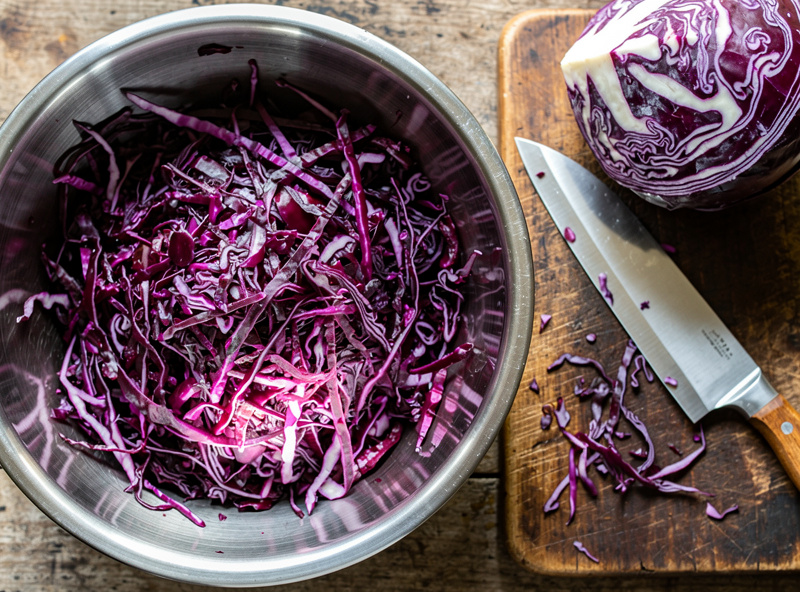
Red cabbage vs green cabbage in the crock
The two cabbages are close cousins, and both ferment beautifully, but they do behave differently on the bench. Here is what I notice across batches:
| Green cabbage | Red cabbage | |
|---|---|---|
| Texture | Crisp, softens over weeks | Firmer, denser, holds crunch longer |
| Brine release | Releases liquid readily | Drier — may need a little more massaging or a small brine top-up |
| Ferment speed | Slightly faster | Slightly slower, especially cooler |
| Color | Pale gold | Vivid magenta to purple, shifts with pH |
| Flavor | Clean, classic sour | Earthier, a little more robust |
The drier-leaf point is the one to plan for. Red cabbage leaves are denser and sometimes don’t throw off quite enough of their own liquid to stay fully submerged. If after massaging and a couple of hours of resting your cabbage still isn’t sitting under brine, top up with a 2% brine (20 g salt dissolved in 1,000 g of non-chlorinated water) — never plain water, which would dilute your salinity below the safe band.
The recipe
You will need: one medium head of red cabbage (roughly 900 g to 1,200 g), salt at 2 to 2.5% of the cabbage’s trimmed weight, and optionally 1 to 2 teaspoons of caraway seeds or a few crushed juniper berries.
- Trim and reserve. Peel off one or two clean outer leaves and set them aside — they make a perfect cap to hold the shreds down later. Quarter and core the head.
- Shred thin. Slice into thin, even ribbons. The thinner and more uniform the shred, the faster the brine releases and the more evenly it ferments. A sharp knife or a mandoline both work.
- Weigh and salt. Put the shredded cabbage in a bowl on a scale, read the grams, and weigh out 2 to 2.5% of that in salt. For 1,000 g of cabbage that is 20 to 25 g. Use a pure salt with no additives — I cover the choice in detail in my guide to the best salt for sauerkraut.
- Massage. Work the salt in with clean hands for 5 to 10 minutes. The cabbage will go limp, darken, and start weeping purple brine. This is the satisfying part. Add the caraway or juniper now if using.
- Pack. Press the cabbage firmly into a clean jar or crock, pushing out air pockets as you go, until the brine rises above the shreds.
- Submerge and weight. Lay a reserved outer leaf over the top and hold everything below the brine with a fermentation weight. Nothing should be poking up into the air.
- Ferment. Cover loosely (or fit an airlock lid) and leave at cool room temperature, out of direct sun, for at least 1 to 2 weeks. Taste from week one onward and pull it when the sourness is where you like it.
A set of glass fermentation weights is the single tool that makes this reliable — they hold the dense red shreds under the brine so nothing oxidizes at the surface. If you ferment in jars, a set of silicone airlock lids lets gas escape without letting air back in, which keeps kahm yeast and mold off the surface.
Disclosure: the product links here are Amazon affiliate links. I may earn a small commission if you buy through them, at no cost to you. I only recommend gear I actually run in my own fermentation room.
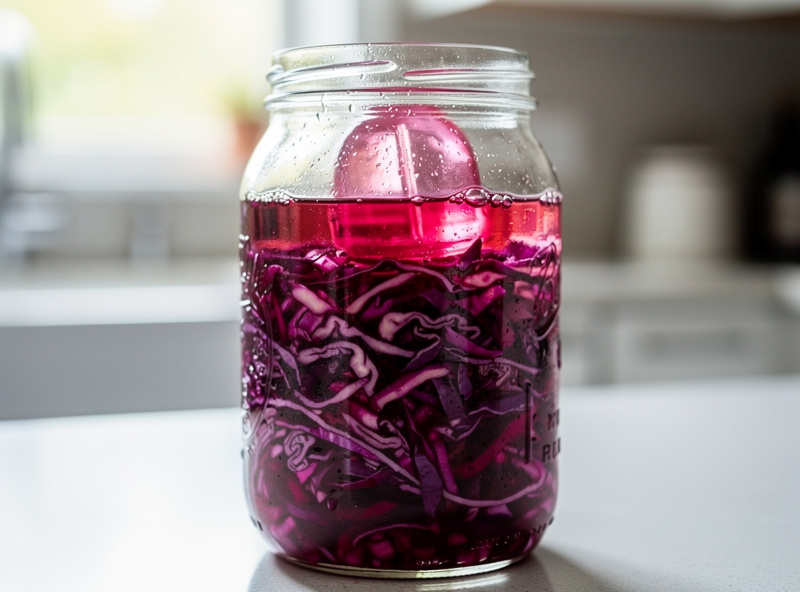
Why red cabbage changes color as it ferments
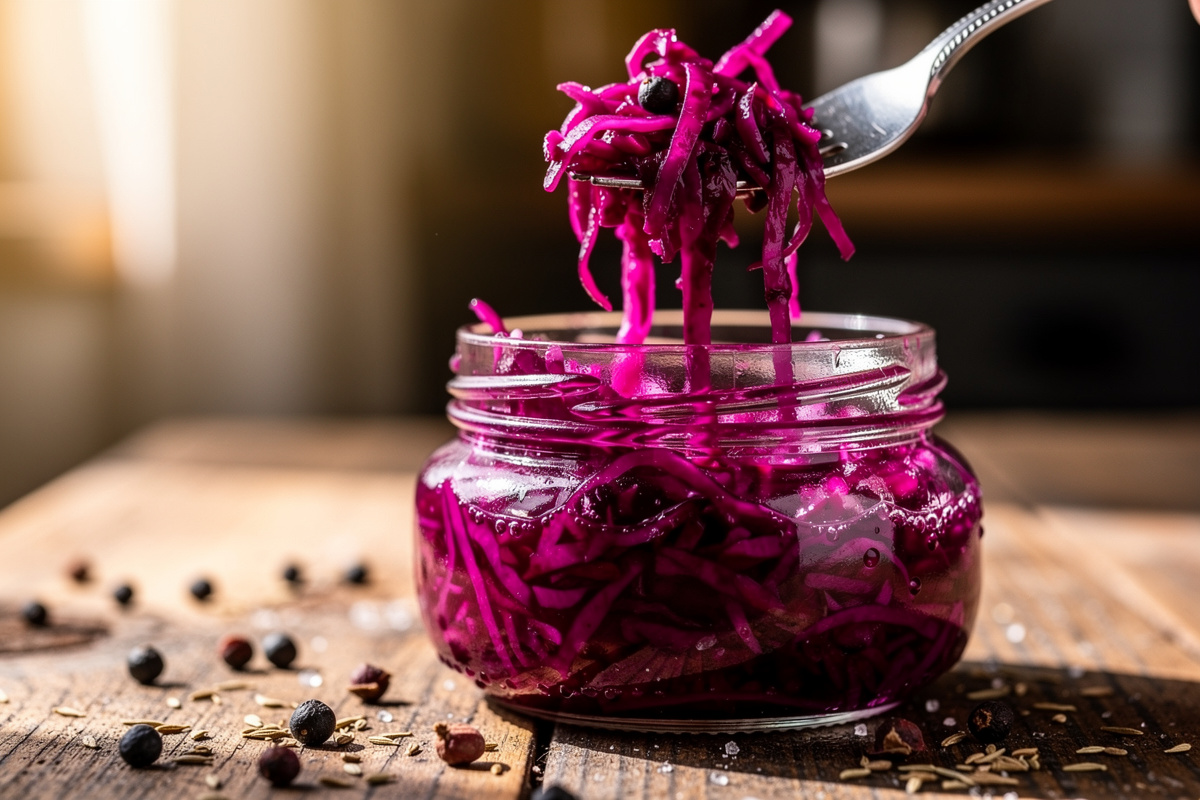
This is my favorite thing to point out to anyone fermenting red cabbage for the first time. The purple pigments in red cabbage are anthocyanins, and anthocyanins are natural pH indicators — the same compounds behind the classic “red cabbage juice” science demonstration. In a neutral environment they read blue-purple; as the environment turns acidic they shift toward bright pink and red.
So when your fresh-salted shreds start out a muted blue-violet and then bloom into a vivid magenta over the first few days, you are literally watching the pH drop as the Lactobacillus produces lactic acid. It is a built-in progress bar. A finished, properly sour red kraut sits at a confident, glowing pink-red. If your jar stays dull and bluish after a week, that is a hint the ferment is sluggish — usually too cold or under-packed — and worth checking. I keep a pH meter on the bench for exact numbers, but with red cabbage your eyes give you a free first read.
Choosing the right cabbage
For kraut you want a dense, heavy, tightly-packed head — the heft tells you the leaves are full of the water you need for brine. Loose, light heads are usually older and drier. Storage-type cabbages with firm leaves ferment best; very tender early-season heads can go mushy. I get into head selection and the specific varieties that hold up in the crock in my guide to the best cabbage varieties for sauerkraut, and most of that advice carries straight over to red types.
A note on safety and what to expect
Red cabbage sauerkraut is one of the safest ferments there is — the combination of 2 to 2.5% salt and a steadily dropping pH makes it inhospitable to anything that could hurt you, which is exactly why kraut has preserved cabbage through winters for centuries. Trust the brine: keep everything submerged, and a healthy ferment will smell sharply sour and cabbagey, not rotten. A white, cloudy film on the surface is usually harmless kahm yeast you can skim; fuzzy, raised, colored spots are mold and mean you toss the batch. I walk through telling them apart in my guide to sauerkraut mold vs kahm yeast. Once it tastes right, move it to the fridge and it will keep for many months — the color, if anything, deepens.
Is red cabbage sauerkraut made any differently from green?
The method is identical: shred, salt to 2 to 2.5% by weight, massage, submerge under brine, and ferment for one to several weeks. The only practical differences are that red cabbage is firmer and a little drier, so it sometimes needs a small 2% brine top-up to stay submerged, and it ferments slightly slower while developing a vivid purple-red color.
Why does my red cabbage sauerkraut change color?
Red cabbage contains anthocyanin pigments that act as natural pH indicators. As the Lactobacillus bacteria produce lactic acid and the pH drops, the kraut shifts from a dull blue-violet toward a bright magenta-red. The color change is a free visual cue that your ferment is souring properly.
My red cabbage is not making enough brine. What do I do?
Red cabbage leaves are denser and drier than green, so they sometimes do not release quite enough liquid on their own. Give it a longer massage and an hour or two to rest first. If the cabbage still is not submerged, top up with a 2% brine made from 20 grams of salt dissolved in 1,000 grams of non-chlorinated water. Never use plain water, which would dilute the salinity.
How long does red cabbage sauerkraut take to ferment?
Start tasting at one week. Most red krauts are pleasantly sour somewhere between one and four weeks at cool room temperature, fermenting a little slower than green cabbage. Pull it when the sourness suits you, then refrigerate. The denser red leaves tend to hold their crunch longer than green kraut does.
What spices go best with red cabbage sauerkraut?
Caraway is the classic, and juniper berries are a beautiful match for the earthier red cabbage, especially alongside game or pork. A little crushed garlic or a few black peppercorns also work well. Add whole spices during the massage step so they distribute evenly through the kraut.

About Kenny Nyhus Fadil
A home fermenter documenting brines, bubbles, and the occasional moldy tragedy.