Sauerkraut Juice: What It Is and Why I Never Pour It Down the Drain

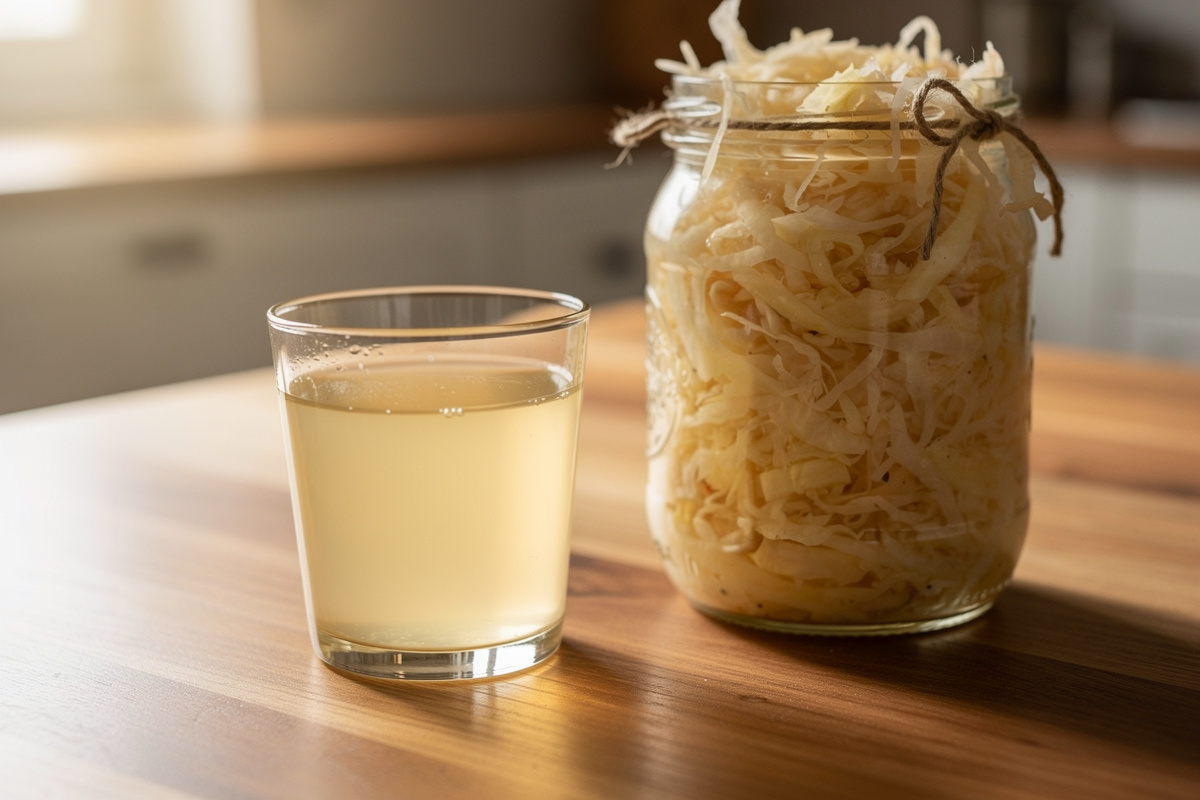
Sauerkraut juice is simply the brine left behind in the jar — the cloudy, tangy liquid the cabbage ferments in. I never pour it down the drain, because it’s the most concentrated, flavor-packed part of the whole batch: a ready-made sour seasoning, a brilliant starter for the next ferment, and a traditional drink in its own right. This article is about what sauerkraut juice is and the many ways I actually use it in the kitchen. It is food and flavor, not medicine — nothing here is health advice.
Let me be clear up front about framing, because “sauerkraut juice benefits” is a phrase that attracts a lot of overblown wellness claims. I’m a fermenter, not a health professional, and I’m not going to tell you that drinking brine cures or treats anything. What I can tell you, from years of running krauts, is that the brine is a genuinely valuable byproduct most people throw away — and the real, demonstrable benefits are culinary and practical. Those are the ones worth your attention.
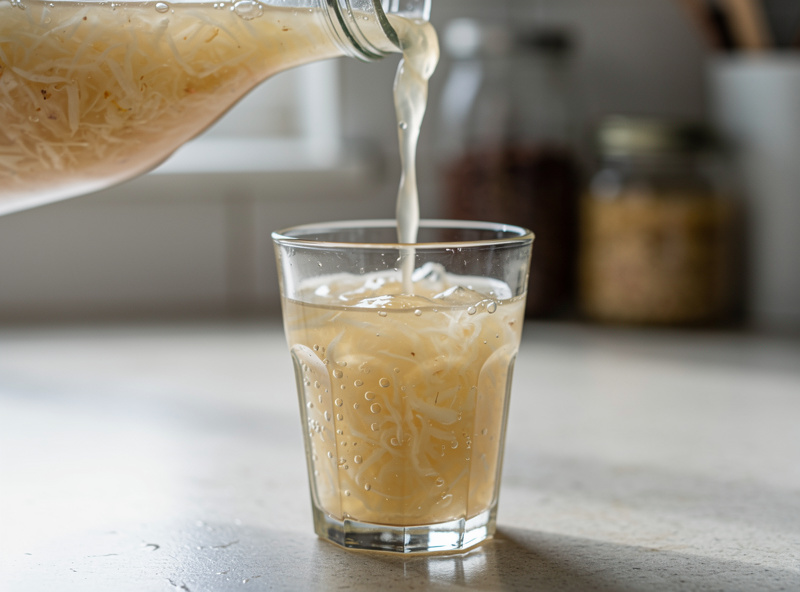
What sauerkraut juice actually is
When you ferment cabbage, salt draws water out to form a brine, and the Lactobacillus bacteria do their work submerged in that liquid. So the juice isn’t a separate product — it’s the medium the whole ferment happened in. By the time the kraut is done, that brine is tangy and acidic from the lactic acid the bacteria produced, salty from the salt you added, cloudy with live cultures, and carrying water-soluble compounds and flavor pulled out of the cabbage. It’s essentially a concentrated liquid expression of everything that makes sauerkraut sauerkraut.
That cloudiness, by the way, is a good sign, not a flaw — it’s the live culture and lactic acid in suspension. A finished kraut brine should smell and taste sharply sour and pleasantly cabbagey. If you’d like the full picture of how that brine forms and what the safe salt and acidity ranges are, it’s all in my complete sauerkraut guide.
The benefits that are actually real: using the juice
Here’s where I think the genuine value lives. Sauerkraut juice is one of the most useful things in my fridge, and almost all of it gets used rather than drunk straight. The “benefit” is that you’re capturing flavor and function you’d otherwise pour away.
1. A ready-made sour seasoning
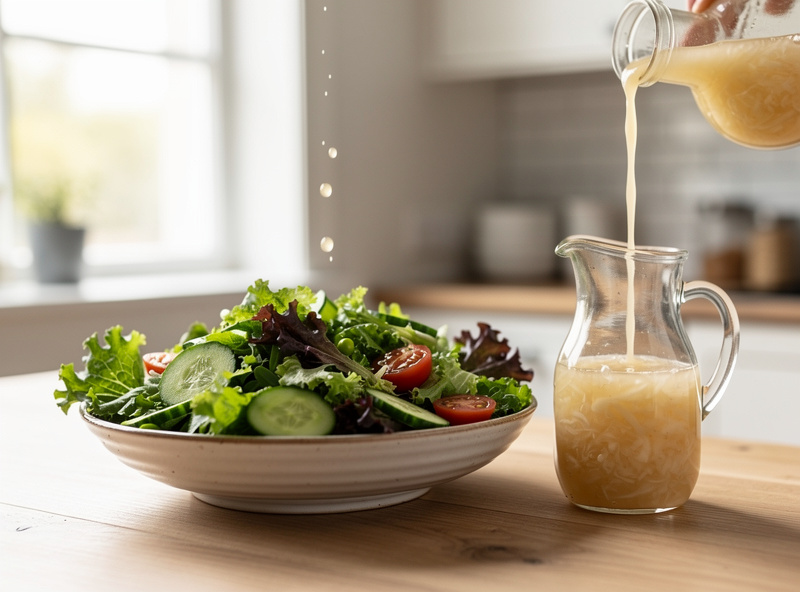
The brine is essentially a tangy, salty, umami-ish liquid seasoning. A splash brightens soups and stews the way a squeeze of lemon or a dash of vinegar would, but with more depth. I use it in salad dressings in place of some of the vinegar, stir a spoonful into mashed potatoes or bean dishes, deglaze a pan with it, or add it to a Bloody Mary–style drink. Because it’s already salty and acidic, it does two jobs at once — taste as you go and you’ll often find you need less added salt and acid elsewhere.
2. A starter culture for your next batch
This is the fermenter’s favorite trick. A little leftover brine is full of active Lactobacillus, so adding a splash to a new batch of vegetables — a process called back-slopping — gives the next ferment a head start by seeding it with an established, vigorous culture. It can help a new ferment get going faster and more reliably, especially in cooler conditions or with vegetables that ferment slowly. I keep the last bit of brine from a good batch specifically for this. It’s the same continuous-culture logic I use across my whole fermentation bench.
3. A quick-pickle and marinade base
Don’t waste good brine — reuse it. Drop sliced cucumbers, radishes, or onions into leftover sauerkraut juice for a fast fridge quick-pickle that picks up the tang in hours. It also makes a punchy marinade for meat or tofu, where the acidity helps tenderize and the salt seasons right through. Think of a jar of finished brine as a second, free product from every batch of kraut.
4. The base of a savory drink
If you do want to drink it, the traditional approach treats kraut juice as a tart, refreshing tonic rather than something you knock back by the glass. A measure of brine topped up with cold water, maybe with a squeeze of lemon, a few cracks of black pepper, or a splash of tomato juice, makes a genuinely pleasant sour drink — think of it as a homemade, savory alternative to a sharp soda. In Central and Eastern Europe, where kraut culture runs deep, this kind of brine drink has a long history at the table. I’ll make one on a hot day after working in the garden, diluted well, because the saltiness and tartness are oddly satisfying when you’re warm. The key word is diluted: this is a seasoning-strength liquid, so it shines as a base, not as a full glass on its own.
5. Don’t waste the dregs of any ferment
The same logic extends across the whole fermentation bench. The brine from a jar of lacto pickles, fermented carrots, or kimchi is just as useful as kraut brine — each carries its own flavor and its own live culture. I keep a rotating little collection of “finished brines” in the fridge and reach for whichever one suits the dish: kraut brine for European cooking, kimchi brine for anything that wants heat and funk. Treating these liquids as ingredients rather than waste is one of those small habits that quietly makes a fermenting kitchen more economical and more flavorful at the same time.
Sauerkraut juice vs store-bought “shots”
You may have noticed bottled sauerkraut juice and fermented “wellness shots” appearing on shop shelves, often with a premium price and a lot of marketing. Here’s the honest comparison from someone who makes the stuff: the brine left in your own jar of live, unpasteurized kraut is the same thing, for free, and it’s often better because it hasn’t been pasteurized. Many commercial bottled juices are heat-treated for shelf stability, which — exactly as with canned kraut — kills the live cultures that are part of the appeal. If you’re fermenting your own kraut, you already have the genuine article in your fridge. There’s no need to buy a bottled version, and your homemade brine carries the flavor of your cabbage, your salt level, and your spices.
About the “health benefits” you’ll read elsewhere
You’ll see a lot of strong health claims attached to sauerkraut juice online. I’m going to stay firmly in my lane here. Sauerkraut and its brine are traditionally valued foods that have been part of human diets for a very long time, and they’re live, fermented foods that contain lactic-acid bacteria. Researchers do study fermented foods, and it’s an active and interesting area. But the responsible way to talk about it is this: I’m not making any medical or therapeutic claims, and you shouldn’t take any from me. If you’re interested in the nutrition or potential health effects of fermented foods, that’s a conversation to have with a qualified health professional and to read about from reputable medical sources — not from a fermentation blog.
What I’ll say plainly is the food-honest version: sauerkraut juice is a tasty, traditional, live-fermented liquid that’s enjoyable in cooking and, for many people, pleasant to sip in small amounts. Treat it as food and flavor — which is exactly what it is — and you can’t go wrong.
A practical note on salt
One thing worth flagging honestly: sauerkraut juice is salty, because it carries the 2 to 2.5% salt the kraut was fermented at. That’s completely normal and part of what makes it a good seasoning, but it does mean it’s a concentrated, salty liquid — so if you’re using it as a drink rather than a seasoning, a small splash diluted in water is the sensible, palatable way to do it, the same way you’d never glug straight pickle brine. Used as a seasoning in cooking, that saltiness is a feature: just account for it and add less salt elsewhere.
How to save your brine
When I finish a jar of kraut, I strain off the remaining brine into a clean small jar and keep it in the fridge, where its acidity keeps it stable for a good while. Labeling it helps — past me has definitely mistaken a jar of kraut brine for something else. A set of small glass storage jars is perfect for stashing brine, and a little kitchen funnel makes pouring it off cleanly far less messy. Once you start saving it, you’ll wonder why you ever tipped it down the sink.
Disclosure: the product links above are Amazon affiliate links. I may earn a small commission if you buy through them, at no extra cost to you. I only recommend kitchen gear I actually use. And to repeat the important part: this article is about flavor and cooking, not health — nothing here is medical advice.
So the real answer to “is sauerkraut juice worth keeping?” is an emphatic yes — as a cook. It’s a free, concentrated, sour-savory seasoning, a reliable starter for your next ferment, and a quick-pickle base, all from a liquid most people pour away. For the food it came from, see my full homemade sauerkraut guide and, if you want to keep both kraut and brine at their best, my notes on how to store sauerkraut.
Related Guides
- Homemade Sauerkraut: The Complete Guide from Cabbage to Crock
- How to Store Sauerkraut: Fridge, Cellar, and Long-Term Keeping
- Sauerkraut Salt Percentage: 2% vs 2.5% vs 3%
- More fermentation guides on FermentFoundry

About Kenny Nyhus Fadil
A home fermenter documenting brines, bubbles, and the occasional moldy tragedy.