How Long Does Kimchi Last? Safe Sour vs Actually Spoiled

The question I get more than any other about kimchi is some version of “is this still okay to eat?” — usually about a jar that has been pushed to the back of the fridge for a few months and now smells sharp and looks darker than it did. The short answer is reassuring: properly made kimchi does not really “go bad” in the way fresh food does. It is a preserved, acidified ferment, and it stays safe to eat for a long time. What changes is the flavour and texture, and learning to read those changes is what tells you when to eat a jar fresh, when to cook with it, and on the rare occasion when something has actually gone wrong, when to toss it.
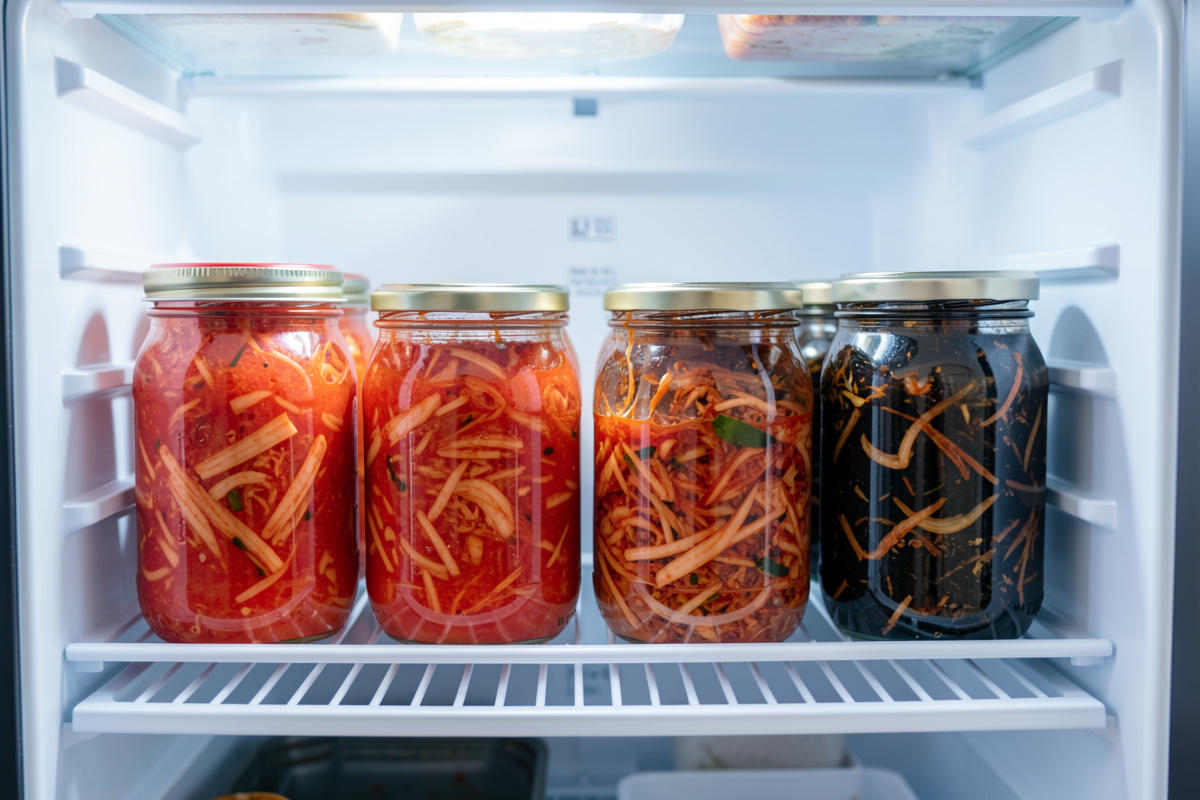
I keep multiple kimchi going at any time — a fresh jar and an aged jar of baechu, usually a kkakdugi on a different cycle, and a summer mul kimchi — so I am constantly tasting kimchi across its whole life. This guide is what years of that has taught me about how long kimchi lasts, how it changes, and how to tell safe sour from actual spoilage.
How Long Kimchi Actually Lasts
Refrigerated at a steady 2-5 C, standard cabbage kimchi (baechu) keeps for 4-6 months and remains perfectly safe well beyond that — many Korean households age kimchi for a year or more deliberately. Cubed radish kimchi (kkakdugi) keeps in the same 4-6 month range. Water kimchi (mul kimchi), which is brine-based and lighter, has a shorter useful life of 2-3 months before the broth turns flat. Cucumber kimchi (oi sobagi) is the exception — it is a fresh-eating kimchi best within 2-3 weeks because cucumber goes soft quickly.
The reason kimchi lasts so long is the same reason any lacto-ferment does: the lactobacillus bacteria drive the pH down into the acidic range (well below the 4.6 pathogen safety threshold), and that low-pH, salted, anaerobic environment is hostile to the organisms that cause food to spoil or to make you sick. Kimchi is not refrigerated to keep it safe — the acidity does that. It is refrigerated to slow the fermentation down so it does not race past the flavour you want.
How Kimchi Changes as It Ages
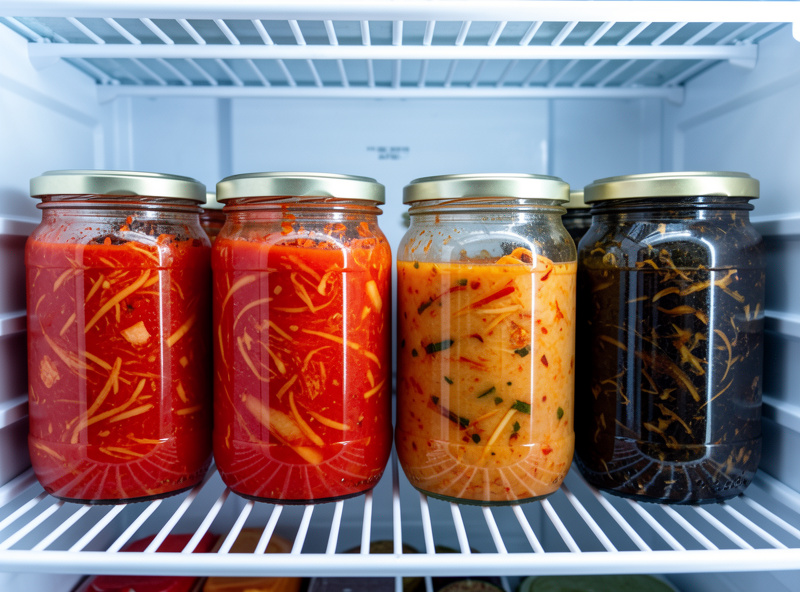
Kimchi has a life cycle, and every stage is useful for something different. In the first week or two, kimchi is young: crunchy, bright, lightly tangy, with the fizzy Leuconostoc character still present. This is side-dish kimchi — eaten straight, with rice, with eggs. From roughly one to three months, it hits a balanced middle: the sourness deepens, the texture softens slightly, the flavour integrates. This is the everyday eating window most people enjoy most.
From three months onward, kimchi becomes aged or “mukeunji” — markedly more sour, softer, darker, and deeply umami. Aged kimchi is not worse, it is different: this is cooking kimchi, the kind that makes the best kimchi jjigae (stew), kimchi fried rice, and kimchi pancake. The acidity that would be aggressive eaten raw becomes a flavour asset when cooked. I deliberately set aside a jar to age for stews precisely because young kimchi makes a thin, flat jjigae while aged kimchi makes a deep, sour, restaurant-grade one.
Two physical changes are normal and not signs of spoilage: the kimchi darkening in colour over months, and liquid rising and sometimes bubbling even in the fridge (slow fermentation continues at cold temperatures). A jar may hiss or fizz when opened after a long rest — that is CO2 from ongoing fermentation, not a problem. Open it slowly over the sink.
Safe Sour vs Actual Spoilage
This is the part worth getting right. The overwhelming majority of “has my kimchi gone bad?” cases are just kimchi that has aged into sourness — completely safe, just sharper than you remember. Sour smell, sour taste, soft texture, darker colour, and fizz are all normal aging, not spoilage. If a jar tastes too sour to eat straight, cook with it rather than throwing it away.
Genuine spoilage is uncommon in properly salted, submerged kimchi, but it does happen and it looks specific. The clear warning sign is mold: fuzzy, raised growth in any colour — white-and-fuzzy, pink, blue, green, or black — on the surface or the lid. Mold means discard the batch; do not try to scoop it off a soft, watery ferment because the threads run deeper than they look. A thin, flat, papery white film, by contrast, is usually kahm yeast — harmless, cosmetic, skim it off and push the kimchi back under the brine. Telling the two apart on sight is the single most useful safety skill in fermentation, covered in depth in kimchi mold vs safe white film.
The other genuine red flags are a slimy, ropey texture in the brine (rare, points to the wrong bacteria taking over, usually from under-salting), or an off-smell that is putrid or rotten rather than sour-funky. Sour and funky is kimchi. Rotten, sulphurous-in-a-bad-way, or chemically off is not. When in real doubt, the cost of a discarded jar is small; but in practice, with kept-submerged, properly salted kimchi, you will far more often be dealing with “too sour” than “spoiled.”
How to Make Kimchi Last Longer
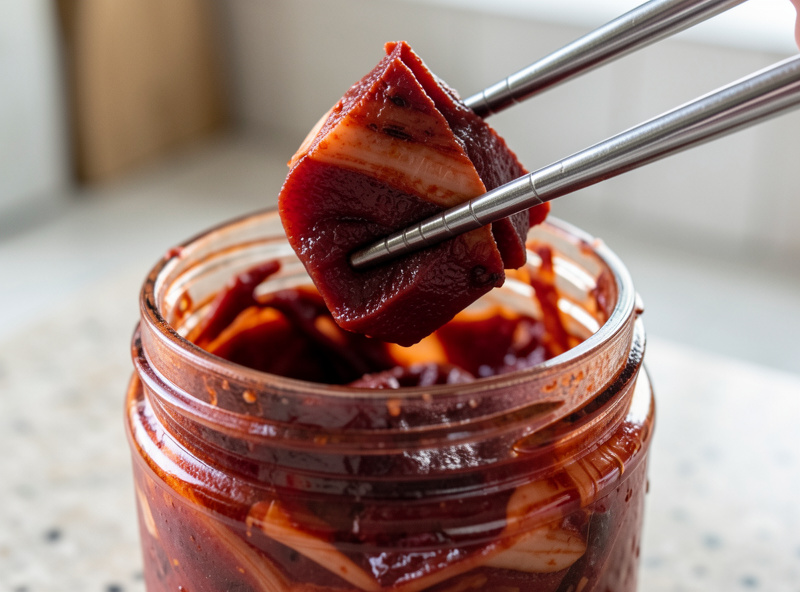
A few habits stretch kimchi’s good life considerably. Keep it submerged: press the kimchi down so the brine covers it after every serving, because the surface exposed to air is where kahm yeast and mold get a foothold. Use clean utensils every time — never a spoon that has been in your mouth or touched other food — to avoid introducing competing organisms. Keep the fridge cold and steady; the colder the storage (down toward 2 C), the slower the aging and the longer kimchi holds its character.
For very long storage, a dedicated cold drawer or a kimchi fridge (which Korean households use to hold a precise low temperature) keeps kimchi in its prime for many months. Most of us do not have one, but the principle transfers: the back-bottom of a normal fridge is the coldest, most stable spot, and that is where the jar meant for long aging should live. If you find yourself with more kimchi than you can eat before it over-sours, the answer is not to throw it out as it ages — it is to start cooking with it, where sour is an asset.
Can You Freeze Kimchi?
You can freeze kimchi, but with a caveat: freezing ruptures the cell walls, so thawed kimchi is soft and watery and loses all its crunch. Frozen-then-thawed kimchi is therefore only good for cooking — jjigae, fried rice, pancakes — never for eating fresh as a side. Given that kimchi already keeps for months in the fridge and aged kimchi is exactly what you want for cooking anyway, I rarely freeze it; the fridge does the job. If you do freeze, portion it into small bags so you can thaw only what a recipe needs.
Frequently Asked Questions
How long does kimchi last in the fridge?
Cabbage kimchi (baechu) and cubed radish kimchi (kkakdugi) keep 4-6 months refrigerated at 2-5 C and stay safe well beyond that. Water kimchi lasts 2-3 months; cucumber kimchi is best within 2-3 weeks. Kimchi grows more sour and soft over time rather than becoming unsafe.
How can I tell if kimchi has gone bad?
Genuine spoilage shows as fuzzy raised mold in any colour, a slimy ropey brine, or a putrid rather than sour smell — discard if you see these. Sour taste, soft texture, darker colour, and fizz are normal aging, not spoilage. A thin flat white film is usually harmless kahm yeast you can skim off.
Is it safe to eat very sour kimchi?
Yes. Sourness is just kimchi that has aged, and it is completely safe to eat as long as there is no mold or off-smell. If it is too sour to enjoy straight, cook with it — aged sour kimchi makes the best kimchi jjigae, fried rice, and pancakes, where the acidity becomes a flavour asset.
Why is my kimchi fizzy and bubbling in the fridge?
That is carbon dioxide from ongoing fermentation. Lactobacillus keeps working slowly even at fridge temperatures, producing CO2 and pressure. A jar may hiss when opened after a long rest. This is completely normal — open it slowly over the sink to manage the fizz.
Does kimchi need to be refrigerated?
Yes, for flavour control. The acidity keeps kimchi safe, but room temperature lets it ferment fast and over-sour within days. Refrigeration slows fermentation so the kimchi holds the flavour stage you want for months instead of racing past it in a week.
Further Reading on FermentFoundry
- Homemade Kimchi: The Complete Guide from Cabbage to Stew
- Kimchi Mold vs Safe White Film: Photo ID Guide
- Kkakdugi: Crunchy Korean Cubed Radish Kimchi Recipe
- Gochugaru: The Korean Chili Flakes That Make or Break Your Kimchi

About Kenny Nyhus Fadil
A home fermenter documenting brines, bubbles, and the occasional moldy tragedy.
Keep Bubbling
Gochugaru: The Korean Chili Flakes That Make or Break Your Kimchi
Easy Napa Cabbage Kimchi Recipe for Beginners (Step-by-Step)