How to Sterilize Fermentation Equipment (and When Not To)

Here is the part most fermentation guides get wrong: you do not actually need to sterilize fermentation equipment the way you would for canning. Clean equipment, not sterile equipment, is what a wild ferment needs — hot soapy water and a good rinse handles the vegetable ferments, because the salt and the dropping pH do the real microbial control. Sterilizing matters far more for the low-acid, sealed worlds of kombucha bottling and vinegar, where you are protecting a culture rather than relying on salt.
I run a fermentation room with crocks, jars, weights, airlocks, bottles, and a pH meter, and I clean all of it constantly — but I only truly sanitize a fraction of it. This guide draws the line clearly: what just needs washing, what needs sanitizing, and the methods I actually use, from boiling water to a no-rinse brewing sanitizer. Knowing which is which saves effort and prevents the real mistakes.
Clean vs Sanitized vs Sterile: The Distinction That Matters
These three words are not interchangeable, and conflating them is the root of most equipment confusion. Cleaning removes visible soil and food residue with soap and water. Sanitizing reduces microbes on an already-clean surface to a safe level. Sterilizing kills essentially everything, which takes sustained heat or pressure and is the canning standard, not the fermentation standard.
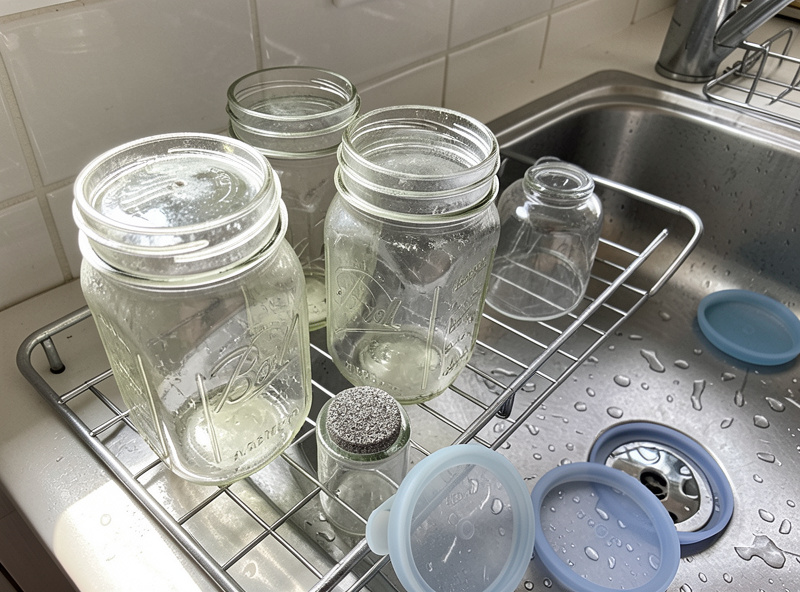
For lacto-fermented vegetables, clean is the goal. You are deliberately inviting the wild Lactobacillus already on the cabbage to take over, and the 2 to 2.5 percent salt brine plus the pH dropping past 4.6 toward 3.5 is what suppresses anything harmful. A sterile jar would not help — the first handful of cabbage reintroduces the very microbes you want. So you wash thoroughly, rinse off all soap residue (soap can stall a ferment), and let it air dry.
When Sanitizing Genuinely Matters
Sanitizing earns its place wherever you are protecting a specific culture or bottling a low-acid product. Kombucha second-ferment bottles, vinegar vessels, and anything that holds a finished, less-acidic liquid all benefit from a sanitized surface because there is no aggressive salt brine doing the defending. A stray mold spore in a kombucha bottle has far more opportunity than one in a 3 percent pickle brine.
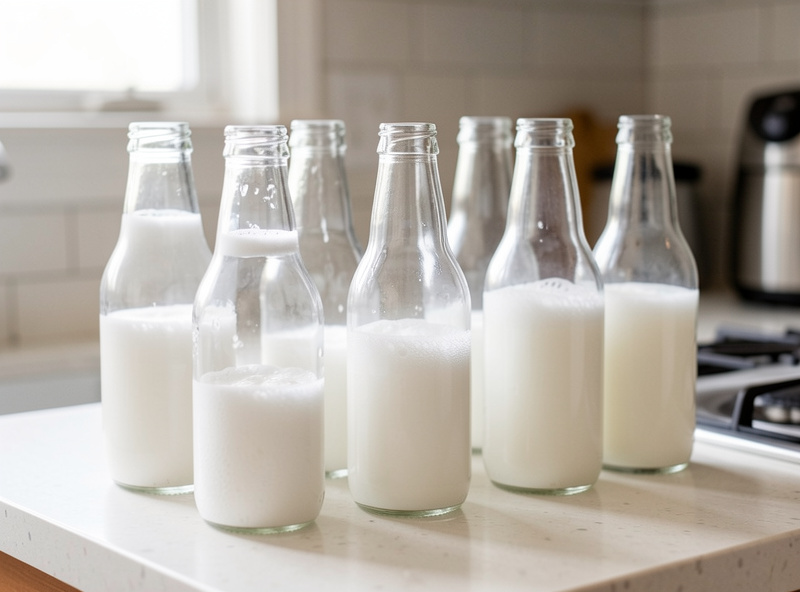
This is where I reach for a proper sanitizer. For bottles and brewing gear I use a no-rinse brewing sanitizer — the acid-based kind homebrewers use — because it sanitizes on contact and needs no rinse that could reintroduce contamination. A bottle brush set does the cleaning first, because sanitizer only works on a surface that is already clean — it cannot penetrate a film of residue.
The Methods I Actually Use
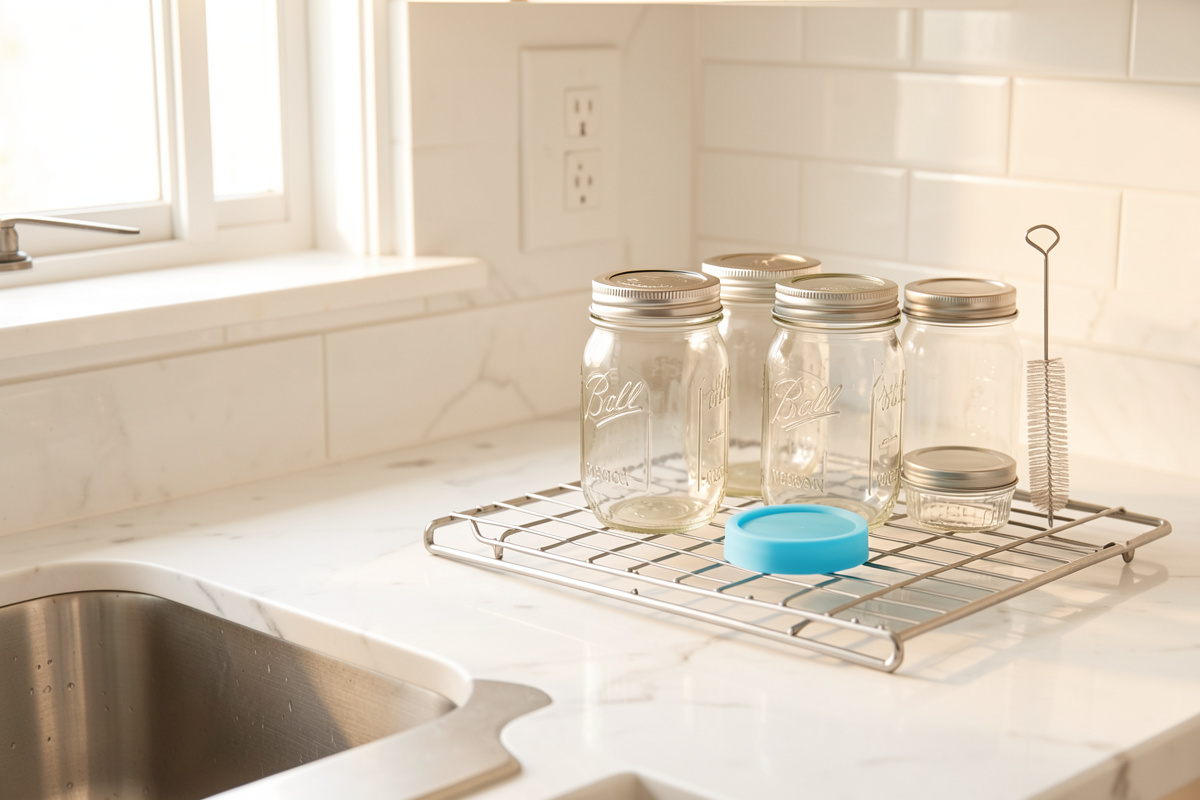
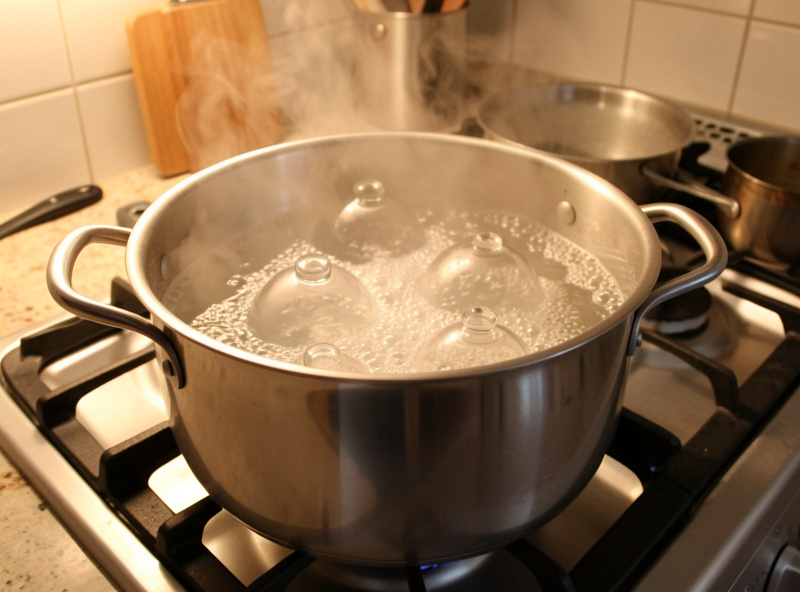
For everyday jars, weights, and airlock lids: hot water, dish soap, a thorough scrub, and a rinse until no soap remains, then air dry on a rack. That is genuinely it for vegetable ferments. Boiling water is a useful step up when I want extra reassurance on a glass weight or a small tool — a few minutes in a rolling boil sanitizes heat-safe glass and stainless without any chemicals.
For bottles and kombucha gear, the routine is clean then sanitize: brush and wash first, then either the no-rinse sanitizer or a hot run through the dishwasher’s sanitize cycle for dishwasher-safe glass. I avoid two things. I do not soak silicone airlock valves or plastic airlock parts in boiling water, which warps them — warm soapy water and a rinse is right for those. And I never use scented or antibacterial dish soap on anything that touches a culture, because the residue can carry into the next batch.
Wood is the one material that needs its own rule. A wooden tamper or spoon cannot be boiled or soaked in sanitizer without damage, so I wash it in hot soapy water, rinse, and dry it fully — trapped moisture in wood is its own problem. For the same reason I keep dedicated tools for fermenting rather than borrowing the garlic-and-onion cutting board, so off-flavours and stray oils do not migrate into a batch.
Water quality matters more than people expect, and it ties straight into the rinse step. Chlorinated tap water can stall a young vegetable ferment, so if your municipal supply is heavily chlorinated, the same water you would let sit out or filter for the brine is the water worth using for the final rinse on jars and weights. It is a small thing, but a freshly washed jar rinsed in heavily chlorinated water and used immediately is a needless way to slow the first crucial days of a ferment. For sanitized brewing gear the no-rinse sanitizer sidesteps this entirely, which is part of why brewers favour it.
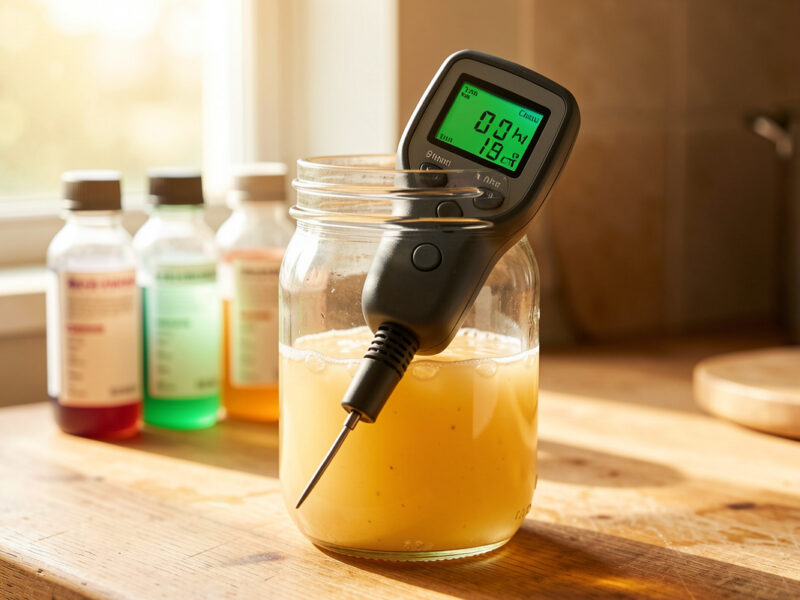
The pH meter deserves a note of its own, because it is the one piece of gear you should never sanitize aggressively. The glass electrode is fragile and chemically sensitive; you rinse the probe in clean or distilled water between readings and store it wet in storage solution, never boil it, never scrub it, and never soak it in sanitizer. The pH meter buying guide covers probe care in full. Treating a probe like a jar is one of the fastest ways to wreck an otherwise good meter, and a drifting probe quietly undermines every safety reading you take afterward.
The Mistakes That Actually Cause Trouble
The failures I see are rarely about insufficient sterilization. They are soap residue stalling a ferment, a dirty bottle contaminating a kombucha second ferment, cross-contamination from a tool used for something pungent, and people stressing about sterilizing a jar while ignoring the weight that lets cabbage float into the air. Get the priorities right: clean everything well, sanitize what holds low-acid liquid, keep food submerged, and let salt and pH do the heavy lifting they are designed to do.
Match the effort to the risk. A vegetable ferment defended by salt and acid forgives a merely clean jar; a kombucha bottle or a vinegar vessel does not. Once you internalise that one distinction, equipment prep stops being a chore you over-think and becomes a quick, correct habit.
Some links above are Amazon affiliate links; if you buy through them I may earn a small commission at no extra cost to you. I only point to gear I actually use in my own fermentation room.
Frequently Asked Questions
Do I need to sterilize jars before fermenting vegetables?
No. Vegetable ferments need clean jars, not sterile ones. The salt brine and the pH dropping past 4.6 toward 3.5 control microbes, and the vegetables reintroduce the wild Lactobacillus you actually want. Wash with hot soapy water, rinse off all soap, and air dry.
When does sanitizing actually matter in fermentation?
Whenever you protect a specific culture or bottle a low-acid product. Kombucha second-ferment bottles and vinegar vessels benefit from sanitizing because no aggressive salt brine is defending them. A no-rinse brewing sanitizer on already-clean surfaces is the simplest reliable method.
Can I just use boiling water to sanitize fermentation gear?
Yes, for heat-safe glass and stainless steel. A few minutes in a rolling boil sanitizes without chemicals. Do not boil silicone valves or plastic airlock parts, which warp; wash those in warm soapy water and rinse instead.
Why did soap stall my ferment?
Soap residue left in a jar can inhibit the Lactobacillus that drives the ferment. Always rinse until no soap remains, and avoid scented or antibacterial dish soaps on anything that touches a culture, since their residue carries into the next batch.
How do I clean wooden fermentation tools?
Wash wooden tampers and spoons in hot soapy water, rinse, and dry them completely, since trapped moisture is a problem for wood. Do not boil or soak them in sanitizer, which damages the wood. Keep dedicated fermenting tools to avoid carrying over pungent flavours.
Further Reading
- Fermentation Equipment: The Complete Home Brewer Toolkit
- Crock vs Jar vs Vacuum Bag: Which Fermentation Vessel Wins
- Fermentation Airlock vs Silicone Lid: Which to Use
- Kahm Yeast: What It Is, How to Prevent It, When It Is Safe
- Kombucha pH Guide: Safe Levels, Timeline, and Fixes

About Kenny Nyhus Fadil
A home fermenter documenting brines, bubbles, and the occasional moldy tragedy.
Keep Bubbling
Fermentation Airlock vs Silicone Lid: Which to Use
Smart Fermentation Chamber: Temperature and pH Monitoring with Home Automation Sensors