How to Keep Fermented Vegetables Crunchy: Texture Science

To keep fermented vegetables crunchy, you protect their pectin: ferment cool (60–68°F), keep salt at 2.5–3.5% by weight, add a calcium or tannin source, and use produce within a day or two of harvest. Pectin is the cell-wall glue that holds crunch, and pectinase enzymes are what dissolve it.
That single sentence took me about three soft, disappointing batches to actually believe. Texture is the part of vegetable fermentation almost nobody plans for — people obsess over salt and flavor, then open a jar of fermented carrots on day six and find rubber. Crunch isn’t luck and it isn’t one trick. It’s pectin chemistry, and once you understand the four dials that move it, you can keep nearly any vegetable firm through a full ferment. This is the all-vegetable version of the texture problem; for the cucumber-specific deep dive I keep a separate piece on the tannin trick for crunchy pickles.
What Actually Makes Fermented Vegetables Go Soft?
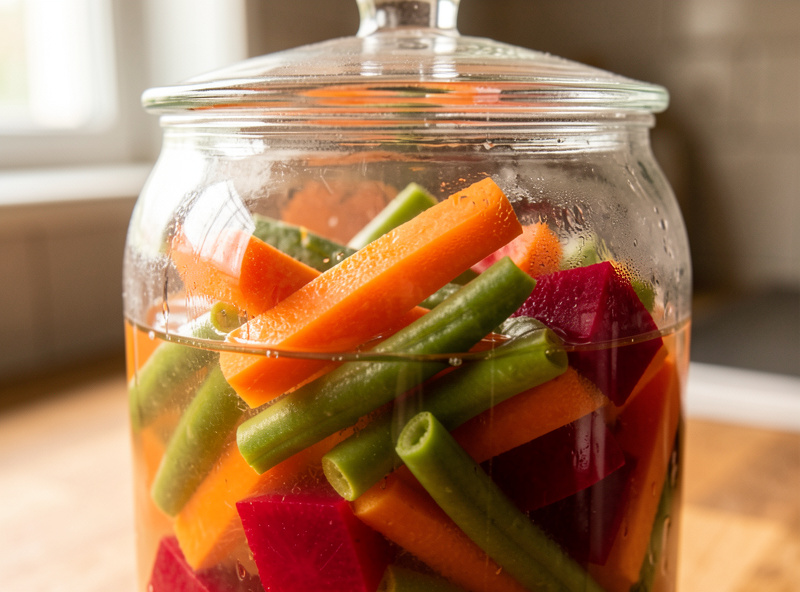
Vegetables go soft because pectinase enzymes break down pectin, the carbohydrate that cements plant cell walls together. Pectinase rides in on the produce itself and on surface bacteria, peaks around days 3–5 of a room-temperature ferment, and turns crisp cell walls into mush. Salt and acidity slow it; they don’t stop it.
Here’s the thing that took me too long to accept: softening is biological, not a fermentation “failure.” A jar can have textbook pH, perfect clear brine, zero off-smells, and still collapse into slush by day five. The lactic acid bacteria did their job. The pectinase just did its job too. On my pH meter a soft batch and a crunchy batch can read identically at 3.4 — texture and acidity are separate problems with separate solutions, and that’s the single most useful idea in this whole article.
Temperature is the master throttle. Pectinase runs fastest at the warm end of the LAB range (75–80°F) and crawls down near 60°F. Every fermenter I know who fights softness in summer is really fighting kitchen temperature. The fix is rarely more salt; it’s a cooler shelf.
How Salt Percentage Affects Crunch
Salt firms vegetables osmotically: it pulls water out of cell vacuoles and stiffens the tissue, and it slows the bacteria that produce pectinase. For crunch-critical vegetables I run 3–3.5% brine by weight rather than the 2–2.5% I use for sauerkraut, where I actually want some softening. Below about 2% you lose both the firming effect and the safety margin.
I weigh every gram on a 0.1 g kitchen scale and never eyeball it — salt is the one number in fermentation where guessing costs you both texture and safety. The math is simple: brine percentage is grams of salt divided by total grams of water plus vegetables, times 100. For a quart jar of carrot sticks that usually lands around 20–25 g of salt. If you want the full breakdown of why these ratios matter, I lay it out in the salt percentage guide.
One caution: there’s a ceiling. Push past roughly 5% and you stall the LAB so hard the ferment barely sours, which is its own failure. The sweet spot for a firm, fully soured vegetable is that 3–3.5% band — high enough to firm and suppress pectinase, low enough to let Lactobacillus finish the job.
Does Calcium Chloride Keep Ferments Crunchy?
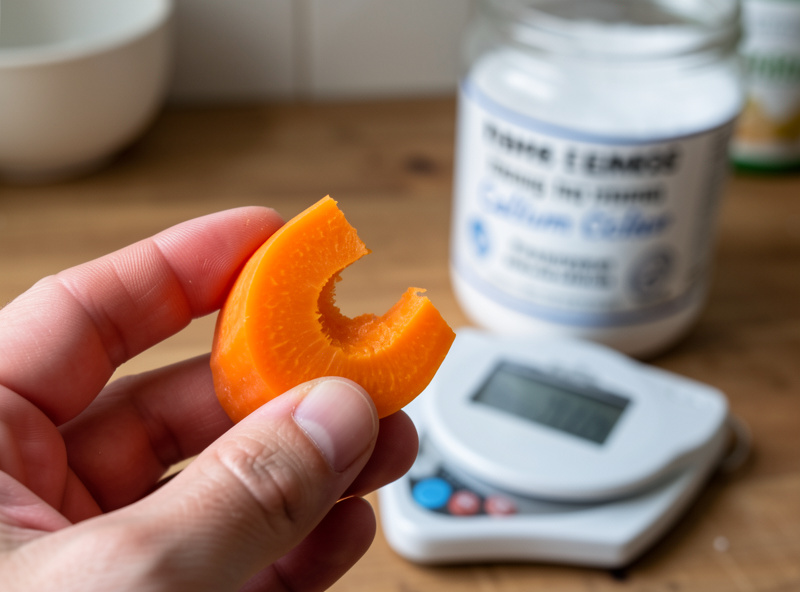
Yes — calcium chloride (sold as Pickle Crisp) is the single most reliable firming agent, used at about 1/8 teaspoon per quart jar. Calcium ions crosslink the pectin chains into a stronger gel that pectinase struggles to cut. It works on carrots, beans, beets, and giardiniera mixes, and unlike tannins it adds no flavor at all.
I keep a tub of Ball Pickle Crisp granules on the fermentation shelf for the batches where texture is non-negotiable — a mixed giardiniera going to a dinner, say, where soft cauliflower would be embarrassing. (Affiliate note: I earn a small commission if you buy through that link, at no cost to you.) A little goes a long way; one teaspoon firms eight quart jars. The crunch it produces is genuinely commercial-grade.
The honest caveat: some home fermenters prefer to avoid added calcium chloride and stick to natural tannins or just cool temperatures and fresh produce. Both paths work. I use the calcium when reliability matters more than purism and skip it when a slightly softer texture is fine. It is not a license to ignore the other three dials — calcium on a warm-fermented, week-old-produce batch still underperforms cool calcium on fresh.
How Do Tannins Keep Vegetables Crisp?
Tannins keep vegetables crisp by binding to and denaturing pectinase enzymes, shutting down the softening reaction before it starts. One washed grape leaf, oak leaf, or 1/4 teaspoon of loose black tea per quart jar is enough. They’re the traditional, plant-based answer to the same problem calcium solves chemically.
Tannins are strongest on cucumbers, where pectinase loads are highest, which is why the grape-leaf tradition grew up around pickles specifically. On carrots and beans the effect is real but smaller — those vegetables start firmer and shed less pectinase. When I add tannins to a mixed lacto jar I lean on black tea because it’s always in the cupboard; a single pinch of loose leaf disappears into the brine with no tea flavor at typical levels.
You can stack tannins and calcium, but you rarely need both. For most non-cucumber vegetables I’d reach for cool temperature plus a touch of calcium first, and save the tannin step for cucumber-heavy jars. The full grape-leaf-versus-tea-versus-oak comparison lives in my crunchy pickles guide — there’s no reason to repeat that whole table here.
Why Fresh Produce Matters More Than Any Additive
Freshness beats every additive because pectinase activity climbs the longer a vegetable sits after harvest. A carrot pulled this morning has firm, intact cell walls; a week-old supermarket carrot has already started its own enzymatic breakdown before it ever hits the brine. No amount of calcium fully rescues tired produce.
This is the mistake I made for an entire summer. I’d buy a big bag of carrots, ferment my way through it over two weeks, and could not understand why the first jars came out snappy and the last ones came out limp — same salt, same crock, same recipe. It wasn’t the method drifting; it was the carrots aging on my counter. The day I started fermenting produce within 24–48 hours of buying it, my texture-failure rate dropped to almost nothing. When the season lines up I pull cabbage and roots straight from the same garden-to-crock rotation I run for all my lacto vegetables, and garden-fresh produce is so firm it barely needs the other tricks.
Practical version: shop or harvest the day you ferment, trim any soft spots, and for root vegetables peel and cut just before they go in the jar. Cut surfaces oxidize and soften faster than intact tissue, so the gap between cutting and brining should be minutes, not hours.
Which Vegetables Stay Crunchy and Which Don’t
Not every vegetable holds crunch equally — it comes down to baseline pectin density and how much pectinase the vegetable carries. Dense roots like carrots and beets hold crunch easily; thin-walled, high-enzyme vegetables like cucumbers fight you the hardest. Knowing where a vegetable sits on that scale tells you how much intervention it needs.
| Vegetable | Natural Crunch-Holding | Best Crunch Strategy | Typical Brine % |
|---|---|---|---|
| Carrots | High | Cool ferment, fresh produce | 3% |
| Green beans | High | Whole, untrimmed ends, cool | 3.5% |
| Beets | High | Cube small, cool ferment | 3% |
| Radishes | Medium-High | Calcium or tannin optional | 3% |
| Cauliflower (giardiniera) | Medium | Calcium chloride, cool | 3.5% |
| Cucumbers | Low | Tannins essential, trim blossom end | 3.5% |
| Cabbage (kraut) | Softens by design | Not a crunch ferment | 2–2.5% |
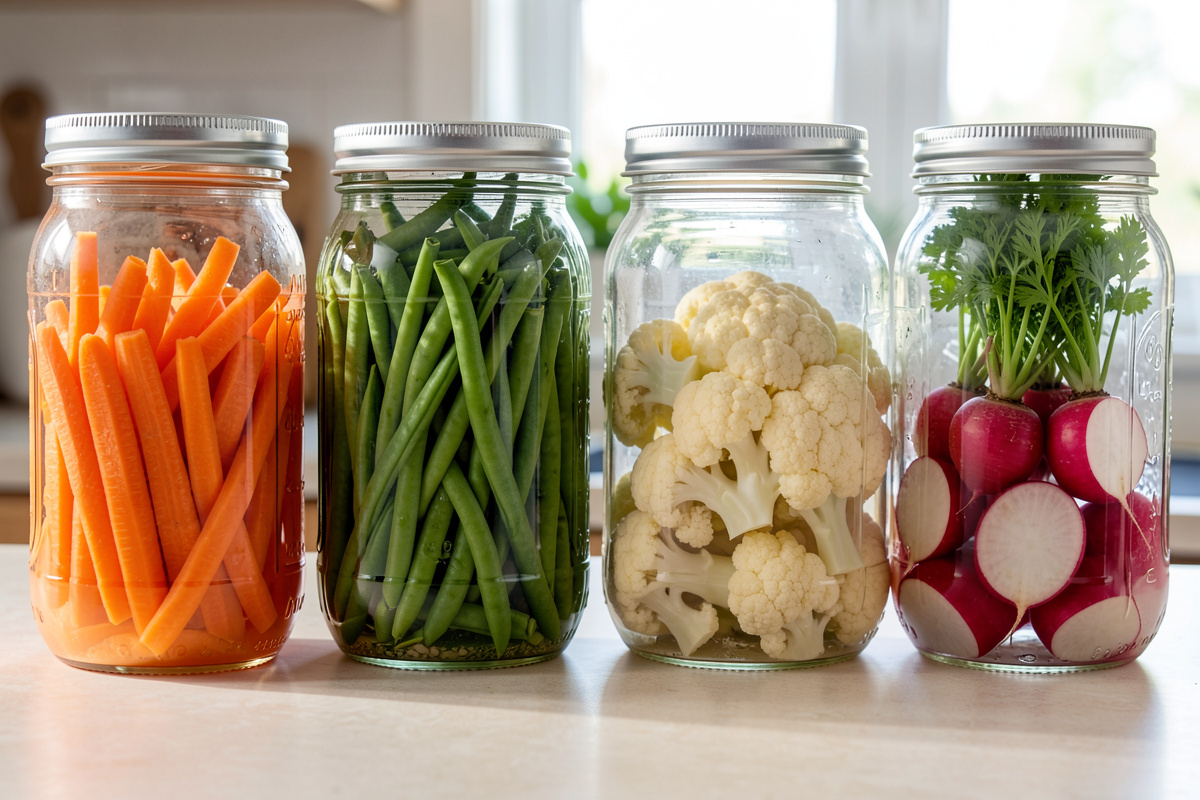
A few field notes behind that table, with recipes if you want to put each one into practice. Carrots are the easiest place to start — my fermented carrots with ginger stay snappy on cool-shelf temperature alone. Dilly fermented green beans stay snappy longest when you leave them whole and don’t trim both ends — every cut surface is an entry point for softening. Beets hold crunch beautifully but bleed color, so cube them small and expect pink brine; the method is in my fermented beets with horseradish recipe. Cauliflower in a fermented giardiniera is the one mixed-vegetable component most likely to go soft on you, which is exactly where I reach for calcium chloride. Softer-textured ferments like lacto-fermented salsa don’t need any of this — there a little breakdown is welcome. And cabbage destined for sauerkraut is the deliberate exception — there I want the controlled softening, so none of this applies.
Putting It Together: My Crunch Protocol
The reliable routine is four dials, in order of impact: ferment cool (60–68°F if you can), use produce within 24–48 hours of harvest, salt to 3–3.5% by weight, and add calcium chloride or tannins for the vegetables that need it. Get the first two right and you’re most of the way there before any additive enters the jar.
My actual bench process looks like this. I weigh the vegetables and water together, calculate salt to 3% on the 0.1 g scale, and dissolve it fully before pouring. I pack tightly under a glass weight so everything stays below the brine — exposed vegetable tops soften and grow kahm. For mixed jars with cauliflower or older produce I tap in 1/8 teaspoon of Pickle Crisp. Then the jar goes on the coolest shelf I have, not the warm kitchen counter, and I taste-test for crunch starting around day four. A good fermented carrot should snap when you bend it and crack when you bite — if it bends without breaking, the texture has already started to go and the next batch needs a colder shelf or fresher produce.
If I were starting today with one vegetable to build confidence, I’d ferment carrot sticks: high natural crunch, forgiving, and fast feedback. Nail those, then move to a mixed giardiniera where calcium earns its place, and finally tackle cucumbers, which are the texture boss fight. For the gear and shelf setup behind all of this, the complete lacto-vegetable guide ties the whole rotation together.
Frequently Asked Questions
Why are my fermented vegetables soft and mushy?
Softness comes from pectinase enzymes breaking down pectin in the cell walls. It is biological, not a fermentation failure, so a jar can have perfect pH and still go soft. Ferment cooler, use fresher produce, and add calcium or tannins.
What is the best salt percentage to keep ferments crunchy?
Run 3 to 3.5 percent salt by weight for crunch-critical vegetables like carrots, beans, and giardiniera. That is higher than the 2 to 2.5 percent used for sauerkraut, where some softening is wanted. Stay below 5 percent so the bacteria still work.
Does calcium chloride really keep fermented vegetables crisp?
Yes. Calcium chloride, sold as Pickle Crisp, is the most reliable firming agent at about one-eighth teaspoon per quart jar. Calcium ions crosslink pectin into a stronger gel that resists enzymatic breakdown, and it adds no flavor at all.
What temperature keeps fermented vegetables crunchy?
Ferment at 60 to 68 degrees Fahrenheit. Pectinase, the softening enzyme, runs fastest at 75 to 80 degrees and slows dramatically near 60. A cooler shelf is usually the single biggest fix for summer softness, more than any additive.
Do I need grape leaves for non-cucumber vegetables?
Usually no. Tannins from grape leaves, oak leaves, or black tea matter most for cucumbers, which carry the highest pectinase load. Carrots, beans, and beets stay firm mainly through cool temperature, fresh produce, and optional calcium chloride.
Why do fresh vegetables stay crunchier than store-bought?
Pectinase activity climbs the longer a vegetable sits after harvest, so a week-old carrot has already begun breaking down before it hits the brine. Fermenting produce within 24 to 48 hours of harvest keeps cell walls intact and texture firm.
Related Guides
- Lacto-Fermentation for Vegetables: The Complete Home Guide
- Lacto-Fermented Pickles That Stay Crunchy: The Tannin Trick
- Sauerkraut Salt Percentage: 2% vs 2.5% vs 3%
- Fermented Carrots Recipe with Ginger
- Fermented Giardiniera Recipe: Crunchy Lacto Mix

About Kenny Nyhus Fadil
A home fermenter documenting brines, bubbles, and the occasional moldy tragedy.
Keep Bubbling
Fermented Pickle Brining and Curing-Chamber Aging: Where Two Traditions Overlap
How to Lacto-Ferment Garlic: Honey vs Brine Methods