Fermented Giardiniera Recipe: Crunchy Italian Mix

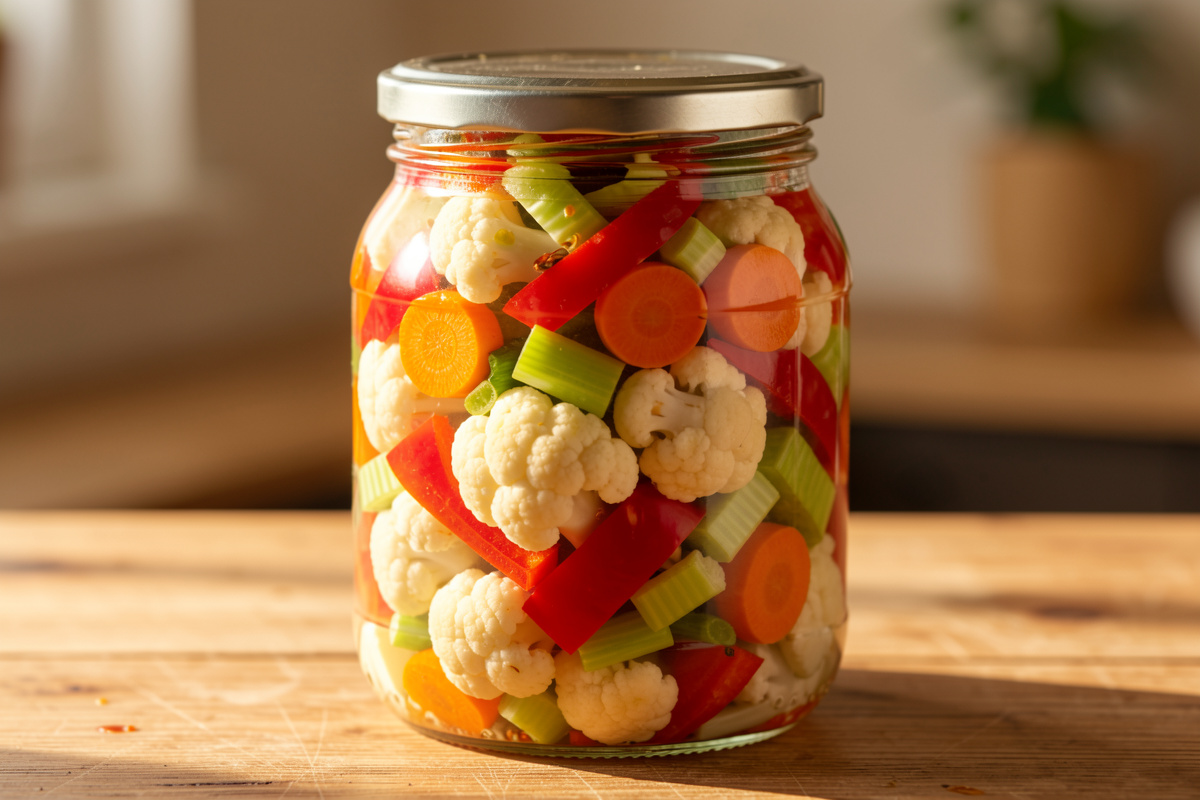
Fermented giardiniera, the Italian-American mix of cauliflower, carrots, celery, and peppers, ferments in a 3 to 3.5% brine over 7 to 14 days into a crunchy, tangy, mildly spicy condiment. It is the showpiece of the lacto-vegetable shelf, and because it mixes firm and soft vegetables in one jar, the brine strength and the cut sizes matter more than in a single-vegetable ferment. On my meter a finished jar settles around pH 3.5 to 3.8.
I make giardiniera at the end of summer when there is a bit of everything left in the garden, because it is the ferment that uses up odds and ends beautifully. The classic version is oil-packed and vinegar-brined; this is the live lacto take, which keeps every vegetable snappy and builds a far more complex sourness. Here is how to balance the mix so nothing turns to mush.
What Vegetables Go in Fermented Giardiniera?
Classic giardiniera is cauliflower, carrots, celery, and bell or chili peppers, with optional additions like green beans, fennel, or pearl onions. The key is choosing firm vegetables that ferment at similar rates so the jar finishes evenly rather than with mushy celery next to raw cauliflower.
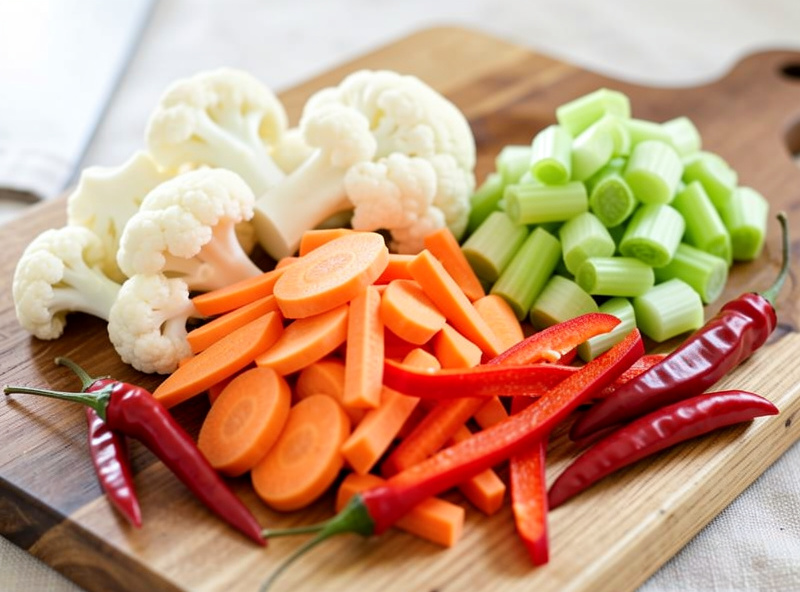
My standard mix by rough volume is about one-third cauliflower florets, one-third a blend of carrot coins and celery, and one-third peppers (a mix of sweet red and hot chili). Cut everything to a similar size, roughly 2 cm, so the brine works on them at the same pace. Cauliflower and carrots are the sturdiest; celery softens fastest, so I cut it a little thicker. The same firmness logic that keeps my fermented green beans snappy applies here, just across a mixed jar.
Treat the recipe as a framework, not a fixed formula. At the end of a Swedish summer I build the jar around whatever the garden is finishing on, kohlrabi and turnip standing in for some of the cauliflower, a handful of green beans or a few radish coins for color and bite. The two things I keep constant are the firmness balance and the total weight, since the 3.5% brine is mixed to the water, not the vegetables. A few black peppercorns, a bay leaf, and a couple of garlic cloves per liter round out the aromatics without overwhelming the vegetables, and dialing the ratio of sweet pepper to hot chili is how I set the heat for whoever is going to eat it.
What Brine Strength Does Giardiniera Need?
Use a 3 to 3.5% brine for fermented giardiniera: 30 to 35 grams of non-iodized salt per liter of water. The mix leans toward the firmer, slower end of the salt scale because cauliflower and the dense vegetables benefit from a slightly higher salt that protects texture and keeps the ferment controlled.
I weigh the salt against the water on a 0.1-gram scale and dissolve it before pouring over the packed vegetables. Because giardiniera mixes vegetables with different densities, the higher 3.5% brine is insurance against the softest pieces over-softening before the firmest ones are done. For the full reasoning on why a half-percent of salt changes texture and speed so much, see my tested salt percentage guide. A grape leaf or a pinch of black tea tucked in adds tannins that firm the whole jar, the same trick I rely on for keeping lacto ferments crunchy.
How Long Does Giardiniera Take to Ferment?
Fermented giardiniera takes 7 to 14 days at 20 to 22°C, with most jars at their best around day 10. The cauliflower and carrots set the pace; they need the longer end to develop tang, while the peppers and celery come along faster. Taste from day 7 and refrigerate once the brine is sour and the cauliflower has lost its raw squeak but kept its bite.
Giardiniera holds its texture longer than a single soft vegetable because the firm components dominate. Once refrigerated, it keeps developing for weeks and arguably improves, the flavors marrying as the chili heat spreads through the milder vegetables.
| Vegetable | Cut size | Firmness after ferment | Notes |
|---|---|---|---|
| Cauliflower | 2 cm florets | Very firm | The backbone; sets the timing |
| Carrot | 1 cm coins | Firm, sweet | Adds color and crunch |
| Celery | 2.5 cm pieces (thicker) | Softens fastest | Cut larger to compensate |
| Bell + chili pepper | 2 cm strips | Tender | Carries the heat through the jar |
How Do You Keep Giardiniera Crunchy?
Keep giardiniera crunchy with the firmer 3.5% brine, a tannin source, cool fermentation under 22°C, and an early move to the fridge. Cut the softest vegetables larger and the firmest smaller so they finish together. The mistake is fermenting too long and warm, chasing more sourness until the celery goes limp.
The first giardiniera I made, I cut everything the same tiny size and let it run two warm weeks; the cauliflower was great but the celery and peppers turned soft. Now I size by firmness and pull the jar earlier. A glass weight keeps the lighter pieces, especially the peppers, from bobbing above the brine where they would oxidize and invite kahm yeast.
How Do You Serve Fermented Giardiniera?
Serve giardiniera as an antipasto, on sandwiches (it is the classic Chicago Italian beef topping), chopped into salads, or alongside cheese and cured meats. The crunch and acidity cut through rich, fatty foods, which is exactly why it belongs next to charcuterie and sharp cheese.
I keep a jar specifically for cheese boards and to chop into a quick relish for grilled sausage. The brine, like every vegetable ferment, becomes a seasoning liquid for dressings. This jar is the natural neighbor to the rest of the lacto-vegetable shelf, sharing the same brine math and crunch tricks as the single-vegetable jars but delivering all of it in one colorful mix.
Is Fermented Giardiniera Safe to Eat?
Fermented giardiniera is safe once the brine acidifies below pH 4.6, the recognized botulism floor, and a healthy lacto jar drives well past it to pH 3.5 to 3.8 within the first week. The reliable safety levers are the same across every vegetable ferment: a correct 3 to 3.5% salt brine, every piece held under the surface, and room-temperature fermentation away from direct sun.
A mixed jar floats more than a packed single vegetable, so the one thing I watch hardest is submersion; an exposed pepper or floret poking above the brine is where trouble starts. I cross-check borderline jars on a calibrated pH meter, but you do not need one to ferment safely, only to satisfy curiosity. As always, a thin flat white film is harmless kahm yeast to skim and push back under, while fuzzy, raised, colored growth (green, blue, black, or pink) is mold and means the whole jar goes in the bin. Trust your nose: a clean, sour, vegetal smell is exactly right, and anything rotten or sharply chemical is your signal to toss it.
Recommended Gear for Fermented Giardiniera
A mixed-vegetable jar floats more than a packed single-vegetable one, so weighting matters most here. A glass fermentation weight holds the lighter pieces under the brine, a 0.1-gram kitchen scale sets the 3.5% brine precisely, and a wide half-gallon mason jar gives the colorful mix room to pack loosely.
Disclosure: the product links above are Amazon affiliate links. If you buy through them I may earn a small commission at no extra cost to you. I only link gear I actually use.
Frequently Asked Questions
What vegetables can you use in fermented giardiniera?
The classic mix is cauliflower, carrots, celery, and bell or chili peppers. You can add green beans, fennel, pearl onions, or radish. Choose firm vegetables and cut the softer ones, like celery, a bit larger so the whole jar finishes at the same texture.
What salt ratio is best for giardiniera?
Use a 3 to 3.5% brine, which is 30 to 35 grams of non-iodized salt per liter of water. The slightly higher salt protects the texture of the mix and keeps the firmest vegetables like cauliflower from over-softening before the ferment finishes.
How long does fermented giardiniera take?
It takes 7 to 14 days at 20 to 22C, with most jars best around day 10. The cauliflower and carrots set the pace. Taste from day 7 and refrigerate once the brine is sour and the cauliflower has lost its raw squeak but kept its bite.
How do you keep giardiniera crunchy?
Use the firmer 3.5% brine, add a tannin source like a grape leaf or black tea, ferment under 22C, and refrigerate early. Cut the softest vegetables larger and the firmest smaller so they finish together rather than the celery going limp first.
Is fermented giardiniera the same as the jarred kind?
No. Most store giardiniera is vinegar-brined and oil-packed, not fermented. The lacto version uses a salt brine and live bacteria, so it stays raw and crunchy and develops a deeper, more complex sourness than the sharp one-note vinegar version.
How long does fermented giardiniera last?
Refrigerated, it keeps good quality for 4 to 6 months and often improves in the first few weeks as the flavors marry. Its acidity keeps it safe longer, but the texture slowly softens. Keep it submerged in its brine in a sealed jar.
Related Guides
- Lacto-Fermentation for Vegetables: The Complete Home Guide
- Fermented Carrots Recipe with Ginger
- Fermented Green Beans Recipe: Crunchy Dilly Beans
- Fermented Beets Recipe with Horseradish + Kvass
- Sauerkraut Salt Percentage: 2% vs 2.5% vs 3% Brine, Tested

About Kenny Nyhus Fadil
A home fermenter documenting brines, bubbles, and the occasional moldy tragedy.
Keep Bubbling
Lacto-Fermentation for Vegetables: The Complete Home Guide
Lacto-Fermented Salsa Recipe: Tangy, Probiotic, Fresh