Homemade Doenjang: Korean Soybean Paste Guide

Doenjang is Korean fermented soybean paste: cooked soybeans pounded into blocks called meju, aged until they grow their own wild culture, then submerged in brine for months until the liquid becomes soy sauce and the solids become doenjang. It is the deepest, slowest condiment I make, with a paste salt level around 12 to 14 percent and a cure that runs six to eighteen months. The reward is a savory, funky, profoundly umami paste that no store jar matches.
This is fermentation as a season-long relationship, not a weekend project, and it is the natural deep end of my fermented condiments guide. Doenjang is often compared to Japanese miso, and they are cousins, but the Korean process is meaningfully different in a way that matters for both flavor and technique. Here is how I make it, what makes it distinct, and the salt and aging numbers that keep it safe and delicious.
Doenjang Is Not Just Korean Miso
The most common misconception is that doenjang is simply miso made in Korea. The two share soybeans, salt, and time, but they part ways at the culture. Japanese miso is made by mixing cooked soybeans with grain koji that has been deliberately inoculated with Aspergillus oryzae, a controlled single-organism ferment. Traditional doenjang is wild: the meju blocks are left to catch and grow whatever the air and rice straw provide, chiefly Bacillus subtilis along with native molds. That wild, Bacillus-driven ferment is exactly what gives doenjang its stronger, funkier, more pungent character compared to the rounder sweetness of miso.
This difference is also why doenjang smells and tastes more assertive. Bacillus subtilis produces the same kind of compounds that drive Japanese natto’s powerful aroma, and a well-aged doenjang carries that deep, almost cheesy funk. I keep Aspergillus oryzae going for my miso rotation, but doenjang is where I let the wild process lead, which is both more traditional and, honestly, more forgiving for a paste meant to be bold. The full koji-versus-wild picture is worth understanding, and my koji fermentation guide lays out where each organism fits.
Step One: Making and Aging Meju
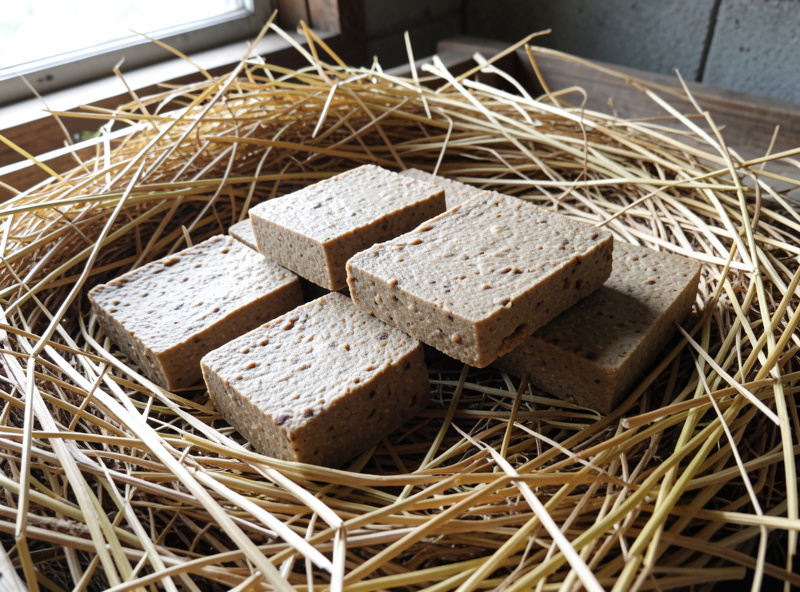
Everything starts with meju. I soak dried soybeans overnight, boil them until soft (several hours), then pound or mash them while warm into a dense paste and form that paste into firm bricks. These meju blocks are then dried and aged, traditionally hung in a warm room or set on rice straw, for several weeks to a couple of months. During this time the blocks develop a cracked, crusty exterior and grow a fuzzy white-to-grayish culture inside as Bacillus subtilis and wild molds colonize them. The straw is not decoration; it is the traditional inoculant, carrying the Bacillus that drives the ferment. This is the same hay-and-soil bacterium documented as the workhorse behind natto and other alkaline soybean ferments, which is exactly why meju is left open to the air rather than sealed in a jar.
This aging stage is where patience starts and where beginners get nervous, because meju is supposed to grow mold. White and grayish-green surface growth on aging meju is normal and expected; the block is meant to ferment dry and hard. What you do not want is soft, wet, slimy black rot, which means the meju stayed too moist and did not dry properly. The fix is airflow and the right humidity: meju needs to be dry enough to cure rather than putrefy. I keep mine in a warm, ventilated spot and accept that it will look and smell intensely funky. That funk is the future flavor.
Step Two: The Brine Cure and Two Condiments at Once
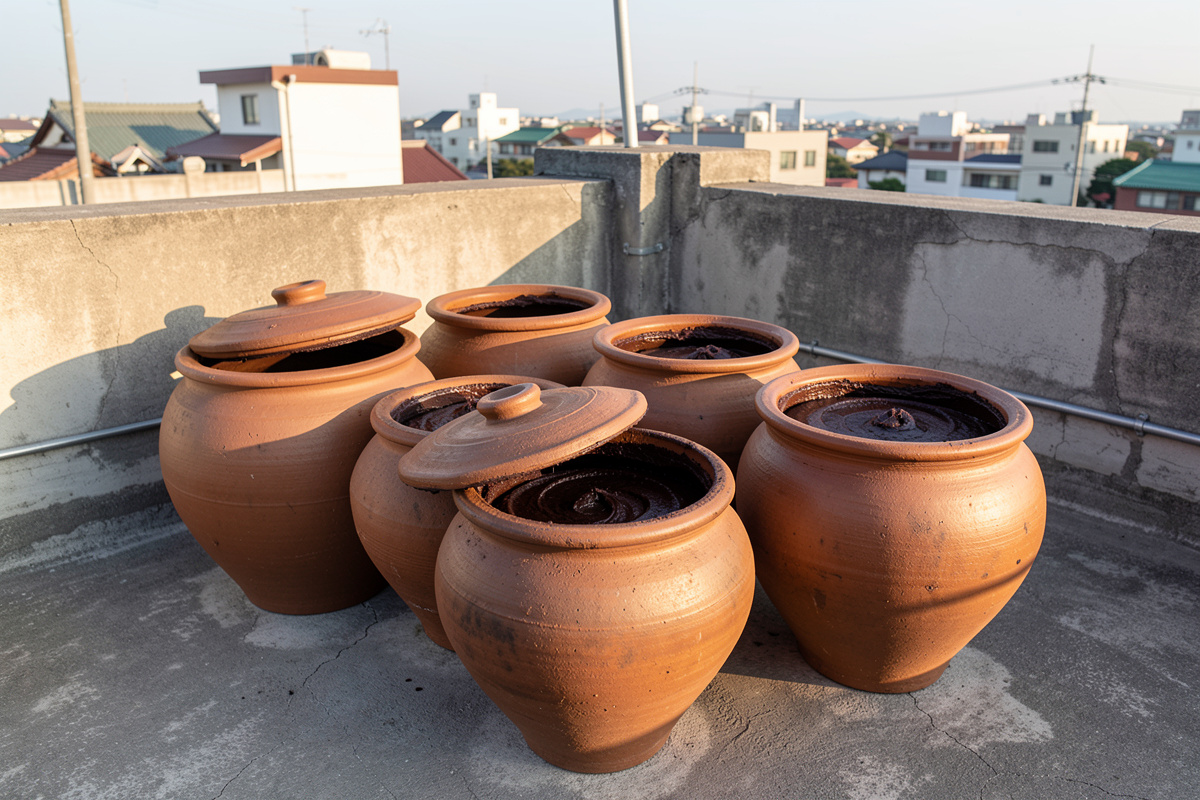
This is the elegant part of the Korean process: one ferment gives you two condiments. The aged meju blocks are rinsed, brushed clean, and submerged in a strong salt brine (traditionally around 18 to 20 percent salt) in an onggi crock, often with dried chilies and charcoal added by custom. The blocks then soak and ferment in that brine for one to three months. As they break down, soluble compounds leach into the liquid while the solids slowly disintegrate.
After this brine soak you separate the two products. The liquid, now dark and intensely savory, is strained off and becomes ganjang, Korean soy sauce, which is then often boiled and aged further. The softened solids are mashed, sometimes with a little of the brine added back to reach the right consistency, and packed down to become doenjang. The finished paste lands around 12 to 14 percent salt, which is what carries it safely through the long aging ahead. Getting the salt right here is non-negotiable, the same principle of salt-as-preservation that governs the high-salt ferments in my garum and fish sauce guide.
| Attribute | Doenjang (Korean) | Miso (Japanese) |
|---|---|---|
| Primary culture | Wild Bacillus subtilis and native molds | Inoculated Aspergillus oryzae (koji) |
| Starter form | Meju blocks aged in open air | Grain koji mixed with soybeans |
| Flavor | Stronger, funkier, more pungent | Rounder, often sweeter, mellower |
| Byproduct | Yields ganjang (soy sauce) too | No separate liquid byproduct |
| Paste salt level | 12 to 14 percent | 5 to 13 percent by style |
Step Three: The Long Age
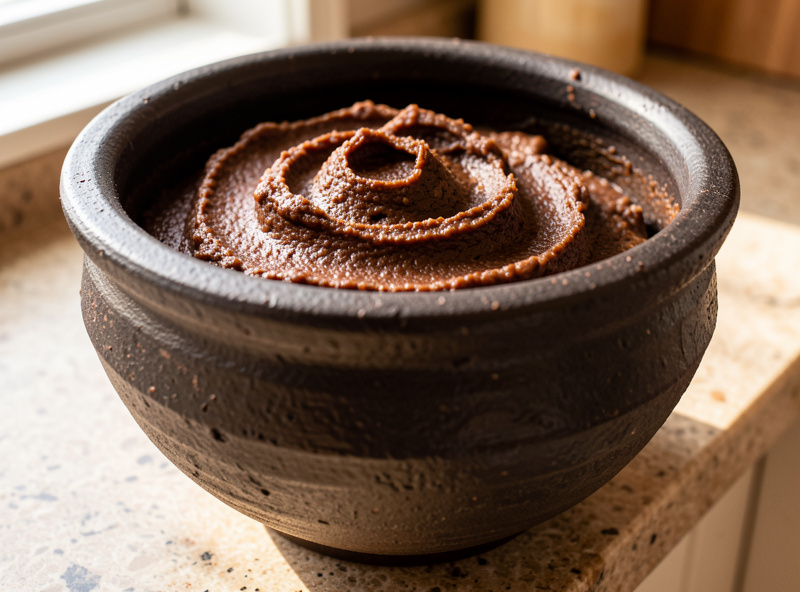
Packed into its crock, doenjang now ages. A young paste is usable after a few months, but doenjang rewards patience like few other ferments: six months gives a solid everyday paste, a year deepens it considerably, and traditional doenjang is aged for years, darkening and concentrating into something extraordinary. The high salt holds it safe throughout, and the flavor only improves with time as enzymes and microbes continue their slow work. For the broader science of why salt level and dropping pH keep fermented vegetables and pastes safe, the National Center for Home Food Preservation is the reference I point people to. I keep mine in an onggi crock, the breathable earthenware that lets the paste respire while protecting it, the traditional vessel for exactly this reason.
Aging doenjang is the same meditative practice as watching a sourdough starter mature or a vinegar mother thicken, just stretched across seasons. The same patience that watches a kraut crock sour and a koji batch bloom watches a doenjang darken over a year. There is genuinely nothing to do but wait and occasionally check that the surface is sound. A white film or salt crust on top is normal on a high-salt paste; soft colored rot is not, though at 12 to 14 percent salt it is rare. This is the long game of fermentation, and doenjang is its patient master.
Using Doenjang in the Kitchen
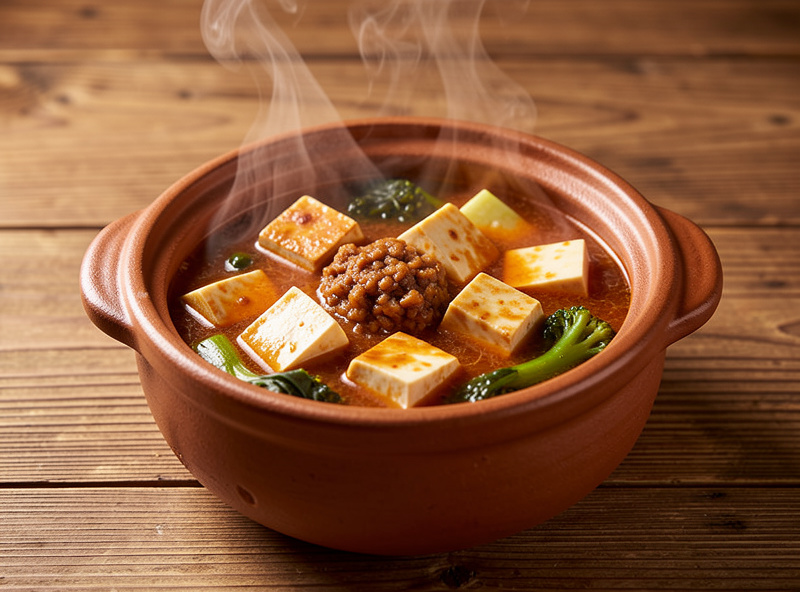
Doenjang is a workhorse seasoning, not a dipping sauce to use straight (it is far too salty and pungent for that). Its home is doenjang jjigae, the rustic Korean stew of paste, tofu, vegetables, and whatever is around, where a couple of spoonfuls build the entire savory backbone. I also use it in marinades, in ssamjang (the dipping paste made by cutting doenjang with gochujang and aromatics), and stirred into soups and braises anywhere I want deep, funky umami. A little goes a long way, exactly like the garum at the other end of this cluster.
Because it is so high in salt and so deeply fermented, doenjang keeps essentially indefinitely in the fridge or a cool cellar, continuing to mellow and darken. It is the opposite of the fast, perishable condiments like lacto-fermented salsa and fermented ketchup; where those live days to weeks, doenjang lives for years. If you make your own, you will also have a jar of homemade ganjang to show for it, two condiments from one patient project, which is the quiet genius of the Korean method.
Frequently Asked Questions
What is the difference between doenjang and miso?
Doenjang is fermented with wild Bacillus subtilis and native molds caught during meju aging, while Japanese miso uses deliberately inoculated Aspergillus oryzae koji. That makes doenjang stronger, funkier, and more pungent, and the Korean process also yields soy sauce (ganjang) as a byproduct.
Is it normal for meju to grow mold?
Yes. Meju blocks are meant to develop white and grayish-green surface culture as Bacillus subtilis and wild molds colonize them while drying. That is the ferment working. What you do not want is soft, wet, slimy black rot, which means the meju stayed too moist instead of curing dry.
How much salt does doenjang need?
The meju is cured in a brine of roughly 18 to 20 percent salt, and the finished paste lands around 12 to 14 percent salt. That high level is the safety system, preserving the paste through six to eighteen months of aging at room temperature, the same salt-as-preservation logic behind fish sauce.
How long does homemade doenjang take?
Plan on months. Meju forms and ages for several weeks to two months, then cures in brine for one to three months, then the separated paste ages for at least six months. A year is better, and traditional doenjang is aged for years, deepening the whole time.
Can I make doenjang without making soy sauce too?
The traditional method produces both at once because the brine that cures the meju becomes ganjang (soy sauce) while the solids become doenjang. You can keep the paste looser and skip separating much liquid, but the elegance of the Korean process is getting two condiments from one ferment.
Related Guides
- Fermented Condiments and Pastes: The Complete Guide
- Koji Fermentation: The Complete Guide
- Garum and Fish Sauce Guide
- Homemade Kimchi: The Complete Guide
- Gochugaru: The Korean Chili Flakes Guide

About Kenny Nyhus Fadil
A home fermenter documenting brines, bubbles, and the occasional moldy tragedy.
Keep Bubbling
Fermented Condiments and Pastes: The Complete Guide
Homemade Garum and Fish Sauce: A Safe Guide