Homemade Garum and Fish Sauce: A Safe Guide

Garum and fish sauce are the same idea separated by two thousand years: fish broken down by its own enzymes under heavy salt into a clear, intensely savory liquid. The salt does the safety work here, not acid. At 15 to 20 percent salt by weight nothing pathogenic can grow, which is why this ancient method is safe to run on a home counter. Add koji and you can drop to around 12 percent and finish in weeks instead of a year.
This is the deepest umami you can make at home, and it is not lactic fermentation at all. There is no Lactobacillus, no bubbling, no pH chase. Instead, enzymes (the fish’s own, plus salt-tolerant microbes, plus koji if you use it) cleave protein into free glutamates and amino acids. Understanding that distinction is the whole game, because it changes every rule compared to the lacto condiments in my fermented condiments guide.
What Garum Actually Is
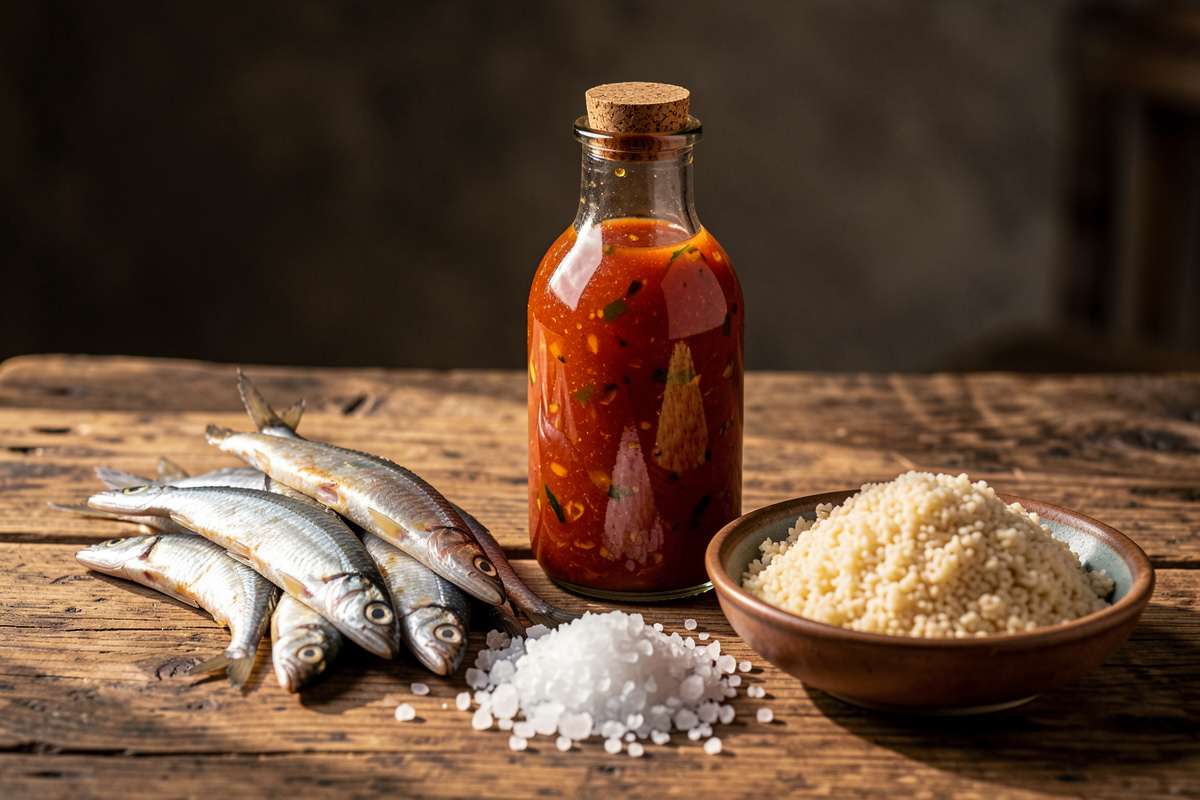
Garum was the fermented fish sauce of ancient Rome, made by salting fish (often the whole fish, guts included, because the digestive enzymes accelerate the breakdown) and letting it autolyze in the sun for months. Southeast Asian fish sauces like Vietnamese nuoc mam and the Italian colatura di alici descend from the same principle: fish plus salt plus time equals liquid umami. The result is not fishy in the way people fear; properly made, it is round, savory, and deeply meaty, the seasoning that makes a dish taste of more without tasting of fish.
The active process is enzymatic autolysis. Proteases, enzymes that exist in the fish and in the microbes that tolerate high salt, break long protein chains into short peptides and free amino acids, chiefly glutamate, the molecule behind savory taste. Salt-loving (halophilic) bacteria contribute their own enzymes and flavor compounds. None of these organisms are dangerous, and crucially, the salt level locks out everything that is. This is preservation by salt concentration, the same principle behind salt cod and prosciutto.
The Salt Is the Safety System
This is the single most important thing to understand before you make garum: the salt is the entire safety mechanism, so it is never the place to economize. Traditional fish sauce and garum run at 15 to 20 percent salt by weight of the fish. At that concentration the water activity is too low for Clostridium botulinum or any other pathogen to grow, which is what makes a months-long room-temperature ferment of raw fish safe. Cut the salt to feel adventurous and you remove the only thing standing between you and a genuinely dangerous product.
I weigh both fish and salt on a 0.1 gram scale and calculate salt as a percentage of the fish weight, exactly as carefully as I do for any brine, just at a much higher number. A useful sanity check: traditional colatura is made at roughly equal layers of anchovy and salt, landing well within that safe band. Unlike a lacto ferment where I chase a target pH, here I do not rely on acidity for safety at all. The pH of finished fish sauce varies and is not the control point; the salt is. That is the inverted logic that trips up people coming from vegetable fermentation.
| Method | Salt Level | Time to Finish | Character |
|---|---|---|---|
| Traditional (anchovy colatura) | 15 to 20 percent of fish weight | 6 to 12 months | Clean, deep, classic umami |
| Whole-fish garum (Roman style) | 15 to 20 percent, guts included | 3 to 9 months | Funkier, faster from gut enzymes |
| Koji-accelerated garum | Around 12 percent with koji | 4 to 10 weeks (warm) | Sweet-savory, modern, fast |
Traditional Method: Fish, Salt, Time
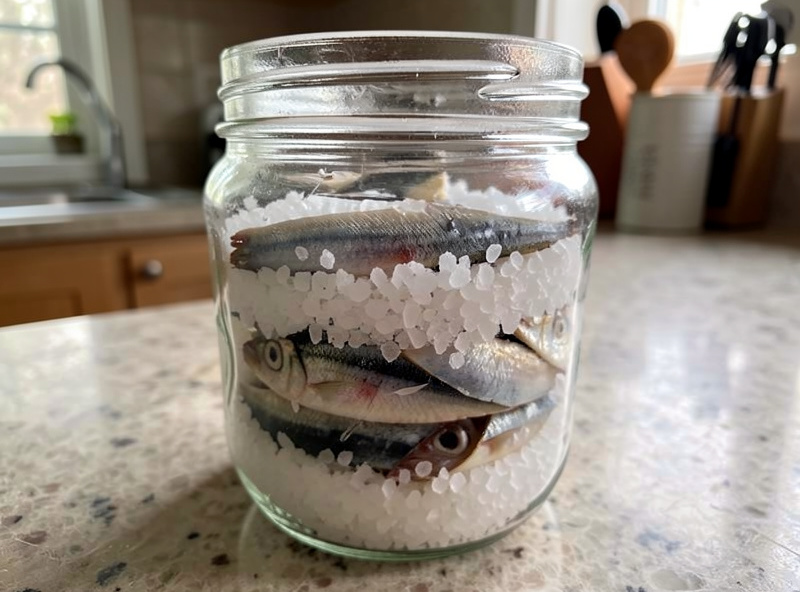
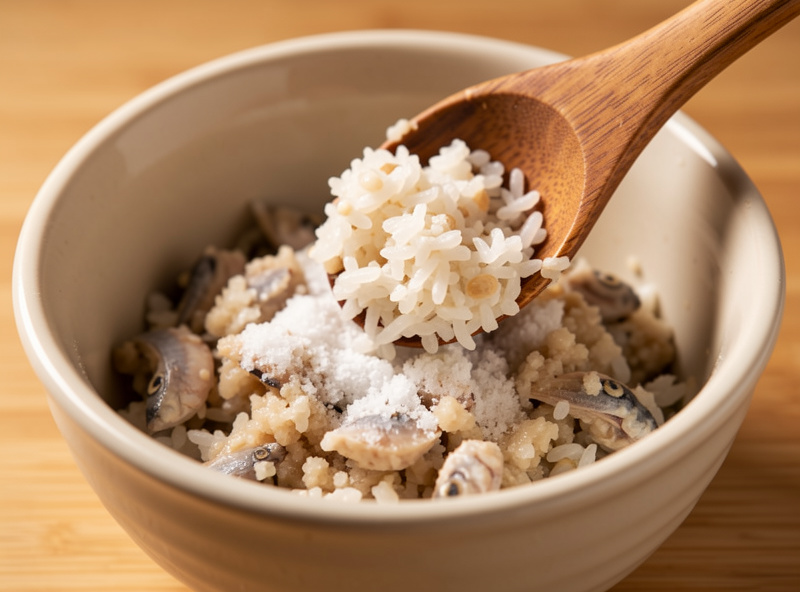
The classic build could not be simpler in materials. Layer small oily fish (anchovies and sardines are ideal) with salt at 15 to 20 percent of their weight in a non-reactive container, weight them down so they stay submerged in the brine that forms as the salt draws out moisture, and wait. Within days the fish begin to soften; over months they liquefy almost entirely as the enzymes work. I keep the vessel somewhere warm and stable, because warmth speeds the enzymatic breakdown, and I am patient. Roman garum took a full summer; a home anchovy colatura is usually ready in six months to a year.
When it is done, the solids have largely dissolved and what remains is a clear amber liquid. I strain it through cloth, sometimes pressing the solids to extract the last of the liquid, and bottle the result. Because the salt is so high, finished fish sauce is essentially indefinitely stable; mine keeps for years and only deepens. The whole-fish Roman approach, including the guts, ferments faster because the digestive enzymes are more aggressive, at the cost of a funkier, stronger flavor. Either way the salt level, not the recipe, is what keeps it safe.
The Koji Shortcut
The modern revolution in garum, popularized by Noma’s fermentation lab, is adding koji. Koji is rice or barley grown with Aspergillus oryzae, the same mold behind miso and shio koji, and it is a powerhouse of protein-digesting enzymes. Add koji to salted fish (or any protein) and those enzymes do in weeks what the fish’s own enzymes take a year to accomplish. Because koji brings so much enzymatic horsepower, you can run a koji garum at around 12 percent salt and hold it warm, finishing in four to ten weeks.
I run koji garum off the same Aspergillus oryzae rotation I keep for miso, blending cooked koji with ground fish and salt and holding the mix warm on a seedling-style heat mat. The result is sweeter and rounder than traditional fish sauce because koji contributes its own sugars and aromatics. It is also where I would point a beginner who wants results without a year of waiting. The koji side of this is worth learning in its own right; my complete koji fermentation guide covers growing and using it, and the same organism powers the doenjang at the other end of this cluster. One honest hedge: industrial-scale fish sauce production and the specific strain engineering behind commercial koji are beyond home practice, and I do not pretend otherwise. What I run is the home version, and the home version works.
Choosing Your Fish and Reading the Ferment
Oily, small fish make the best garum because they are rich in the enzymes and the flavorful fats that drive the process. Anchovies are the gold standard and the basis of classic colatura; sardines, mackerel, and herring all work well. I avoid large lean fish, which break down slowly and give a thinner result. Freshness matters less than you might think, because the salt takes over immediately, but I still start with good fish out of respect for the finished product. Whole small fish, lightly crushed to expose more surface, ferment faster than fillets because more enzyme-rich tissue is in contact with the salt.
Reading the ferment is mostly a matter of patience and smell. In the early weeks the mixture smells aggressively fishy and that is normal; as the months pass it transforms into something rounder and more savory, less obviously of fish. A healthy ferment develops a clear amber liquid and softening solids. What you should never see, because the salt prevents it, is fuzzy colored mold or a putrid, rotten (as opposed to funky-savory) stench. If the salt was correct and the fish stayed submerged, those failures simply do not happen, which is the quiet confidence the high-salt method buys you. The one genuine mistake is under-salting, and that is the one mistake I never make. Keep the salt at or above 15 percent of the fish weight, keep the fish submerged in the brine that forms, and the safety question is genuinely closed before the ferment even begins.
Using and Storing Your Garum
A little garum goes a long way. It is a seasoning, not a sauce: a few drops deepen a braise, a soup, a dressing, or a pan of vegetables, adding savory weight without announcing itself as fish. I treat it the way I treat salt, as a background amplifier, and I reach for it constantly once a batch is made. The koji versions, being sweeter, are lovely brushed on grilled food; the traditional colatura is unbeatable stirred into pasta with garlic and oil.
Storage is the easy part. The high salt that kept it safe during fermentation keeps it safe in the bottle, so finished fish sauce needs no refrigeration and lasts for years, slowly darkening and deepening. I keep mine in a cupboard and never worry about it. This is the great reward of the enzymatic ferments: they ask for patience up front and then give back a condiment that essentially never spoils, the polar opposite of the fast, fridge-bound salsa and ketchup elsewhere in this cluster.
Further Reading
Garum sits at the deep end of the condiment world, but it connects to everything else on the bench. Start with the complete fermented condiments guide for the full map, then explore the koji that powers the fast method in my koji guide and its cousin paste in the homemade doenjang guide. For the acid-driven condiments at the other end of the spectrum, the fermented hot sauce guide and fermented ketchup recipe show how differently a lactic ferment behaves.

About Kenny Nyhus Fadil
A home fermenter documenting brines, bubbles, and the occasional moldy tragedy.
Keep Bubbling
Fermented Ketchup Recipe: Tangy, Not Just Sweet
Homemade Doenjang: Korean Soybean Paste Guide