Fermented Ketchup Recipe: Tangy, Not Just Sweet

Fermented ketchup is a tomato-paste base seasoned, salted to around 2 to 2.5 percent by weight, and left to ferment for three to five days until Lactobacillus turns it tangy and savory instead of flatly sweet. It is the condiment that most surprised me: the homemade fermented version makes the bottled stuff taste like sweetened paste. Finished and cold, it lands at pH 4.0 or below and keeps for weeks.
I came to fermented ketchup through hot sauce and never went back to the bottle. The bottled product is built on sugar and vinegar doing all the work; the fermented version gets its tang from live culture, which gives it a rounded, umami-forward depth that no amount of added vinegar reproduces. Here is exactly how I make it, including the whey shortcut, the raw-versus-cooked decision, and how to keep the color from going dull.
Why Ferment Ketchup at All
Commercial ketchup is acidified, not fermented: it gets its tang from distilled vinegar poured in at the end and its shelf life from sugar and that vinegar. Fermenting instead means the sourness is grown by Lactobacillus over a few days, and grown acidity tastes completely different. It is rounder, deeper, and carries the savory glutamate notes that make tomatoes taste more like themselves. You also get to control the sugar, which in my version is a fraction of what the bottle contains.
The trade is a few days of patience and a little attention to salt and pH, which is true of every condiment in my fermented condiments guide. But ketchup is one of the faster, more forgiving ferments because the tomato base is already acidic. Tomatoes start around pH 4.3 to 4.6, so you begin close to the safe zone and the ferment only pushes you further down into it. That head start is why ketchup is ready in days rather than weeks.
The Base: Paste, Salt, and a Culture Starter
I build fermented ketchup on tomato paste rather than fresh tomatoes or passata, because paste is already concentrated and gives a thick, clingy ketchup without hours of reduction. To a base of tomato paste thinned with a little unchlorinated water I add salt at 2 to 2.5 percent of the total weight, weighed on a 0.1 gram scale. That salt level is the safety floor here: it favors Lactobacillus and suppresses spoilage while the ferment gets going. The same reasoning behind choosing the right salt, which I cover in my salt guide, applies; skip iodized table salt, which can inhibit the culture.
To speed things along and stack the deck in favor of the right bacteria, I add a culture starter. A few tablespoons of whey strained from live yogurt works beautifully, or a splash of brine from an active sauerkraut or pickle ferment. This inoculates the ketchup with a strong Lactobacillus population so it ferments cleanly and predictably rather than relying on whatever is on the tomatoes. The starter is optional but it is the difference between a reliable three-day ferment and an unpredictable one.
Seasoning: Building the Ketchup Flavor
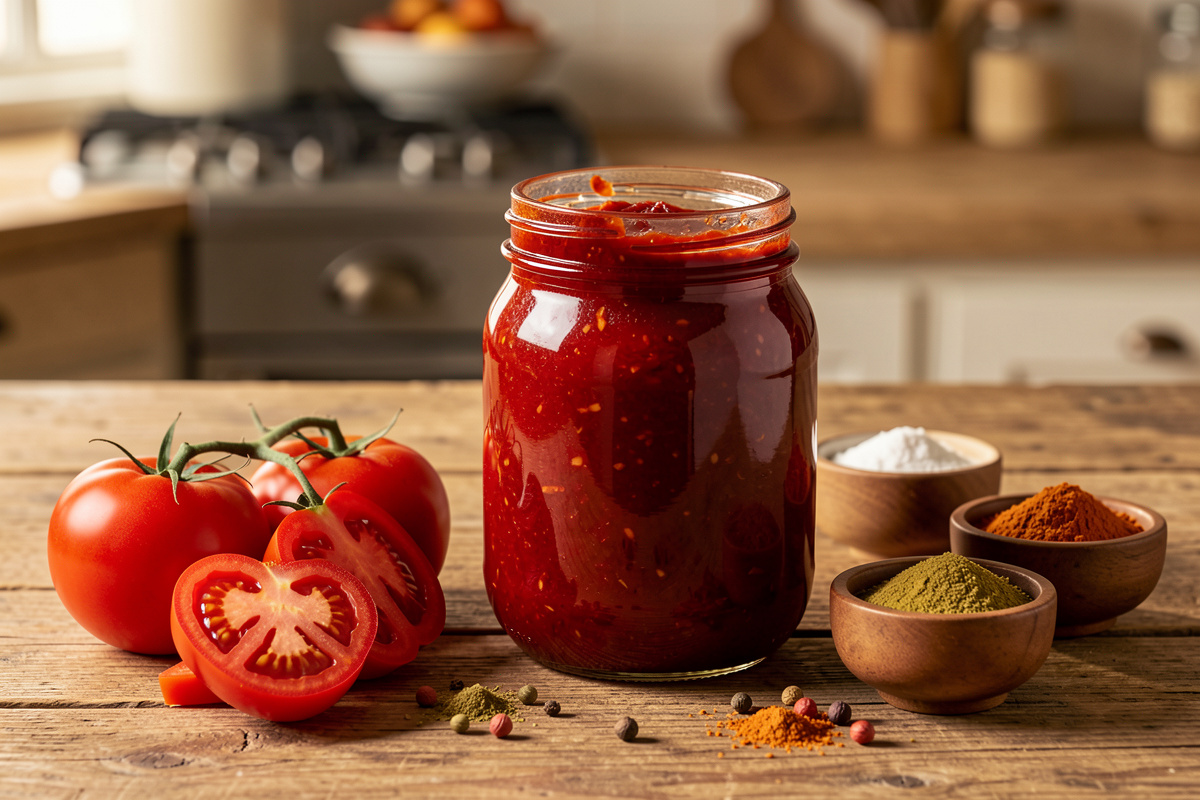
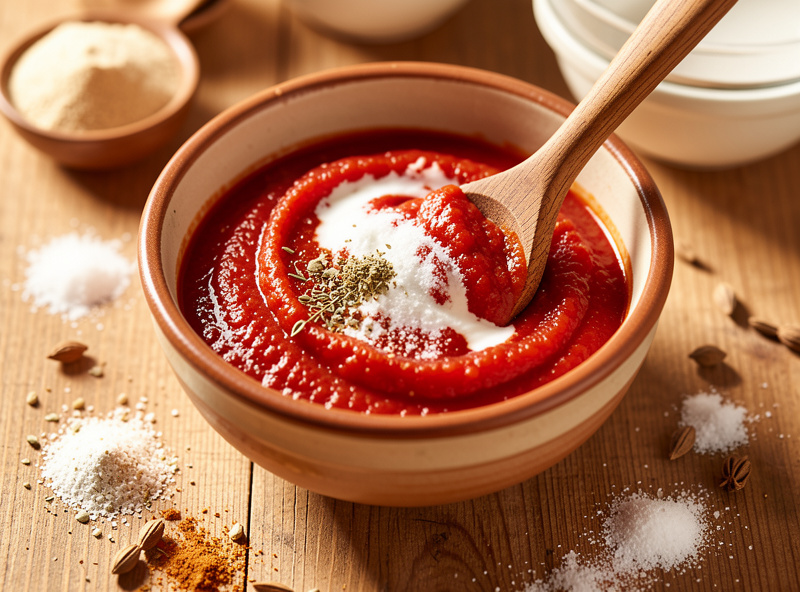
Plain fermented tomato paste is not ketchup; the seasoning is what makes it recognizable. I add a modest amount of sweetener (honey or maple), a splash of raw vinegar or the reserved starter, and a warm spice blend: onion and garlic powder, a pinch of ground clove and allspice, a little cinnamon, and a touch of mustard powder. The clove and allspice are the secret notes that read as classic ketchup; without them you have a tomato sauce, with them you have ketchup.
Go light on the sweetener compared to the bottle. Fermentation consumes some sugar and develops its own complexity, so a ketchup that tastes balanced before fermenting will taste perfectly tangy after. I season to just-slightly-too-sweet going in, knowing the ferment will pull it back. Whisk everything smooth, pack it into a jar leaving headspace, and you are ready to ferment.
Fermenting, Then Raw or Cooked
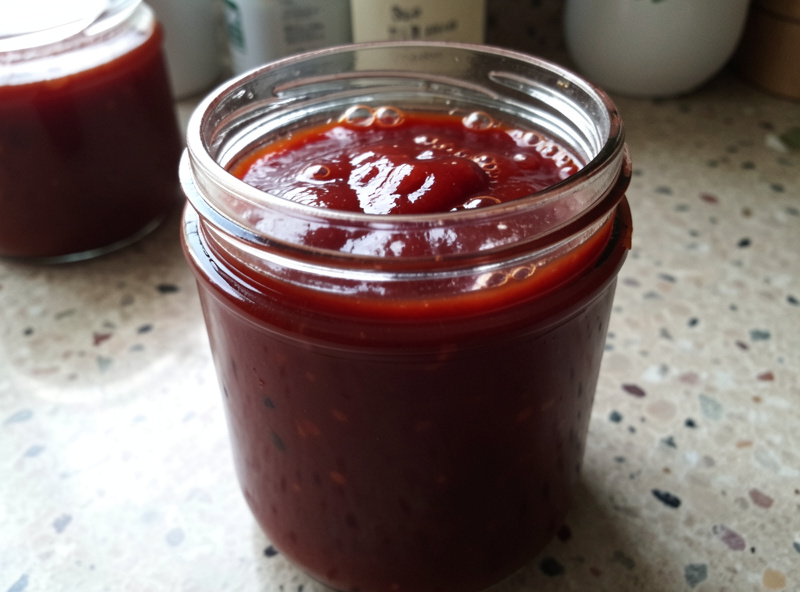
I ferment ketchup at room temperature for three to five days under a loose lid or airlock. It will bubble gently and the color will brighten slightly as it works. After three days I taste: when it has lost the raw paste flatness and reads pleasantly tangy, it is done. On my pH meter a finished ketchup sits at 4.0 or below, comfortably under the 4.6 pH safety floor below which Clostridium botulinum cannot grow, and into shelf-comfortable territory. That margin is why I treat the meter reading, not the calendar, as the real finish line: a ketchup that has dropped below pH 4.0 is safely acidified regardless of how many days it took to get there. Tomatoes’ natural acidity means this happens quickly and reliably.
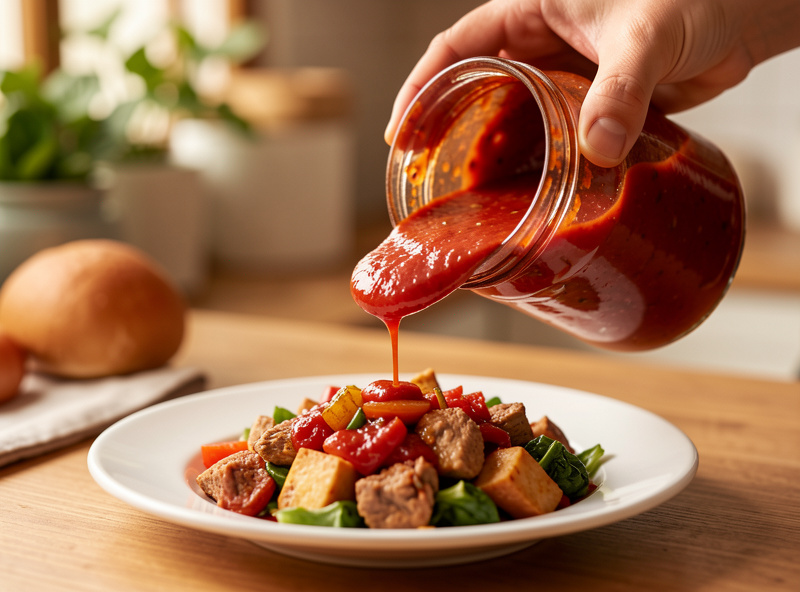
Now the fork in the road. A raw fermented ketchup keeps the live culture and the brightest flavor, but it stays a little looser and must live in the fridge, where it is best within a few weeks. A cooked ketchup, gently simmered down after fermenting, loses the live cultures and some of the fresh tang but gains a thicker, glossier body and a longer fridge life. I keep most of mine raw for the flavor and cook a batch down only when I want that classic thick, spoon-coating texture. Either way, refrigeration after fermenting is what locks the flavor where you like it, exactly as it does for the sauces in my hot sauce guide.
Keeping the Color and Avoiding Problems
The most common cosmetic complaint with fermented ketchup is the color going from bright red to a duller brick. Two things cause it: oxygen exposure at the surface and overly long fermentation. I keep the ketchup packed tight with minimal headspace and stop the ferment at three to five days rather than letting it run, which holds the color bright. A thin darkening right at the air surface is just oxidation and stirs back in harmlessly.
As with every ferment, watch the surface. A thin white film is harmless kahm yeast, which I stir in or skim; fuzzy, raised, colored mold means discard the batch. Because ketchup starts acidic and ferments fast, problems are rare if you respect the salt level and keep it submerged. The headspace logic from my vessel comparison applies directly: less air above the ketchup means fewer surface problems. Once it is in the fridge it is a stable, reliable condiment that I keep in steady rotation alongside my fermented mustard. I have run this ferment in both high summer and a cold Swedish kitchen, and the only variable that really moves is speed: a warm room finishes in three days while a cool counter can take the full five, but the endpoint on the meter is the same either way. When in doubt I trust the number over the clock, because a slow ferment is still a safe ferment once it crosses pH 4.0.
Frequently Asked Questions
How long does fermented ketchup take to make?
Three to five days at room temperature. Tomato paste starts acidic at around pH 4.3 to 4.6, so the ferment only needs to push it a little further to reach a safe, tangy pH of 4.0 or below. Taste at three days and stop when the raw flatness is gone.
Do I need whey to ferment ketchup?
No, but a starter helps. A few tablespoons of whey from live yogurt, or a splash of active sauerkraut or pickle brine, inoculates the ketchup with strong Lactobacillus for a cleaner, more predictable ferment. Without a starter it still works but is less reliable.
Should fermented ketchup be raw or cooked?
Raw keeps the live culture and the brightest tang but stays looser and lives in the fridge for a few weeks. Cooked ketchup, simmered down after fermenting, is thicker and keeps longer but loses the live cultures. I keep most batches raw for flavor.
Why did my fermented ketchup turn brown?
Color dulls from oxygen at the surface and from fermenting too long. Pack it tight with minimal headspace and stop the ferment at three to five days to hold the red bright. A thin dark layer right at the air surface is harmless oxidation and stirs back in.
What gives fermented ketchup its classic flavor?
The warm spices. A pinch of ground clove and allspice, plus onion and garlic powder, cinnamon, and a little mustard powder, are what read as ketchup rather than plain tomato sauce. Keep the sweetener light because fermentation develops its own depth.
Is fermented ketchup safe to make at home?
Yes, when you respect the numbers. Salt at 2 to 2.5 percent by weight, keep it submerged, and confirm a finished pH of 4.0 or below on a meter. Tomatoes start acidic so ketchup reaches the safe zone quickly. Discard any batch with fuzzy colored mold.
Keep Building
Fermented ketchup is a gateway to the whole condiment shelf. Once you trust the salt-and-pH rhythm here, the same instincts carry straight into the rest of the lineup: my complete fermented condiments guide is the map, the fermented mustard recipe is the natural next jar, and the fermented hot sauce guide and lacto-fermented salsa round out the table. For the cultured-dairy whey that starts this ferment, my homemade yogurt guide is where that whey comes from.

About Kenny Nyhus Fadil
A home fermenter documenting brines, bubbles, and the occasional moldy tragedy.
Keep Bubbling

Homemade Doenjang: Korean Soybean Paste Guide
Homemade Garum and Fish Sauce: A Safe Guide