Fermented Mustard Recipe: Seeds, Brine, and Heat

Fermented mustard is mustard seeds soaked and left under a roughly 2 percent brine until Lactobacillus rounds out their raw bite, then blended to the texture you want. The single rule that separates a fierce mustard from a flat one is temperature: mustard’s pungent heat is volatile and destroyed by warmth, so I ferment and store mine cold to keep the bite sharp. Done right it is ready in three to seven days.
This is one of the easier ferments on my bench, and also one of the most misunderstood. People treat mustard like a vegetable lacto and wonder why it never gets sour, or they cook it and wonder why it goes mild. Mustard plays by its own chemistry, and once you understand that chemistry the whole thing becomes predictable. Here is exactly how I make it, with the seed ratios, the brine math, and the heat trick that nobody mentions.
Why Fermented Mustard Behaves Differently
Mustard seeds are naturally antimicrobial, which is the first thing to internalize. The same compounds that give mustard its sinus-clearing heat also slow down the very bacteria you are trying to encourage, so a mustard ferment is gentler and quieter than a kraut or a pepper mash. Do not expect a vigorous, bubbling, obviously-alive jar. You will see modest activity and a slow mellowing of the raw harshness over several days.
The heat itself comes from a reaction, not from a fixed compound. When ground mustard seed meets cold water, an enzyme called myrosinase acts on glucosinolates to produce the sharp isothiocyanates that hit your nose. That reaction needs cool water and time, and the resulting heat compounds are volatile: heat them, and the pungency evaporates. This is why a fermented mustard kept cold stays aggressive while one fermented warm or cooked turns nutty and mild. The brine ferment running alongside this reaction is what trades raw acridity for the rounded, complex tang that makes a homemade mustard worth the effort. The same brine-percentage discipline I use for every ferment, laid out in my salt percentage guide, keeps this one safe and clean.
Choosing Your Seeds: Yellow, Brown, and Black
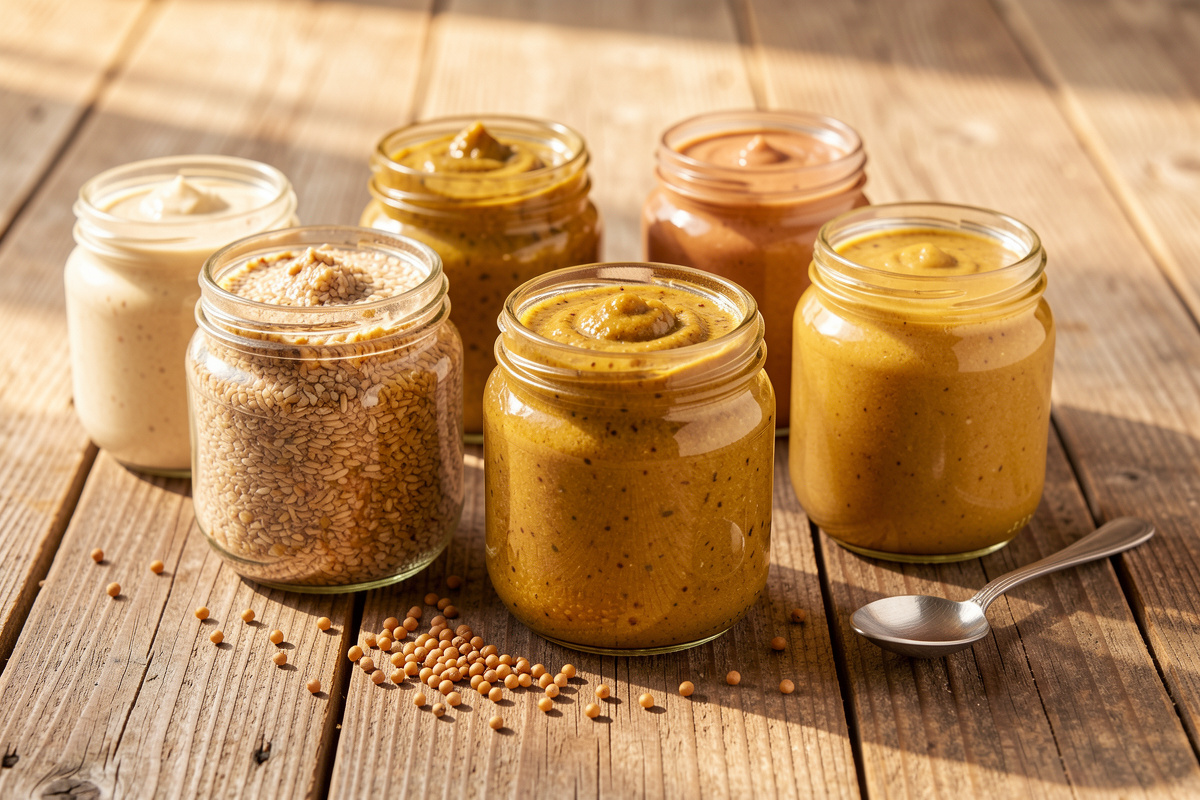
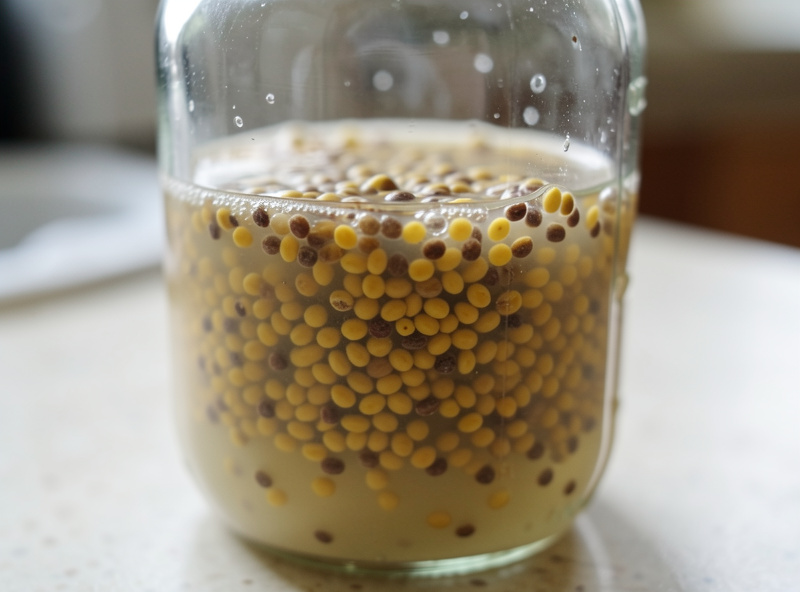
The seed you pick sets the heat level before fermentation even starts. Yellow (white) mustard seeds are the mildest, giving the gentle tang of a classic American-style mustard. Brown seeds are sharper and more pungent, the backbone of Dijon and most grainy mustards. Black seeds are the fiercest of all, common in Indian cooking. I keep yellow and brown on hand and blend them to taste, usually leaning two parts brown to one part yellow for a grainy mustard with real character.
The grind matters as much as the variety. Whole seeds fermented and left intact give you a popping, caviar-textured grainy mustard. Cracked or partially ground seeds release more myrosinase and ferment into something smoother and hotter. Fully ground seed gives a smooth paste but oxidizes and loses heat fastest, so I grind smooth mustards last and store them cold immediately.
| Seed Type | Heat Level | Best For | Notes |
|---|---|---|---|
| Yellow (white) | Mild | American-style, mellow grainy | Most forgiving; good base seed |
| Brown | Sharp | Dijon-style, grainy mustard | My main workhorse seed |
| Black | Fierce | Hot specialty mustards | Use sparingly as an accent |
The Brine and the Ferment
I make a 2 percent brine by weight: 20 grams of non-iodized salt per liter of unchlorinated water, weighed on my 0.1 gram scale. Iodized table salt and chlorinated tap water both inhibit the culture, so I use sea or pickling salt and either filtered or dechlorinated water (chlorine off-gasses if you let tap water sit overnight). I cover the seeds with brine by a good centimeter, leaving room for them to swell, and weight them down so nothing sits exposed to air.
The seeds drink up an astonishing amount of liquid, roughly doubling in size, so check after a day and top up the brine to keep them submerged. I ferment on the counter for three to seven days. Three days gives a fresher, hotter mustard; a week gives a deeper, more complex tang as the Lactobacillus works further. Because mustard self-acidifies and the seeds are antimicrobial, I am comfortable in this range without obsessing over a meter, though a finished mustard typically lands around pH 3.8, well below the 4.6 botulism floor. In practice I rarely bother metering a mustard at all, because the combination of self-acidification and the seeds’ own antimicrobial oils means it reaches a safe pH faster and more reliably than almost anything else on the bench; the meter only confirms what the chemistry already guarantees. The same anaerobic, keep-it-submerged logic from my vessel comparison applies: a glass weight and an airlock lid make this effortless.
Blending, Resting, and the Heat Trick
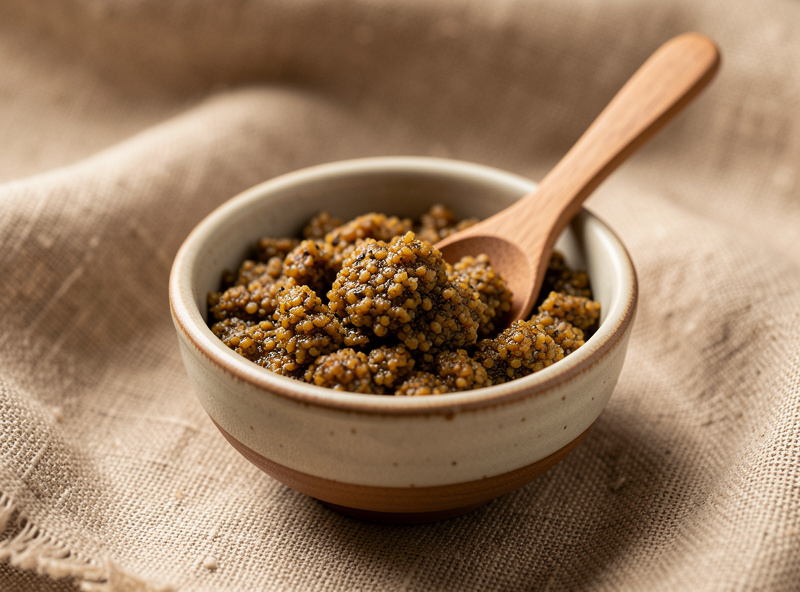
Once the ferment is where I want it, I drain the seeds (reserving the brine) and blend. For a grainy mustard I pulse just enough to crack some seeds while leaving most whole, adding reserved brine to loosen it. For a smooth mustard I blend hard, adding brine, a splash of raw vinegar, and sometimes a little honey to balance. This is the moment the heat reaction kicks into high gear, and freshly blended mustard is genuinely brutal. It smells like it could clear a room.
Do not judge it yet. Freshly ground mustard needs to rest cold for two to four days for the harsh, bitter edge to settle into the rounded heat you actually want. This resting period is non-negotiable in my kitchen; skip it and you will think you made a mistake. And here is the heat trick in full: if you want a fierce mustard, keep everything cold from blend to storage and never heat it. If you want a milder, sweeter, more spreadable mustard, let it sit at warm room temperature for a day or gently warm it, which drives off the volatile pungency. A splash of acid (the reserved brine or vinegar) at blending time also stabilizes the heat at its current level by halting the myrosinase reaction. My home vinegar guide is useful here if you want to make the vinegar you finish it with.
Storage and Shelf Life
Fermented mustard keeps for months in the fridge, and unlike a fresh salsa it improves with a little age as the flavors marry. Cold storage does double duty: it slows the lactic bacteria so the flavor holds, and it preserves the volatile heat compounds that warmth would drive off. I store mine in a sealed jar and expect the heat to settle and mellow slightly over the first couple of weeks, then hold steady for a long time. The grainy jars I keep longest, sometimes six months or more, develop a mellow, almost wine-like depth that a fresh blend never has, which is the quiet payoff for a condiment that asks so little of you up front. The high mustard-oil content and low pH make it a poor home for spoilage organisms, so this is a forgiving condiment to keep.
If a mustard ever smells off, putrid, or shows fuzzy colored mold rather than clean tang, discard it, but in practice mustard is among the most stable things I ferment. Its natural antimicrobial character that made the ferment slow is exactly what makes the finished product keep so well. Pair a jar with the other condiments in my fermented condiments guide, and if you want a sharper table to set it next to, my fermented ketchup recipe is the natural companion.
Frequently Asked Questions
Why is my fermented mustard not hot?
Heat in mustard comes from volatile isothiocyanates that are destroyed by warmth. If you fermented or stored it warm, or cooked it, the pungency cooked off. For a fierce mustard keep everything cold from blending through storage and never heat the finished mustard.
How long does fermented mustard take?
Three to seven days of fermentation, then a mandatory two to four day cold rest after blending so the harsh raw edge settles into rounded heat. Three days of fermenting gives a hotter, fresher mustard; a full week gives a deeper, more complex tang.
What salt percentage do I use for fermented mustard?
A 2 percent brine by weight, which is 20 grams of non-iodized salt per liter of unchlorinated water. Mustard seeds are naturally antimicrobial so the ferment is gentle and does not need a higher salt level. A finished mustard typically lands near pH 3.8.
Why is my fresh-blended mustard so bitter?
Freshly ground mustard is always harshly bitter and aggressively hot right after blending. This is normal. It needs two to four days resting cold for the bitterness to fade and the heat to round out. Never judge a mustard the day you blend it.
Can I make smooth Dijon-style fermented mustard?
Yes. Use mostly brown seeds, ferment in a 2 percent brine, then blend hard with reserved brine, a splash of raw vinegar, and a little honey to balance. Smooth mustard oxidizes faster than grainy, so store it cold immediately to hold the heat.
Related Guides
- Fermented Condiments and Pastes: The Complete Guide
- Fermented Ketchup Recipe Guide
- Fermented Hot Sauce: The Complete Guide
- Home Vinegar Making Guide
- Crock vs Jar vs Vacuum Bag

About Kenny Nyhus Fadil
A home fermenter documenting brines, bubbles, and the occasional moldy tragedy.
Keep Bubbling
Homemade Garum and Fish Sauce: A Safe Guide
Fermented Ketchup Recipe: Tangy, Not Just Sweet