Kvass: Fermenting Bread Beer at Home

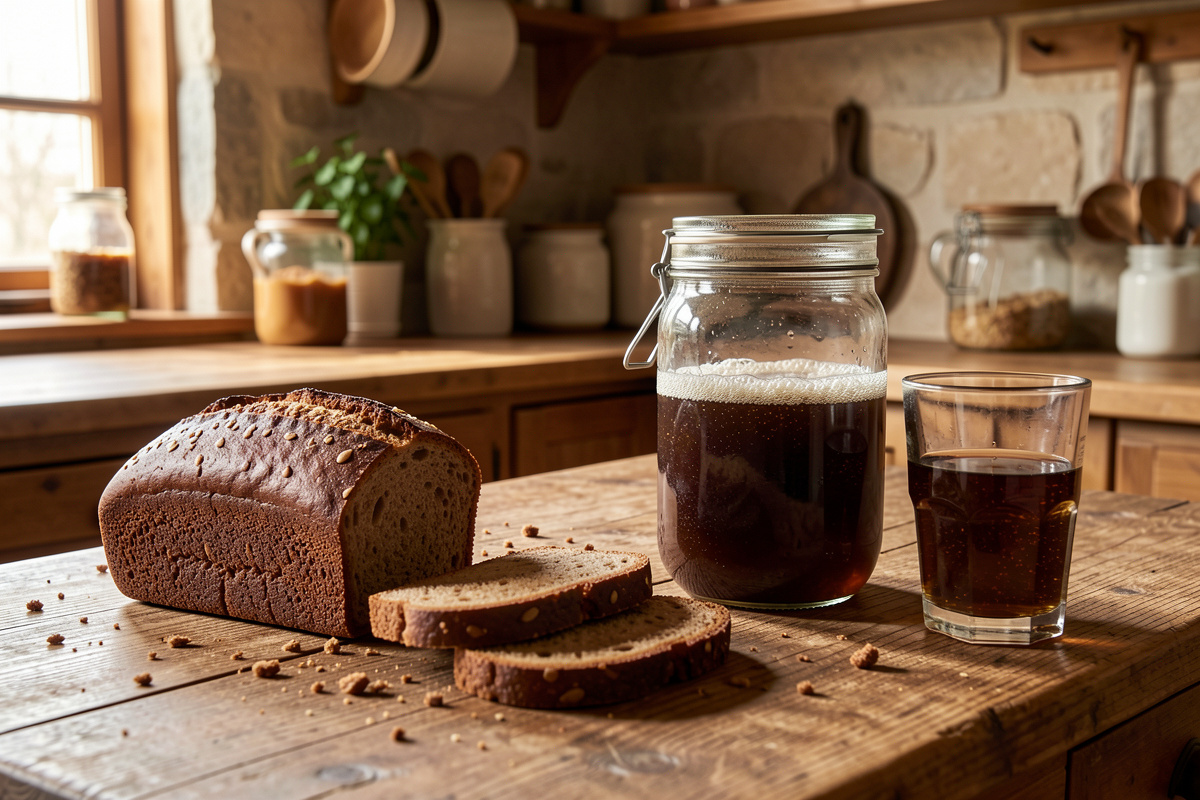
Bread kvass is the original way to turn stale rye into a drink — a tangy, lightly fizzy “bread beer” that has been brewed across Eastern Europe for centuries. You steep toasted dark rye bread in hot water, sweeten it, add yeast, and ferment it for one to three days into a refreshing beverage of roughly 0.5–2% ABV. It is closer to a soft drink than to beer, almost impossible to get wrong, and it rescues bread that would otherwise hit the bin.
This guide is specifically about bread kvass, the grain-based “bread beer” version. If you want the beetroot kind and the full picture of the kvass family, my broader kvass overview covers both. Here I am focused on the rye-bread brew and where it sits in the beverage fermentation world — the low-alcohol, fast, wild end of the spectrum alongside tepache, perfect for a first-time fermenter who wants a result in days.
Why Bread Becomes “Bread Beer”
The name “bread beer” is more accurate than it sounds. Bread is baked from grain, and grain is what beer is made from — kvass simply ferments the sugars in already-baked bread instead of mashing raw malt. When you toast rye bread dark and steep it in hot water, you extract sugars and starches plus a deep, malty, almost coffee-like flavour from the toasting. Yeast then converts those available sugars to a little alcohol and CO2, exactly the same reaction that powers every other drink in the hub, just kept short and low so the result is a tangy near-beer rather than a strong one.
The best bread for it is a dense, dark sourdough rye — the kind of loaf that already carries acidity and robust flavour. Lighter white bread works in a pinch but makes a thinner, blander kvass. Toasting the bread until it is properly dark, even at the edge of burnt, is what gives traditional kvass its characteristic colour and that bittersweet, malty depth. This is grain fermentation at its most forgiving: no mashing, no boiling wort, no temperature schedule.
The Basic Bread Kvass Method
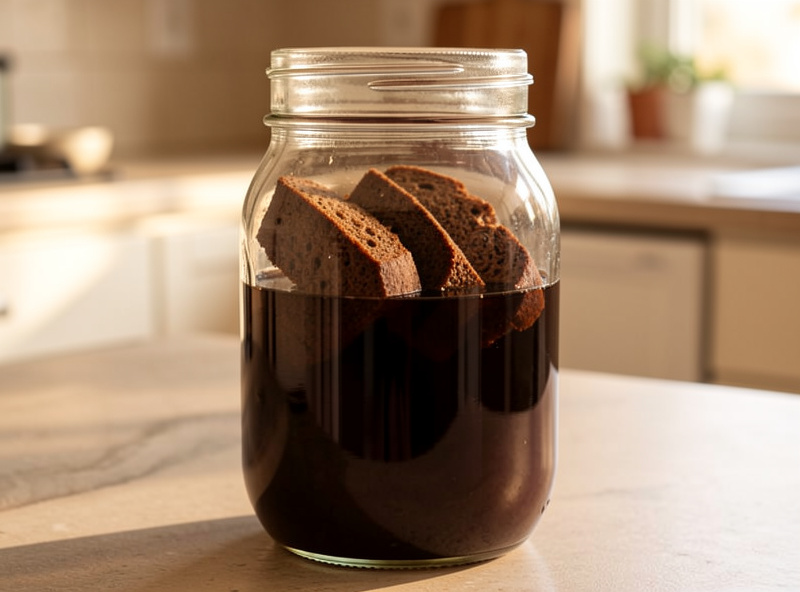
Toast about 250 g of dark rye bread until deeply browned, then pour roughly 2 litres of just-boiled water over it in a large jar or bowl and let it steep for several hours or overnight as it cools — this draws out the sugars, colour, and flavour. Strain off the liquid, pressing the soaked bread to extract everything, and discard the spent bread. To the cooled liquid (it must be below body temperature before yeast goes in, or you will kill the culture) add 2–3 tablespoons of sugar and a small pinch of yeast.
For the yeast, you have options that shape the character. A pinch of regular baker’s yeast or a wine yeast like EC-1118 gives a clean, reliable ferment; a spoonful of active sourdough starter leans it tangier and more traditional; and the old-country trick of dropping in a few raisins introduces wild yeast from the fruit skins and a touch more sugar for fizz. Cover loosely so CO2 can escape, leave it at room temperature, and within a day it will be bubbling.
| Choice | Effect on the kvass | Notes |
|---|---|---|
| Baker’s / wine yeast | Clean, predictable, fast | Easiest for a first batch |
| Sourdough starter | Tangier, more traditional | Uses the starter you keep |
| Raisins (wild) | Extra fizz, rustic character | Adds wild yeast and sugar |
| Mint / lemon / honey | Brightens and varies flavour | Added at steep or bottling |
Timing, Bottling, and Fizz
Bread kvass is fast. Taste it from the end of day one. When it is pleasantly tangy, lightly sweet, and faintly boozy — usually somewhere between one and three days depending on warmth — it is ready. Strain it again if needed, bottle it, and refrigerate; the cold slows the ferment and holds the flavour where you want it. As with tepache, if you seal it tight at room temperature while it is still active, it keeps generating CO2 and can build pressure, so either refrigerate promptly, use pressure-rated bottles, or burp them. A gentle, soda-like fizz is the target.
Because the ferment is short and the alcohol low, kvass stays in the realm of a tangy refreshment rather than a true beer — which is precisely its charm. Traditionally it is also used as a base for cold summer soups like okroshka, where its sourness does the work a stock would. Drunk young and cold, it is bright, malty, and slightly sour, like a non-sweet root beer with a rye backbone.
Flavouring and Variations
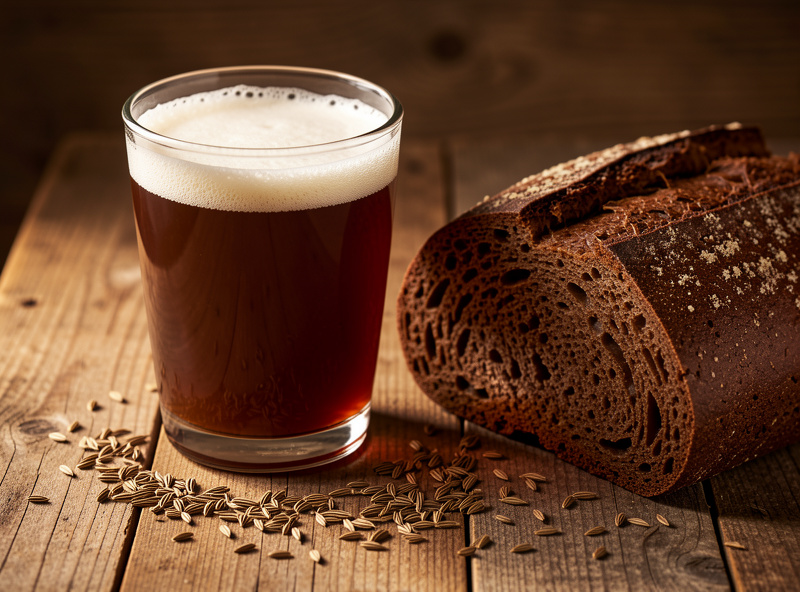
Plain bread kvass is excellent, but it takes flavourings beautifully and this is where you make it your own. Mint added to the steep gives the bright, cooling version popular in summer; a few strips of lemon zest or a squeeze of juice sharpen and lift it; a spoon of honey in place of some sugar rounds it out and adds floral notes. Caraway seeds, a classic rye companion, deepen the bread character, while a knob of fresh ginger gives it a warming bite. I add delicate aromatics like mint and citrus near the end or at bottling so their freshness survives, and sturdier ones like caraway during the hot steep so they have time to infuse.
The colour and strength are yours to dial too. More dark, well-toasted bread and a longer steep make a richer, darker, more robust kvass; a lighter hand makes a paler, more delicate one. Because the whole batch is forgiving and fast, it costs almost nothing to experiment — a stale loaf and an afternoon. Keep notes on what bread, how dark you toasted it, and how long you fermented, and within a few batches you will have dialled in a house style that tastes the way you like it.
Traditional Roots and the Modern Glass
Kvass has been a daily drink across Russia, Ukraine, Poland, and the Baltics for centuries — a household ferment made from whatever bread was going stale, sold from barrels on summer streets, and valued as a thirst-quencher that kept without refrigeration thanks to its acidity. That long history is a quiet endorsement of its safety and its appeal: a low-alcohol, sour-sweet, malty drink that a whole region kept making because it works. The modern home version is the same brew, just made in a jar on your counter instead of a barrel in a cellar, and it connects you to one of the oldest grain-fermentation traditions still in everyday use.
Safety and Common Questions
Kvass is safe by the same mechanism as every quick ferment on this site: the yeast and lactic bacteria rapidly acidify the brew, and that acidity plus the trace alcohol keeps pathogens out. It has a long folk-safety record precisely because it is acidic, low-sugar by the end, and drunk fresh. The only real watch-points are the same two as tepache — keep an eye on the surface for any fuzzy, coloured mold (toss the batch if you see it; a thin white kahm film is harmless and can be skimmed), and respect bottle pressure if you cap it while it is lively.
Bread kvass is one of the most satisfying “waste nothing” ferments I make — a stale loaf and a couple of days become two litres of something genuinely good. It builds the same wild-ferment instincts as tepache and feeds straight into the confidence you need for the slower, stronger brews like cider and fruit wine. Start here, taste daily, and let the bread surprise you.
Frequently Asked Questions
What kind of bread is best for kvass?
A dense, dark sourdough rye is ideal because it carries acidity and robust malty flavour. Toast it until deeply browned, even to the edge of burnt, for the characteristic colour and bittersweet depth. Lighter breads work but make a thinner, blander kvass.
How much alcohol is in bread kvass?
Very little, typically 0.5 to 2% ABV. The ferment is kept short, just one to three days, and the sugar is limited, so it stays a tangy low-alcohol refreshment closer to a soft drink than to beer. Refrigerating it early keeps the alcohol low.
How long does bread kvass take to ferment?
Usually one to three days at room temperature. Start tasting at the end of day one. When it is tangy, lightly sweet, and faintly fizzy, strain and refrigerate it. Warmer rooms ferment faster; the fridge slows it down and holds the flavour.
Is bread kvass the same as beetroot kvass?
No. Bread kvass is a grain-based fermented drink made from toasted rye, sometimes called bread beer. Beetroot kvass is a separate lacto-fermented beverage made from beets. They share the kvass name and quick wild fermentation but taste completely different.
Do I need yeast to make kvass?
Some yeast source helps it ferment reliably and quickly. That can be a pinch of baker’s or wine yeast, a spoon of sourdough starter, or a few raisins that carry wild yeast on their skins. Without any, you rely on slower, less predictable wild fermentation.
Related Guides
- Fermenting Alcohol at Home: The Complete Hub
- Kvass: The Traditional Fermented Drink (Beet and Bread)
- Tepache: Fermented Pineapple in Four Days
- Making Hard Cider at Home
- Fruit Wine Fermentation Guide

About Kenny Nyhus Fadil
A home fermenter documenting brines, bubbles, and the occasional moldy tragedy.