Fruit Wine Fermentation Guide: Country Wines

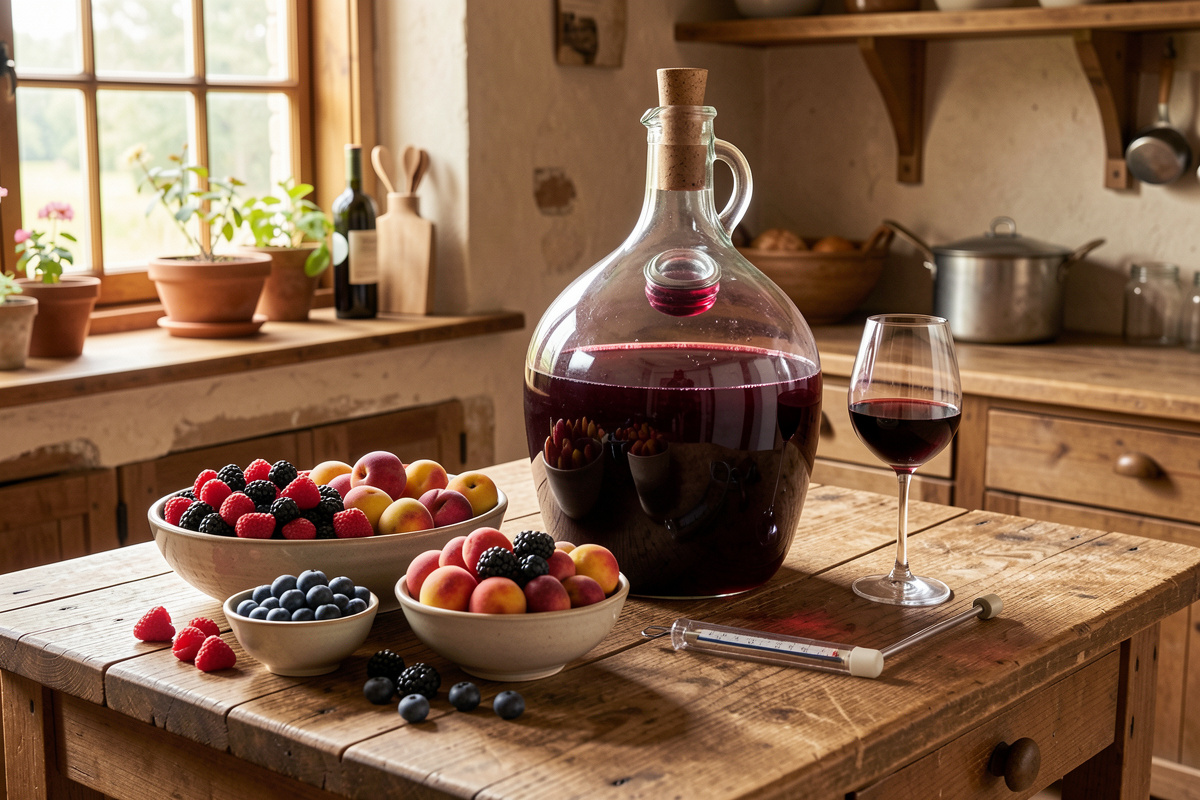
Fruit wine — the old “country wine” — turns almost any fruit in your kitchen into a real wine: berries, stone fruit, apples, even flowers and vegetables. Unlike grapes, most fruit lacks the sugar and balance to ferment into wine on its own, so the craft is building a balanced must: fruit for flavour, added sugar to reach about 1.085 specific gravity (a 12% wine), plus acid, tannin, and pectic enzyme to round it out. Get that balance right and a punnet of summer berries becomes a bottle worth aging.
Fruit wine is the natural next step after a first cider or grape wine, because it teaches you to compose a must rather than just ferment juice that is already balanced. It is the most creative corner of the beverage fermentation world — once you understand the four things every fruit must needs, you can make wine from whatever the garden and the market give you. Here is how to build and ferment one that comes out clean and clear.
The Four Things Every Fruit Must Needs
Grape juice ferments into wine unaided because grapes naturally carry the right sugar, acid, and tannin. Other fruit rarely does, so you supply what is missing. Sugar is almost always added, because most fruit is far too low in sugar for wine strength — you dissolve sugar until the hydrometer reads around 1.085 for a 12% wine. Acid balances the wine and protects it; low-acid fruit like peaches and elderberries needs an acid blend added, while very tart fruit may need diluting. Tannin (a pinch of grape tannin, or some via the fruit skins) gives structure and mouthfeel that watery fruit lacks. And pectic enzyme breaks down the pectin in fruit that would otherwise leave the wine permanently hazy.
The fifth supporting player is yeast nutrient, because a fruit-and-sugar must can run a little short on the nitrogen yeast needs — the same lesson the mead guide hammers home. Add nutrient at the start and your yeast stays healthy and odour-free. None of this is complicated; it is a short shopping list of cheap additives that turn “fermented fruit juice” into “balanced wine.”
| Fruit | Sugar level | Acid | Pectin (haze risk) | Typical adjustment |
|---|---|---|---|---|
| Strawberry | Low | Medium | Medium | Lots of sugar, pectic enzyme |
| Blackberry | Low-medium | Medium-high | High | Sugar, pectic enzyme |
| Peach / apricot | Medium | Low | High | Add acid, pectic enzyme |
| Elderberry | Low | Low | Medium | Add acid, big tannin |
| Apple | Medium | Medium | Medium | Often just sugar (or make cider) |
Building the Must
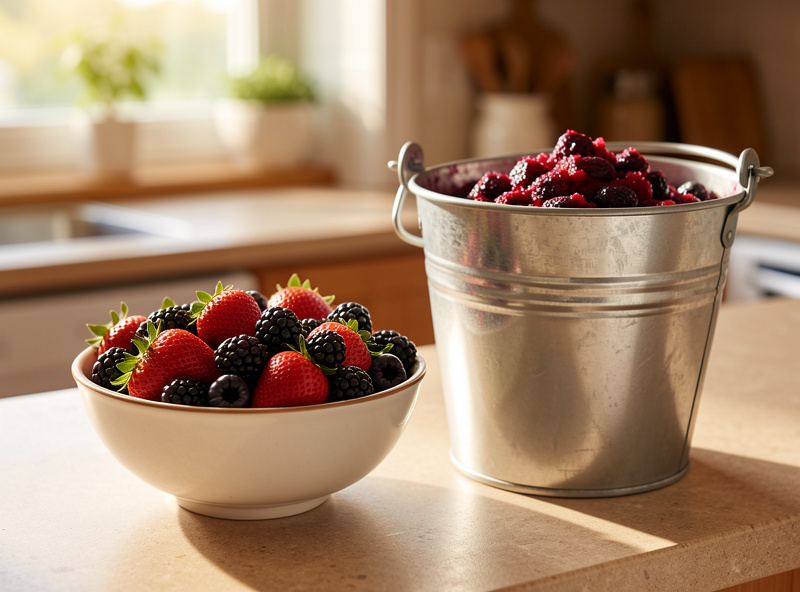
Start by preparing the fruit — wash it, remove stems and pits, and crush or chop it to release the juice. For most fruit wines I run a pulp ferment: the crushed fruit goes into a sanitised bucket, often inside a straining bag, with water added to reach the batch volume. If using Campden (one crushed tablet per gallon, ~50 ppm SO2), add it now and wait 24 hours before the yeast to knock back wild organisms. Then dissolve sugar to hit your target gravity, stir in acid blend, tannin, pectic enzyme, and yeast nutrient, take and record the original gravity, and pitch the yeast.
EC-1118 is my default fruit-wine yeast for its clean, complete, reliable fermentation; 71B is a lovely choice for softer, fruitier reds. The reason for fermenting on the pulp during primary is extraction — the skins and flesh give up colour, flavour, and tannin into the wine over those first vigorous days. I keep the floating fruit cap pushed down once or twice a day so it stays wet and does not grow mold, exactly the submersion discipline from my lacto crocks and from tepache.
From Primary to Bottle
Primary fermentation on the pulp runs about five to seven days, bubbling vigorously as the gravity drops. Then strain out the fruit — lift the bag and let it drip, or strain through a sieve — and transfer the liquid to a glass carboy fitted with a three-piece airlock for secondary. Squeeze the pulp gently if you want more flavour, but hard pressing extracts bitterness and haze, so go easy. Secondary fermentation finishes the sugar slowly over a few weeks until the wine reaches a dry final gravity near 0.995.
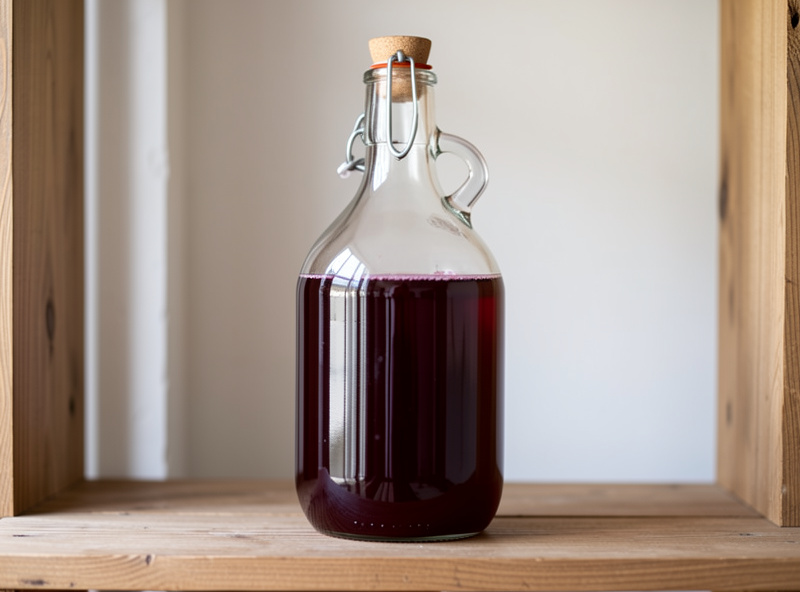
From here it is the same patient finish as grape wine: rack the wine off its sediment a couple of times over the following months, keeping headspace minimal each time to prevent oxidation and the slide toward vinegar. Fruit wines often start cloudy and clear beautifully with time and the pectic enzyme you added; if one stays stubbornly hazy, a dose of pectic enzyme into the finished wine usually fixes it. Bulk-age until clear and stable, then bottle. Most fruit wines drink well at six months and many improve past a year.
A Worked Example: One-Gallon Blackberry Wine
To make the four adjustments concrete, here is the shape of a one-gallon blackberry wine — a classic, generous country wine. Take roughly 1.3–1.6 kg of blackberries, rinse them, and crush them into a sanitised bucket inside a straining bag. Pour over cooled boiled water to nearly a gallon. Add one crushed Campden tablet, cover, and wait 24 hours. Then stir in sugar a little at a time, checking the hydrometer until it reads about 1.085; blackberries bring decent acidity so I add only a little acid blend, plus a pinch of tannin, pectic enzyme per the packet, and yeast nutrient. Record the original gravity and pitch EC-1118 or 71B.
Ferment on the pulp for about five days, pushing the cap down daily, then lift out the bag, let it drip, and rack the wine to a carboy under an airlock. Let secondary finish over two to three weeks to a dry 0.995, then rack off the sediment and bulk-age, racking again every couple of months as it clears to a deep, brilliant ruby. Stabilise and back-sweeten if you want it off-dry — blackberry takes a touch of sweetness well — then bottle and age. That same template, with the adjustments from the table above, makes strawberry, plum, peach, or elderberry wine; only the numbers and the additions shift.
Sweet or Dry, and Avoiding the Common Faults
Fermented to dryness, a fruit wine can taste austere, because the fruit aromatics read as “wine” without the sweetness we associate with the fresh fruit. Many fruit wines are better slightly sweet, so the usual move is to ferment dry, stabilise with sorbate plus sulphite to stop the yeast restarting, then back-sweeten to taste — never sweeten a live wine and bottle it, or it can referment under pressure. The faults to watch are the familiar ones: a permanent haze means not enough pectic enzyme; a thin, watery wine means too little fruit or over-dilution; a vinegar edge means oxygen got in during aging; and a sulphury smell early on means the yeast wanted more nutrient.
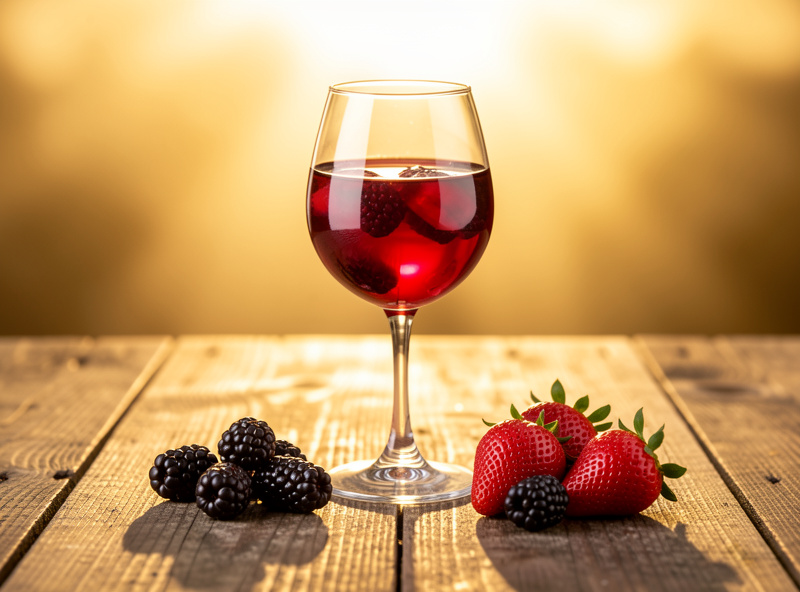
Fruit wine is where home beverage fermentation becomes genuinely creative — the same four adjustments scale to whatever fruit you can get, and a glut of garden berries or windfall apples becomes a cellar of distinct wines. It rests on everything the rest of the hub teaches: the hydrometer math from the main guide, the patience of mead, and the must-balancing instinct that, once you have it, you never lose.
Frequently Asked Questions
Can you make wine from any fruit?
Almost any fruit, and many flowers and vegetables, can become wine. The key is building a balanced must: most fruit needs added sugar to reach wine strength, plus acid, tannin, and pectic enzyme to balance it. Berries, stone fruit, apples, and elderberries are all classic country wines.
Why do I need pectic enzyme in fruit wine?
Fruit contains pectin, which causes a permanent haze in the finished wine. Pectic enzyme breaks pectin down so the wine can clear bright. Add it when building the must, and if a finished wine stays cloudy, a second dose usually clears it. Grapes need it less than most other fruit.
How much sugar do I add to fruit wine?
Enough to reach about 1.085 specific gravity on a hydrometer for a 12% wine. Most fruit is too low in sugar on its own, so you dissolve sugar until you hit that target, adding roughly 17 grams per litre for each 1% ABV. Always measure with a hydrometer rather than guessing.
How long does fruit wine take to make?
Primary fermentation on the pulp runs five to seven days, secondary a few weeks, then months of aging and clearing before bottling. Most fruit wines drink well at six months and many improve past a year. Like all wine, fruit wine rewards patience.
Why is my fruit wine cloudy?
Usually pectin haze from not enough pectic enzyme, or fine fruit particles that need more time and racking to settle. Add pectic enzyme to the finished wine and give it weeks to clear, racking off the sediment. Time and patience clear most fruit wines beautifully.
Related Guides
- Fermenting Alcohol at Home: The Complete Hub
- Wine Making at Home for Beginners
- Mead Making Guide for Beginners
- Making Hard Cider at Home
- Tepache: Fermented Pineapple in Four Days
As an Amazon Associate I earn from qualifying purchases. A small fruit wine additive kit with pectic enzyme and acid blend covers the must-balancing essentials for any fruit.

About Kenny Nyhus Fadil
A home fermenter documenting brines, bubbles, and the occasional moldy tragedy.