The Best Vessels for Brewing Vinegar at Home

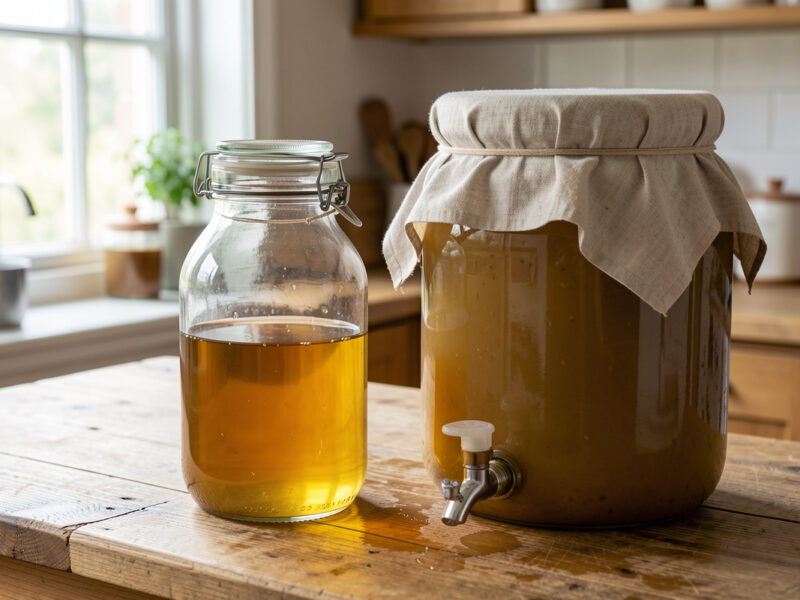
The best vessel for making vinegar is a wide, non-reactive, open container that maximises the surface where liquid meets air — a wide-mouth glass jar, a glazed crock, or a wooden cask. Because Acetobacter is aerobic, surface area matters more than volume, and the vessel that wins is the one with the most air-to-liquid contact.
This is the one place where vinegar breaks every rule the rest of fermentation follows. My sauerkraut and pickles want to be sealed away from oxygen under a weight; vinegar wants the opposite. If you have read my general fermentation vessel comparison, set most of it aside here — vinegar is the aerobic exception, and choosing its vessel comes down to one number: surface-area-to-volume ratio.
Why Surface Area Beats Volume for Vinegar
Every molecule of acetic acid that Acetobacter produces needs oxygen pulled from the air at the liquid surface. That makes the air-to-liquid interface the bottleneck of the whole ferment. A tall narrow jug holding two litres might present only 60 square centimetres of surface; a wide jar holding the same two litres presents three to four times that, and it will acetify two to three times faster as a direct result.
My benchmark vessel is a 4-litre wide-mouth glass jar with a 22-centimetre opening, filled with about 2.5 litres of substrate. That leaves a generous head space and a broad surface, and it is the geometry every other vessel gets measured against in my kitchen. The rule to carry into any choice: pick the widest, shallowest vessel you can live with, never a demijohn or a narrow-necked carboy. Those are superb for stage-one alcoholic fermentation under an airlock and useless for the acetic stage.
The Vessels Worth Owning
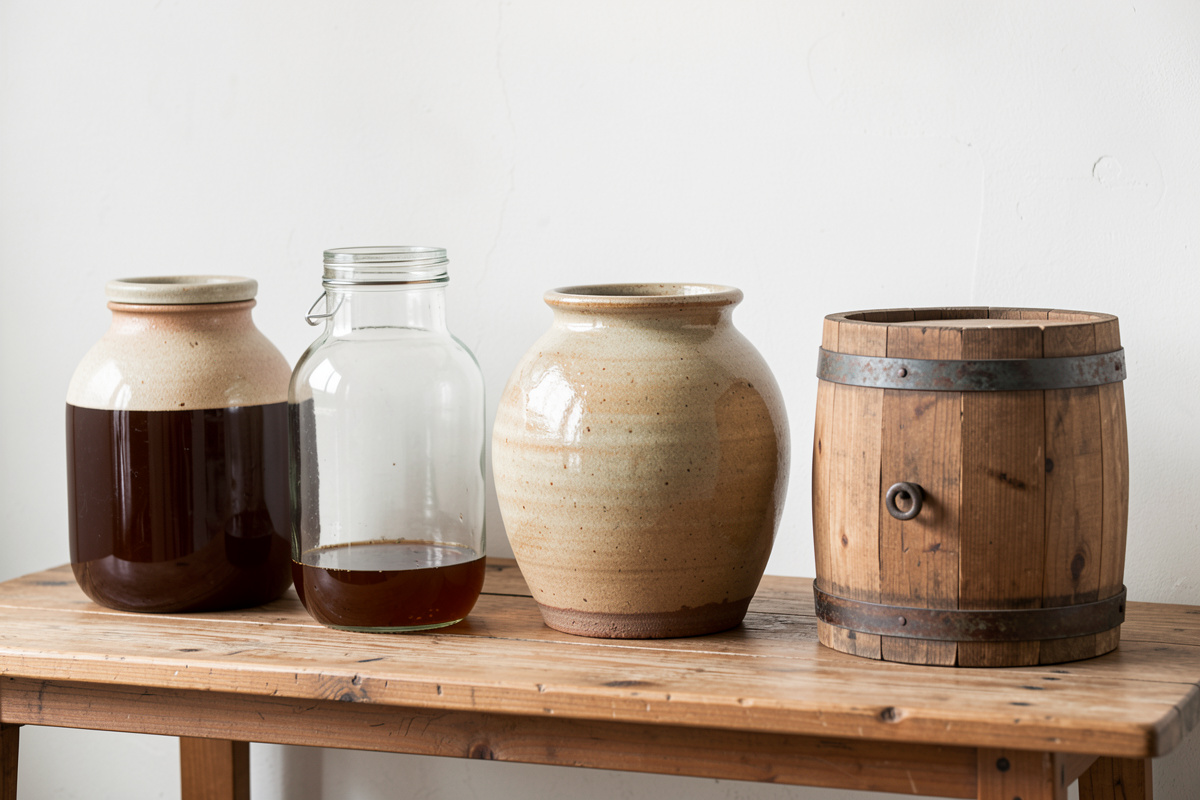
Four vessel types cover essentially every home vinegar situation, from a first quart of cider vinegar to a perpetual Orleans-method cask. Each trades off visibility, volume, and how easily it runs as a continuous system.
| Vessel | Material | Surface area | Best for | Watch-outs |
|---|---|---|---|---|
| Wide-mouth glass jar | Glass | Excellent | Beginners; watching the mother form | Light exposure; cover from direct sun |
| Glazed stoneware crock | Food-safe glazed ceramic | Very good | Larger batches; light-proof aging | Cannot see inside; check by smell |
| Wooden barrel / cask | Oak (food grade) | Good (plus wall oxygen) | Orleans method; continuous brewing | Needs seasoning; evaporation losses |
| Spigoted continuous vessel | Glass or glazed ceramic | Very good | Draw-and-refill perpetual vinegar | Keep spigot clean; refill with alcohol |
For most people starting out, the glass jar is the right answer and I still run several. You can watch the mother lay down its film, judge clarity at a glance, and the cost is trivial. A set of wide-mouth gallon glass jars will run more batches than you can keep cultures for. As an Amazon Associate I earn from qualifying purchases.
Materials: What Acetic Acid Can and Cannot Touch
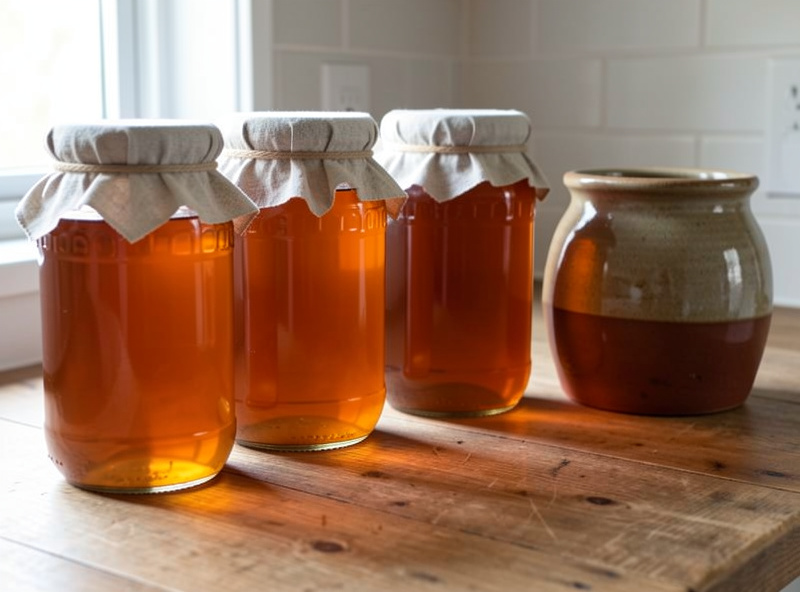
Vinegar is corrosive, and that rules out whole categories of container. Bare reactive metals — aluminium, copper, cast iron, bare carbon steel — are out completely; acetic acid attacks them, leaching metal into your vinegar and pitting the vessel. Food-grade glass, glazed stoneware (with a glaze rated food-safe and lead-free — the FDA’s guidance on lead in food and foodwares is why I only run glazes explicitly marked lead-free for long acetic holds), and seasoned oak are the safe long-term materials. Food-grade HDPE plastic works for short stage-one runs but I do not love it for the long acetic hold.
Stainless steel is the one nuance worth stating correctly: high-grade 304 or 316 stainless tolerates brief vinegar contact, which is why funnels and ladles in stainless are fine, but I would not run a months-long acetic ferment in a steel vessel. For anything that holds vinegar for weeks, default to glass or glazed ceramic and you will never have a materials problem. The persona-proof test I use: if I would not store finished vinegar in it for a month, I do not ferment vinegar in it either.
The Cover Is Part of the Vessel
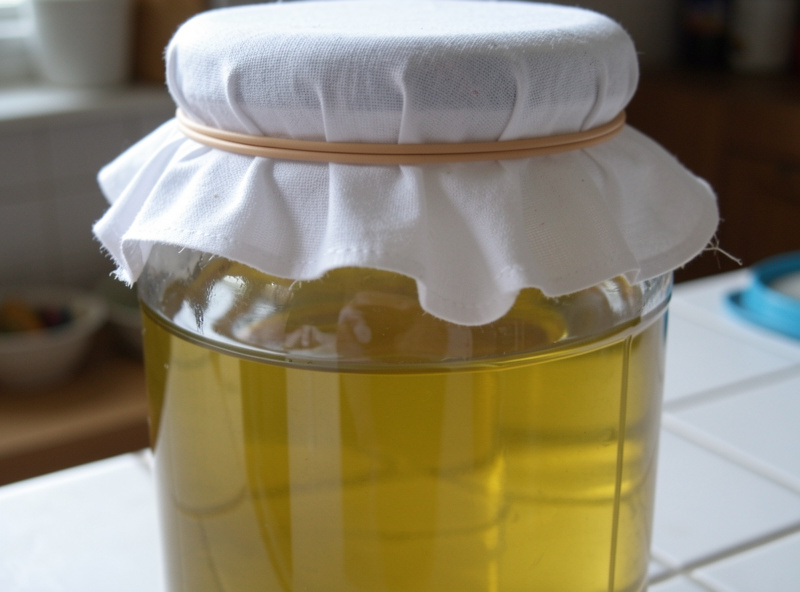
Whatever the body of the vessel, the lid decides whether it works. The single biggest beginner mistake in all of vinegar making is sealing the jar with an airtight lid — sealed substrate never acetifies, it just sits as alcohol indefinitely, because you have starved the aerobic bacteria of oxygen. The cover must breathe: a cotton cloth, a double layer of muslin, or a paper coffee filter, secured tightly at the rim with a band.
That cover is doing real work. It lets oxygen in while keeping dust and, critically, fruit flies out. Two flies in a 4-litre batch can ruin it within 48 hours by seeding competing yeasts and bacteria, so the cloth has to sit tight with no gaps at the edge. This is the exact inverse of an airlock setup, and confusing the two is why so many first vinegar batches stall — the very tool that protects a sauerkraut crock suffocates a vinegar one.
Scaling Up: Crocks, Casks, and Continuous Brewing
When a jar is no longer enough, two paths open up. A glazed open-top stoneware crock gives you far more volume with a still-broad surface and the bonus of blocking light, which some makers prefer for slow aging; the only cost is that you judge progress by smell and taste rather than sight. The classic step beyond that is the Orleans method in a wooden cask: a seasoned oak barrel laid on its side with a bung-hole left open and screened, where vinegar is drawn off the bottom and replaced with fresh alcohol on top, running indefinitely.
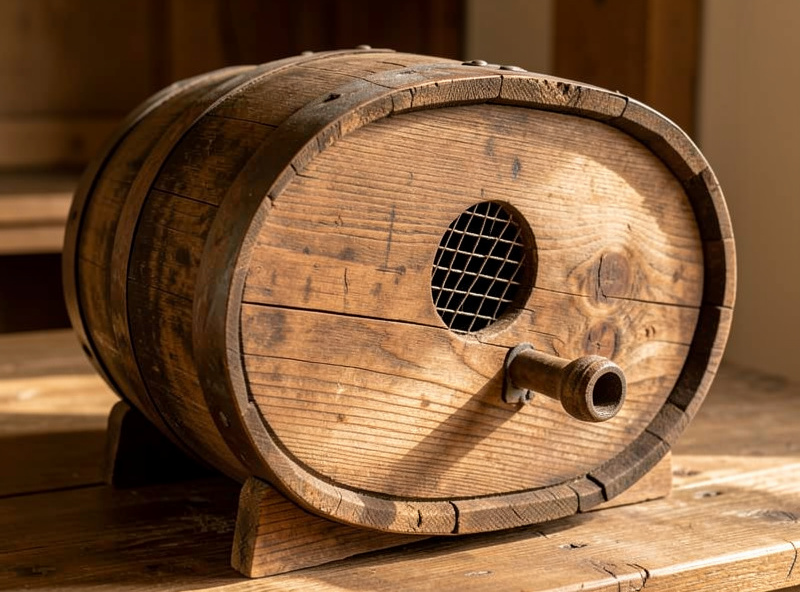
The continuous approach is where vinegar becomes a perpetual system rather than a batch project. A spigoted vessel — glass or glazed ceramic with a tap near the base — lets you draw finished vinegar and top up with fresh wine or cider without ever disturbing the mother on top, the same continuous-brew logic I run on my kombucha rig. Oak adds a slow background flavour and lets a little oxygen through its walls, but it needs seasoning and you will lose some volume to evaporation through the staves. For most home kitchens, a wide jar today and a crock or spigoted vessel when you outgrow it is the whole progression. Once the vessel is right, the rest is just watching the fermentation stages play out and keeping the mother healthy.
Cleaning a Vinegar Vessel Without Killing the Next Batch
Vinegar vessels need a different cleaning routine than the rest of the bench, because soap residue is the enemy of a fast start. I never use detergent on a jar or crock that holds vinegar — surfactant film left on the glass disrupts the mother and stalls the next acetification. Hot water and a stiff brush handle most of it; for a vessel that has held a mother for months, I rinse with a splash of finished vinegar rather than soap, which sanitises and conditions the surface in one step.
Between batches, dry the vessel completely if you are storing it, or better, keep it in continuous service so the established culture never has to restart. A spigot or tap is the one part that needs real attention: sugar and fine pulp lodge in the bore and breed off-flavours, so I flush mine with hot water and a pipe brush after every draw. Oak casks are the exception — never scrub the inside of a seasoned barrel, since the resident culture lives in the wood; just keep it topped up and screened.
One more habit worth building: match the vessel to the batch so you are not fighting headspace. A jar more than two-thirds empty exposes the mother to more air than it needs and dries the surface; a jar filled past the shoulder leaves too little surface for fast acetification. I aim to fill a wide vessel to roughly 60 percent of its height, which on my 4-litre jar means that 2.5-litre charge and a broad, stable surface. Scale the vessel down for a single quart of cider and up to the crock for a gallon-plus run, and the same surface logic carries the whole way.
Frequently Asked Questions
What is the best container for making vinegar at home?
A wide-mouth glass jar is the best starting vessel because it maximises the air-to-liquid surface Acetobacter needs and lets you watch the mother form. A 4-litre jar with a 22-centimetre opening filled to about 2.5 litres is my benchmark geometry.
Can I make vinegar in a sealed jar?
No. Acetobacter is aerobic and needs constant oxygen, so a sealed airtight jar leaves the substrate sitting as alcohol indefinitely. Cover the vessel with breathable cloth or a coffee filter secured with a band instead of any lid or airlock.
What materials are safe for fermenting vinegar?
Food-grade glass, lead-free glazed stoneware, and seasoned oak are safe for the long acetic stage. Avoid reactive bare metals like aluminium, copper, and cast iron, which acetic acid corrodes and leaches. High-grade stainless tolerates only brief contact.
Does the shape of the vessel matter?
Yes, more than the size. Acetobacter works only at the surface, so a wide shallow vessel acetifies far faster than a tall narrow one of the same volume. Always pick the widest, shallowest container you can, never a narrow-necked carboy.
What is a continuous vinegar vessel?
A continuous vessel, such as a spigoted jar or an Orleans-method oak cask, lets you draw off finished vinegar from the bottom and top up with fresh alcohol without disturbing the mother on top. It turns vinegar into a perpetual system rather than single batches.
Further Reading
- Home Vinegar Making: The Complete Guide from Mother to Bottle
- Vinegar Fermentation Stages, From Sugar to Acetic Acid
- The Mother of Vinegar, Explained
- Crock vs Jar vs Vacuum Bag: Which Fermentation Vessel Wins
- Infused Vinegar Recipes and Methods

About Kenny Nyhus Fadil
A home fermenter documenting brines, bubbles, and the occasional moldy tragedy.
Keep Bubbling
How to Make Apple Cider Vinegar From Scratch (With Mother)
Vinegar Brewing at Home: Mother Cultures, Acetobacter, Curing-Brine Crossover