Water Kefir Guide for Beginners: Your First Fizzy Batch

This water kefir guide for beginners gets you from dry grains to a fizzy first batch in about 48 hours. Water kefir grains ferment a simple sugar water at room temperature, dropping it from around pH 6 to pH 3.5 and leaving a light, dry soda under 1% ABV. It is the fastest, most forgiving fermented drink I keep on my shelf.
I run water kefir grains alongside a kombucha SCOBY and a vinegar mother, and of the three, the kefir grains are the ones I hand to anyone nervous about fermentation. There is no SCOBY to inspect, no week-long wait, and the grains multiply on their own so you are never short. If you have found kombucha too sharp, this is the drink that converts you.
What Water Kefir Grains Actually Are
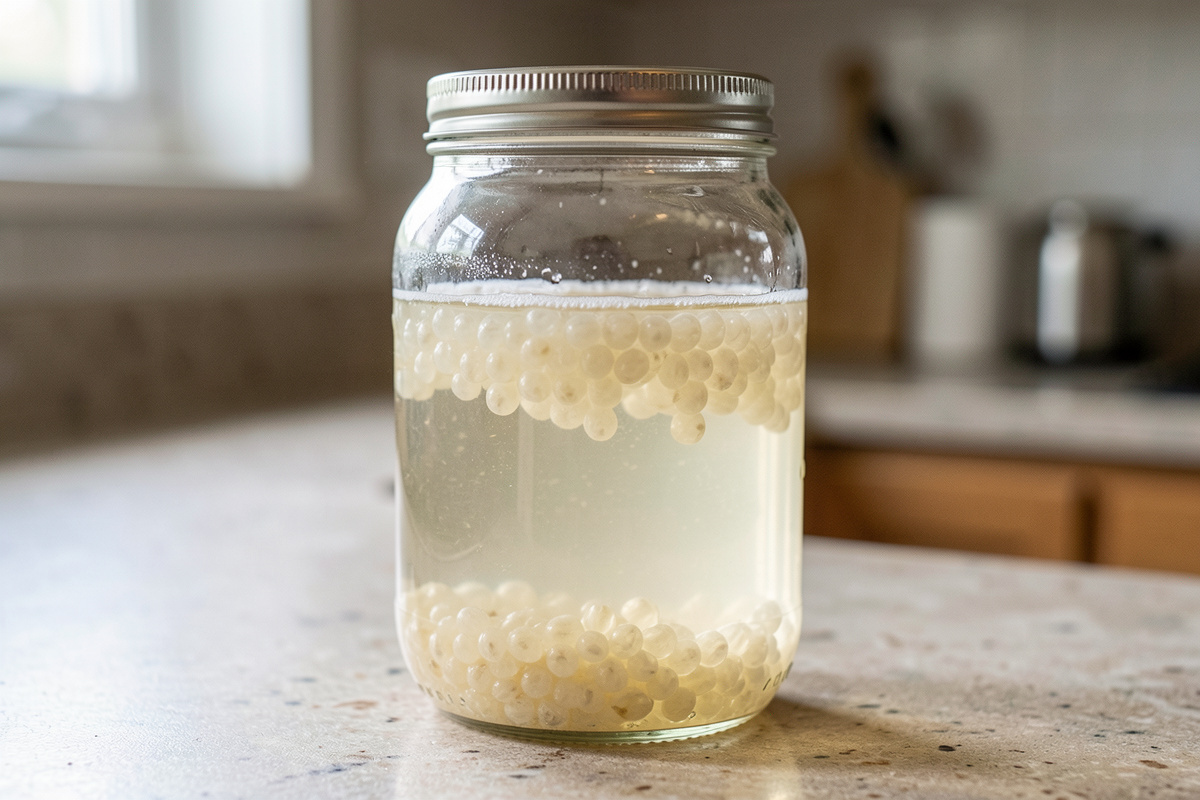
Water kefir grains are not grains in the cereal sense. They are translucent, crystalline colonies of bacteria and yeast — a symbiotic culture that looks like little cauliflower florets or cloudy ice. Drop them into sugar water and they consume the sugar, releasing CO2, a trace of alcohol, and the lactic and acetic acids that sour the drink. The grains grow as they feed; a healthy culture roughly doubles every few weeks in my kitchen.
Because the grains are reusable and self-propagating, one packet is a lifetime supply. You strain them out after each batch and immediately start the next, which is why water kefir becomes a rhythm rather than a project. Live water kefir grains arrive either hydrated or dried; dried grains need two or three warm-up batches before they hit full speed. As an Amazon Associate I earn from qualifying purchases.
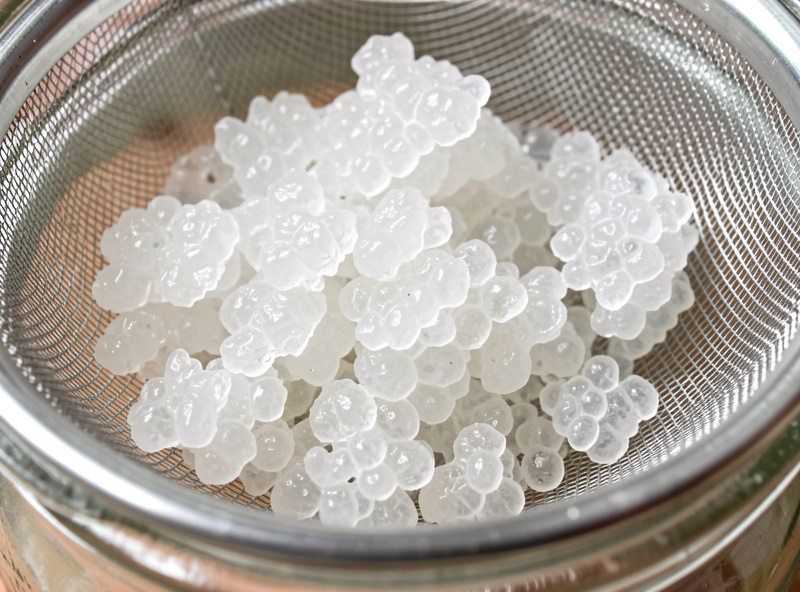
The Sugar and Water That Keep Grains Healthy
Water kefir grains are mineral feeders, and this is where beginners stall them out. Stripped white sugar alone slowly starves the grains of the minerals they need, so I use whole or raw sugar, or add a pinch of unrefined sugar and a dried fig or a few raisins to a white-sugar batch. My standard ratio is about 60 grams of sugar per liter of water — roughly a quarter cup per quart — which the grains convert without trouble.
Water matters as much as sugar. Chlorinated tap water suppresses the culture; chlorine and chloramine are there to kill microbes, and your grains are microbes. I let tap water sit out overnight or use filtered water, the same habit that keeps every culture on my bench lively. Avoid prolonged contact with reactive metal — I strain through nylon mesh and ferment in glass. Get the sugar, the minerals, and the water right and the grains will run for years.
Your First Batch, Step by Step
Dissolve 60 grams of sugar in a little warm water, top the jar to one liter with room-temperature dechlorinated water, and make sure it is no warmer than lukewarm before adding grains — heat above body temperature damages them. Add about three tablespoons of grains, cover with a cloth or a loose lid, and leave it at room temperature out of direct sun. In 24 to 48 hours the liquid turns cloudy, loses most of its sweetness, and smells lightly yeasty and tart.
Taste at the 24-hour mark. When it is pleasantly tangy with just a hint of remaining sweetness, it is done; if you let it run fully dry it gets sharp and the grains can struggle for food. Strain out the grains, start your next batch immediately, and the strained liquid is now drinkable as is — or you can carbonate it. The same first-ferment-then-second-ferment logic I use across every drink in the fermented drinks guide applies here.
Second Ferment: Where the Fizz Comes From
The first ferment makes water kefir tangy but mostly flat. To build the soda-like carbonation, bottle the strained liquid with a little fresh sugar or fruit, seal it, and let it sit one to three days at room temperature. I add a tablespoon of fruit juice or a few pieces of fresh fruit per bottle; the residual yeast eats that sugar in the sealed bottle and traps the CO2. Use proper swing-top bottles that hold pressure, not loose-capped jars.
This stage carries the only real hazard in water kefir: pressure. A bottle left warm and sealed for too long can over-carbonate and, in extreme cases, burst. I keep one plastic bottle as a tester — when it feels rock-hard, every bottle goes in the fridge, which slows the yeast to a crawl. The flavoring ideas in my guide on second-fermentation flavor translate directly; ginger, lemon, and berries all shine in water kefir.
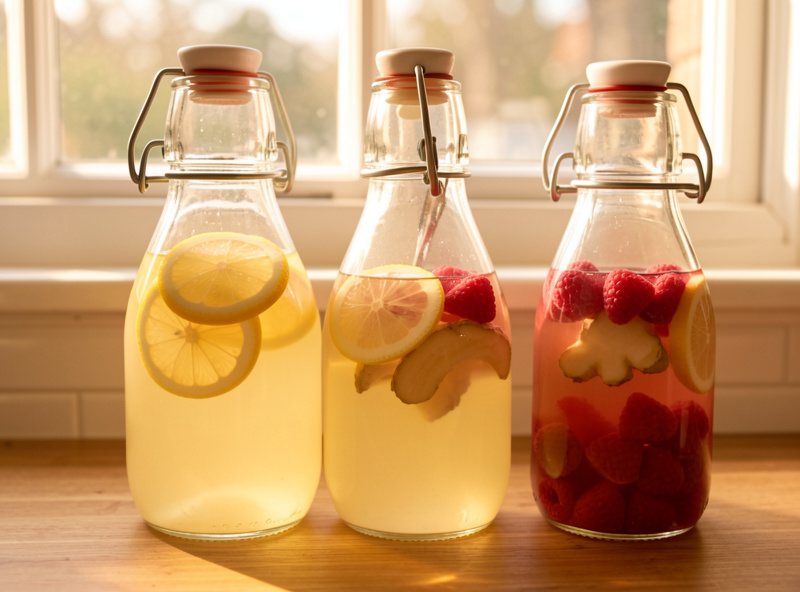
Flavor Combinations Worth Trying
Plain water kefir is pleasant but neutral; the second ferment is where it becomes a drink people ask you to make again. My most-requested combination is ginger and lemon — a thumb of grated ginger and a squeeze of lemon per bottle gives a dry, spicy soda that rivals anything commercial. Tart fruit carbonates best because it brings both sugar and acidity: pomegranate, raspberry, and sour cherry all build strong fizz and a clean color.
For something more grown-up, I run a fig-and-cardamom batch in winter using the dried fig that also feeds the grains minerals, and a cucumber-mint version in summer that drinks like a soda but tastes like a garden. Citrus peel, a vanilla pod, or a few crushed berries each push the flavor a different direction without adding processed sugar beyond what the yeast needs to carbonate. The rule across all of them: bottle while still faintly sweet, because the fruit sugar and the residual sugar together drive the carbonation. Over-sweeten and you risk a gusher; under-sweeten and you get a flat, sour result.
Water Kefir vs Milk Kefir vs Kombucha
Beginners often ask which kefir to start with, and the honest answer depends on what you want to drink. Water kefir is a light, clear soda; milk kefir is a thick, tangy dairy drink closer to drinkable yogurt; kombucha is a sharper, more vinegary tea. Water kefir ferments fastest and is the most neutral canvas for flavoring. If dairy is on your table, the milk kefir making guide covers its grains, which feed on lactose and cannot be swapped with water kefir grains. Many fermenters, myself included, simply keep both going side by side, since each takes only minutes of attention a day.
Is Water Kefir Safe? The Honest Answer
Water kefir is among the lowest-risk ferments you can make. It acidifies quickly to around pH 3.5, well below the 4.6 floor where harmful bacteria could grow, and it starts in an open, aerobic jar. On my meter a finished batch reads in the low 3s, the same safe acidity range as kombucha. If you want to confirm rather than trust, my notes on the best pH meter for fermentation cover what to buy.
If a white film forms on the surface, it is almost always kahm yeast — flat, pale, harmless; skim it and continue. Fuzzy, raised, colored growth is mold, which is rare in something this acidic, and means discard the batch and the grains. Learning to tell the two apart on sight, covered in the kahm yeast guide, is the single most useful safety skill in this hobby.
Troubleshooting a Slow or Off Batch
If your grains are not souring the water, suspect temperature, food, or water in that order. Cold rooms slow them dramatically; below about 18 degrees Celsius the ferment crawls. Underfed grains — too little sugar, or too many cycles on stripped white sugar — go sluggish, so feed a mineral boost. And chlorinated water stalls them outright. A batch that ferments but will not carbonate in the second ferment usually had no residual sugar to feed, a leaky cap, or a too-cold room.
Grains that stop growing are usually being underfed or overcrowded; thin the colony and feed fresh sugar water. If you need a break, cover the grains in fresh sugar water, cap loosely, and refrigerate for a few weeks — then run two throwaway batches to wake them up before trusting a drink. Once you internalize the rhythm, water kefir becomes the easiest fermented drink to keep going indefinitely.
Frequently Asked Questions
How long does water kefir take to ferment?
24 to 48 hours for the first ferment at room temperature, then one to three days for an optional second ferment to build carbonation. Warmer rooms speed it up, so taste at 24 hours to catch it while still lightly sweet.
Does water kefir contain alcohol?
Only a trace. A standard home water kefir finishes under 1% ABV, similar to kombucha. A longer or warmer second ferment in sealed bottles can nudge it slightly higher, but it stays well below the level of beer.
What sugar is best for water kefir grains?
Whole or raw sugar, because the grains feed on its minerals. Plain white sugar works short-term but slowly weakens the grains, so add a pinch of unrefined sugar or a dried fig or raisin to a white-sugar batch to keep the culture mineral-fed.
Why is my water kefir not fizzy?
Usually no residual sugar fed the second ferment, the cap is not airtight, or the room is too cold for the yeast. Bottle while the drink is still slightly sweet, add a spoon of fruit or juice, and seal in a swing-top bottle for one to three days.
Can I use tap water for water kefir?
Only if it is dechlorinated. Chlorine and chloramine suppress the culture and stall the ferment. Let tap water sit out overnight or use filtered water, the same precaution that keeps any fermentation culture healthy.
Related Guides
- Fermented Drinks Beyond Kombucha: The Complete Guide
- Milk Kefir Making Guide
- Ginger Beer Fermentation Guide
- Kombucha Brewing: The Complete Home Guide
- Kahm Yeast: How to Tell It From Mold

About Kenny Nyhus Fadil
A home fermenter documenting brines, bubbles, and the occasional moldy tragedy.