Tepache: Fermented Pineapple in Four Days

Tepache is the gateway drug of beverage fermentation: a lightly fizzy, tart-sweet Mexican drink made from the peels and core of a single pineapple, unrefined sugar, water, and a few days on the counter. It is wild-fermented, ready in two to four days, and lands at a gentle 1–3% ABV — closer to kombucha than to wine. If you have ever felt intimidated by airlocks and hydrometers, tepache is where you start. It uses the fruit you were about to throw away and rewards you almost immediately.
I keep tepache in heavy rotation precisely because it is so forgiving — it sits at the easy end of the same wild-fermentation spectrum as my kombucha and lacto pickles, governed by the same falling pH that keeps it safe. Where the rest of the beverage fermentation hub asks for patience measured in months, tepache asks for days. Here is exactly how I make it, how to read when it is done, and how to keep it from sliding into vinegar.
What You Need: A Pineapple’s Worth of Scraps
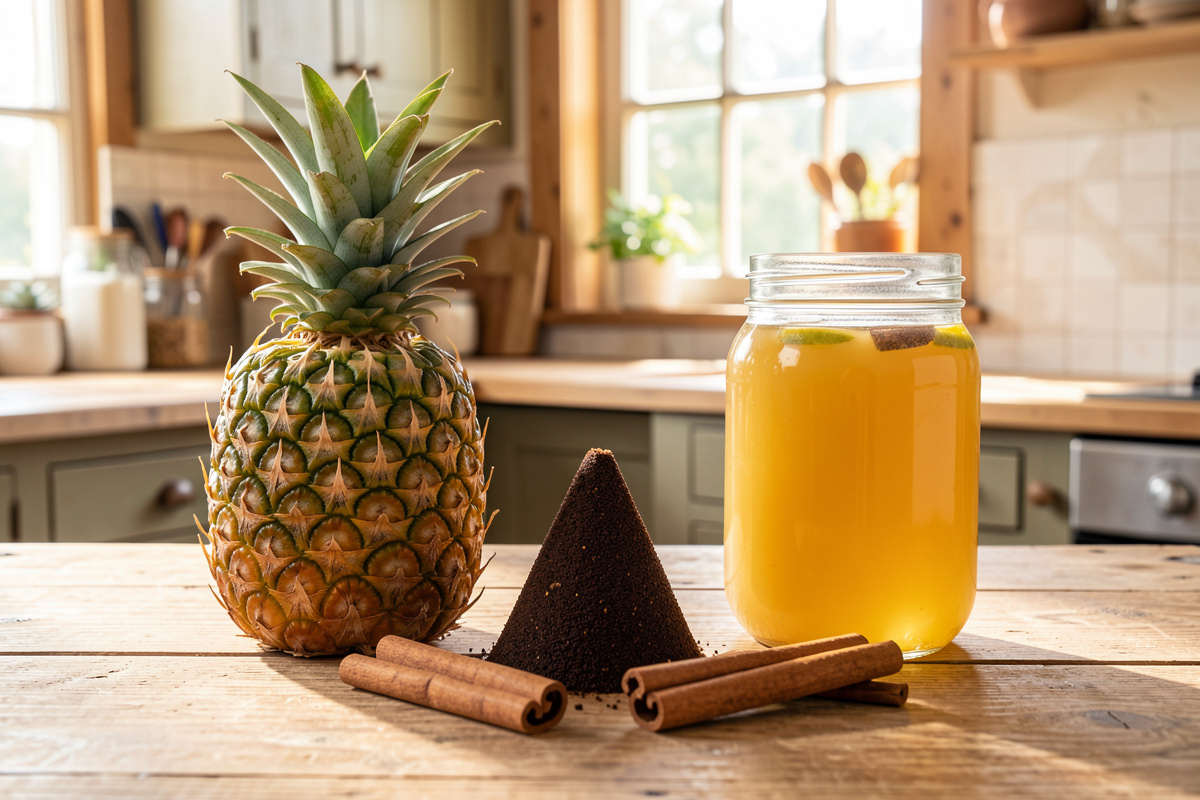
The beauty of tepache is that the peel does the work. When you eat a pineapple, save the whole rind and the core — that is your ferment. Wild yeast and bacteria live on the skin, so the unwashed (just rinsed) peel inoculates the brew without you adding any culture. To that you add piloncillo, the unrefined Mexican cane sugar sold in cones, which brings a molasses depth; brown sugar is a fine substitute. Then water, and traditionally a stick of cinnamon and a few cloves for warmth.
The rough ratio I use is the peels of one pineapple, about 150–200 g of piloncillo or brown sugar, and roughly 2 litres of water — enough sugar to feed a brisk ferment and leave the drink lightly sweet. There is no boiling and no special equipment: a large jar or crock, something to keep the peels submerged, and a breathable cover. This is the same open, wild approach as my kraut crocks, just sweeter and faster.
The Method, Start to Sip
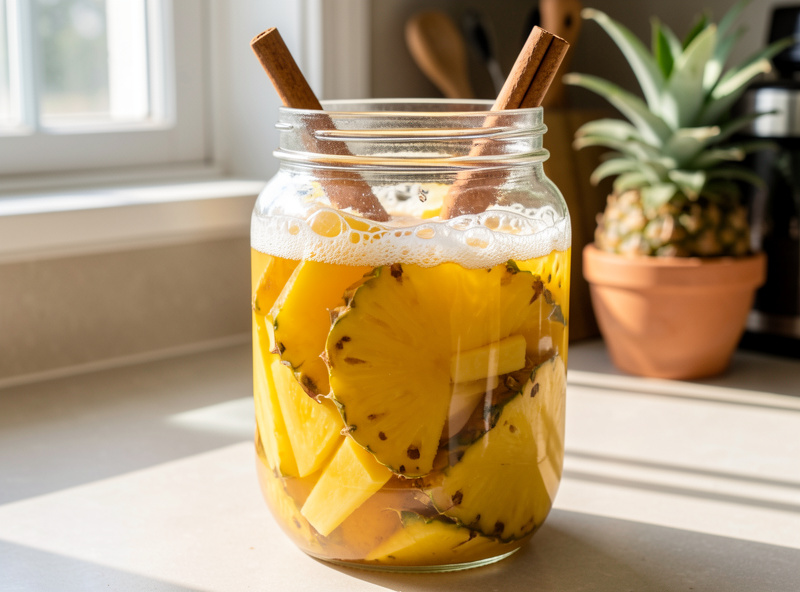
Dissolve the sugar in a little warm water, then combine it with the rest of the cool water, the pineapple peels and core, and your spices in a large jar or crock. Keep the peels pushed below the surface as much as you can — floating fruit is where mold likes to take hold — and cover with a cloth or loose lid that lets CO2 escape while keeping flies out. Leave it somewhere warm, around 20–24°C, and within a day you will see bubbles forming as the wild yeast wakes up and starts converting the sugar.
By day two or three a foamy head develops and the smell turns from sweet to pleasantly tangy and slightly boozy. Taste it daily from day two — this is the whole skill. When it is fizzy, tart, and still lightly sweet for your liking, it is done. Strain out the peels, bottle the liquid, and refrigerate; the cold dramatically slows the ferment and holds it where you like it. Left too long at room temperature it keeps souring and eventually turns toward vinegar, which is the same Acetobacter chemistry behind my homemade vinegars — useful when you want it, not when you wanted a refreshing drink.
Reading Safety and Knowing When to Toss
Tepache is safe by the same logic as every other ferment on this site: the wild yeast and bacteria rapidly drop the pH into the acidic range, and that acidity, combined with the trace alcohol, makes the brew hostile to pathogens. The short, sugary, acidic ferment has a long folk-safety record. Your job is simply to keep the fruit submerged and to watch the surface. A thin white film is usually kahm yeast — harmless, the same film I skim off my lacto crocks — and you can lift it off and carry on. Fuzzy, raised, coloured growth (green, black, pink) is true mold, and that batch goes in the bin, no debate.
The other thing to respect is pressure. If you bottle tepache while it is still actively fermenting and seal it tight at room temperature, it keeps producing CO2 and can build real pressure in the bottle. Either refrigerate it to slow things right down, use bottles built for pressure, or “burp” the bottles daily. A gentle fizz is the goal, not a geyser. Because it is so low in alcohol and so quick, tepache is the batch I hand anyone nervous about fermentation — it teaches the wild-ferment instincts (submersion, daily tasting, kahm-versus-mold) that carry straight into everything else.
Why Tepache Ferments So Fast
It helps to understand why tepache is ready in days when a cider takes weeks. Three things stack in its favour. First, the sugar is already dissolved and instantly available — there is no starch to convert, no complex must to break down, so the wild yeast starts eating immediately. Second, the ferment runs warm, in the 20–24°C range where wild yeast is most active, which speeds everything up (the same temperature that would throw harsh fusels in a high-gravity wine simply makes a fast, clean job of a low-sugar drink). Third, you are not asking for much alcohol — a 1–3% target is a short sprint for the yeast, not the marathon to 13% that wine demands.
This is also why tepache rarely suffers the stalls and off-smells that trouble mead. It never pushes the yeast near its alcohol tolerance, never runs low on the nutrients the fruit provides, and never sits long enough to develop the problems of a long ferment. The whole thing is over before most things can go wrong — which is exactly what makes it the ideal first ferment. The measurement lens still applies if you want it: a pH strip will show you the acidity dropping over those few days, and a refractometer will show the sugar falling, but honestly, daily tasting is all the instrument tepache needs.
Serving and Storing Tepache
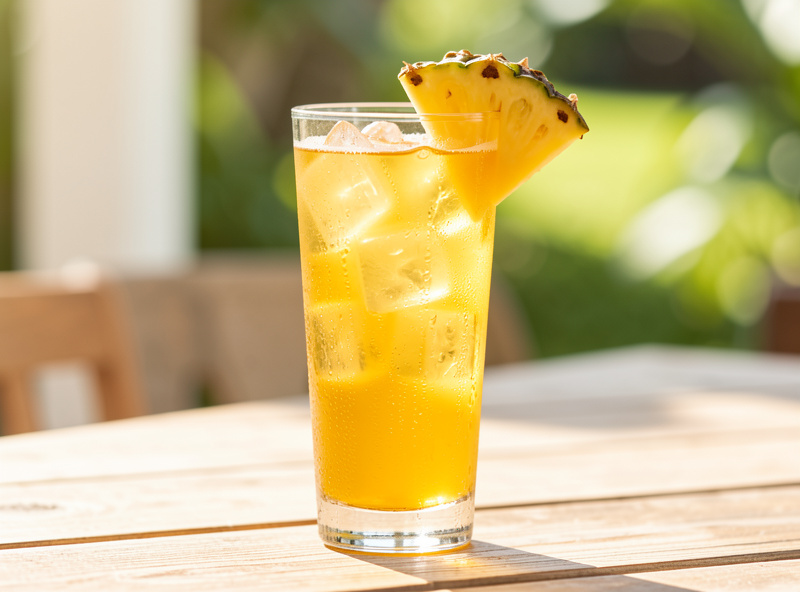
Tepache is best cold, poured over ice, and it shines as a base for other drinks. Traditionally it is sometimes cut with a splash of beer; I like it straight, or topped with sparkling water for a lighter spritz, or used as a tart-sweet mixer. Because the flavour is bright and a little funky, it pairs naturally with rich, spicy food — it cuts through tacos and grilled meat the way a good sour beer would.
Stored in the fridge in a sealed bottle, strained tepache keeps for about a week to ten days, slowly getting drier and more sour as the cold-slowed ferment creeps along. I make it in small batches and drink it young because that fresh, lightly sweet, gently fizzy stage is the best of it. If a bottle does go past its prime and turns properly sour, do not pour it away — that is the start of a pineapple vinegar, and it folds straight into the same vinegar practice as everything else acidic on my bench. Nothing wasted, which is the whole spirit of tepache in the first place.
Variations Once You Have the Basic Brew
Once the plain version feels routine, tepache takes happily to riffs. A handful of fresh ginger sharpens it; a few dried chiles or a split jalapeño give a tepache that bites; star anise or allspice deepen the spice profile beyond cinnamon and clove. For a second, drier, slightly stronger ferment you can extend the time and let more sugar convert, nudging the alcohol up — though if you want real beverage strength you are better off in cider or fruit wine territory. Some people do a quick second ferment in sealed bottles for extra fizz, the same F2 trick as kombucha, watching the pressure carefully.
You can also lean on other fruit. The peels and cores of apples or pears fold in alongside the pineapple for a more orchard-like brew, and a handful of berries thrown in on the last day tints the drink and adds a layer of tartness. The principle never changes: sugar to feed the wild yeast, fruit scraps to inoculate and flavour, warmth to drive it, and your own daily taste to call the finish. Keep the ratios loose and trust your palate — tepache is the rare ferment where precision genuinely does not matter, and that freedom is exactly what makes it such a good first brew. Once your instincts are calibrated here, the airlocks and hydrometers of the stronger beverages stop looking intimidating and start looking like what they are: the same intuition, just written down as numbers.
What I love about tepache is that it closes the loop — the scraps of one pineapple become two litres of a genuinely good drink in less time than it takes a cider to even get going. It is the fastest, friendliest doorway into beverage fermentation, and the instincts it builds are the same ones that serve you through the slower, stronger brews. If tepache hooks you, the other quick folk-ferment worth trying next is bread kvass — same speed, same wild approach, a completely different flavour.
Keep Brewing
- Fermenting Alcohol at Home: The Complete Hub
- Kvass: Fermented Bread Beer
- Making Hard Cider at Home
- Fruit Wine Fermentation Guide
- Mead Making Guide for Beginners

About Kenny Nyhus Fadil
A home fermenter documenting brines, bubbles, and the occasional moldy tragedy.