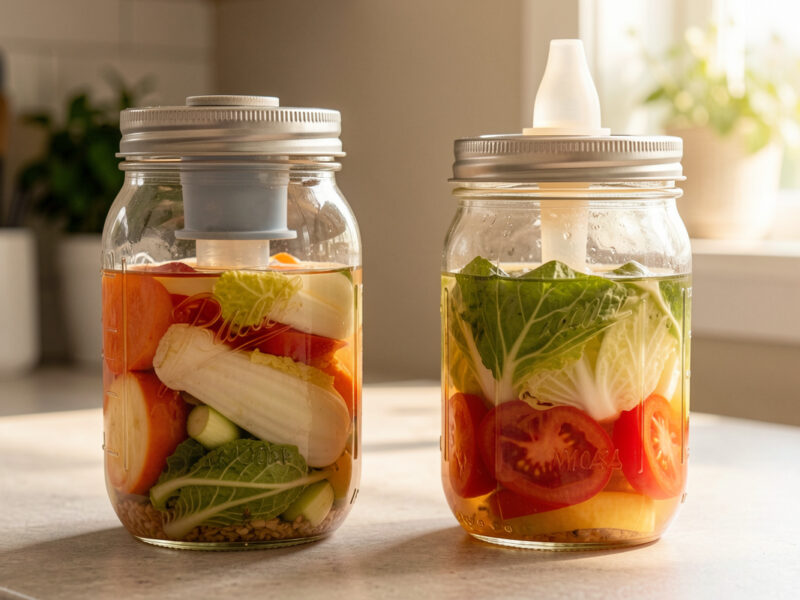
Fermentation Weights: Glass vs Ceramic vs Ziplock Bag Compared

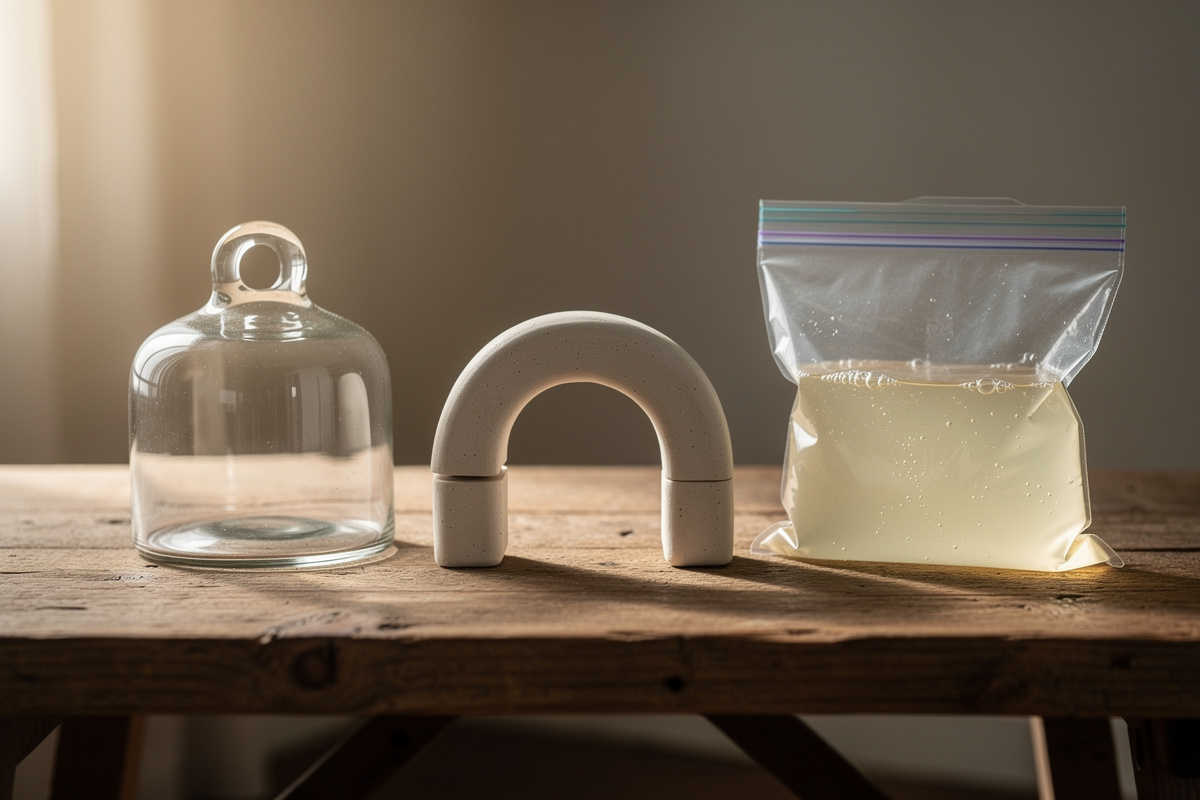
Glass fermentation weights are the best all-around choice for home fermentation — durable, food-safe, and $10-20 per pair for mason-jar size. Ceramic weights excel in large crocks; ziplock bags filled with brine work as a free DIY substitute. Each method has specific use cases where it excels.
Disclosure: FermentFoundry is reader-supported. As an Amazon Associate I earn from qualifying purchases made through links in this article, at no extra cost to you. I only point to gear I actually use or would buy for my own kitchen.
Fermentation weights are one of many decisions in a complete home kit; the rest (vessels, airlocks, sensors, climate control) is in my fermentation equipment guide.
I have used all three weight types across roughly 80 ferments over the past four years, from quick 5-day sauerkrauts to 8-week pepper mashes. My first 20 ferments used the ziplock method because I was reluctant to spend $12 on glass discs I might not need. A leaky bag on batch #21 — brine seepage that diluted my sauerkraut and promoted surface mold — convinced me to upgrade. The glass weights arrived two days later, and I have not lost a single ferment to surface contamination since.
The right fermentation weight is not always obvious because all three options “work” — they keep cabbage submerged, prevent surface mold, and produce successful sauerkraut. The differences appear in convenience, durability, cleanup, and reusability across many ferments. This guide ranks the three options across criteria that matter most to home fermenters and recommends the right choice for typical use cases.
Glass Fermentation Weights: The Modern Standard
Glass fermentation weights are purpose-built discs of food-safe glass with a finger-grip handle, sized to fit standard wide-mouth mason jars (about 64-70mm). Place inside the jar on top of the cabbage to keep it submerged below the brine line. Easy to wash, dishwasher-safe, durable across hundreds of ferments, and stack neatly when not in use.
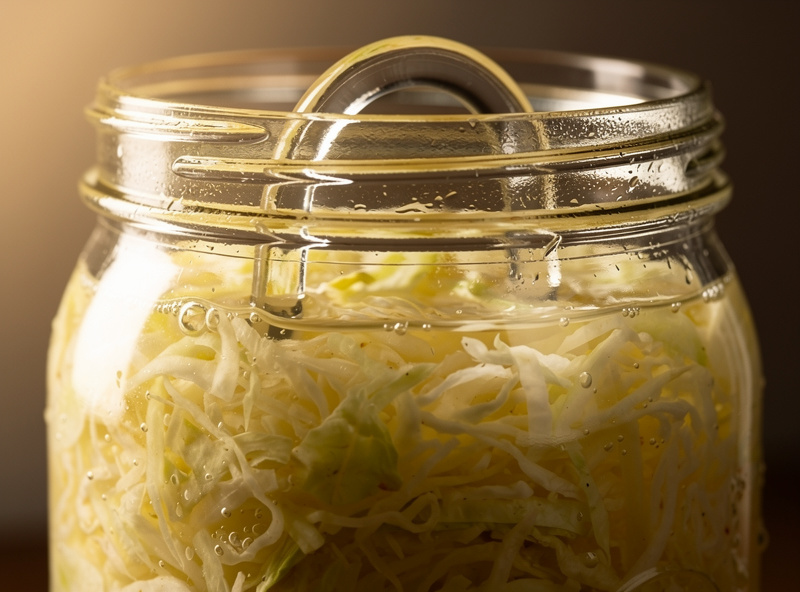
Glass weight characteristics:
- Material: tempered or non-tempered food-grade glass: Both work. Tempered is more drop-resistant.
- Sizing: 64-70mm diameter for wide-mouth jars: Standard mason-jar size. Some 86mm options for larger crocks.
- Finger-grip handle: Small loop or knob on top for easy retrieval from the jar.
- Cleaning: dishwasher-safe: Or hot soapy water hand wash.
- Lifespan: indefinite with reasonable handling: Glass weights last for hundreds of ferments unless dropped.
- Cost: $10-20 per pair: Pairs are economical because most batches need 1-2 weights.
- Best for: most home fermenters using mason jars: The default choice.
- Drawback: can crack if dropped: Glass-on-glass impacts particularly risky.
Glass weights from Mortier Pilon, Kraut Source, or generic Amazon brands all perform similarly. Brand differences are mostly cosmetic — handle shape and exact diameter — rather than functional. A generic glass weight 4-pack is sufficient for most home use, and a wide-mouth set like that is the one I reach for first.
Ceramic Fermentation Weights: For Crocks Specifically
Ceramic fermentation weights come in matched sets with stoneware fermentation crocks (Harsch Gairtopf, Polish-style crocks, etc.). They are typically 2-piece weights designed to interlock and cover the cabbage surface inside the crock. Heavier than glass, traditional appearance, but only practical with the matching crock — they do not fit in mason jars.
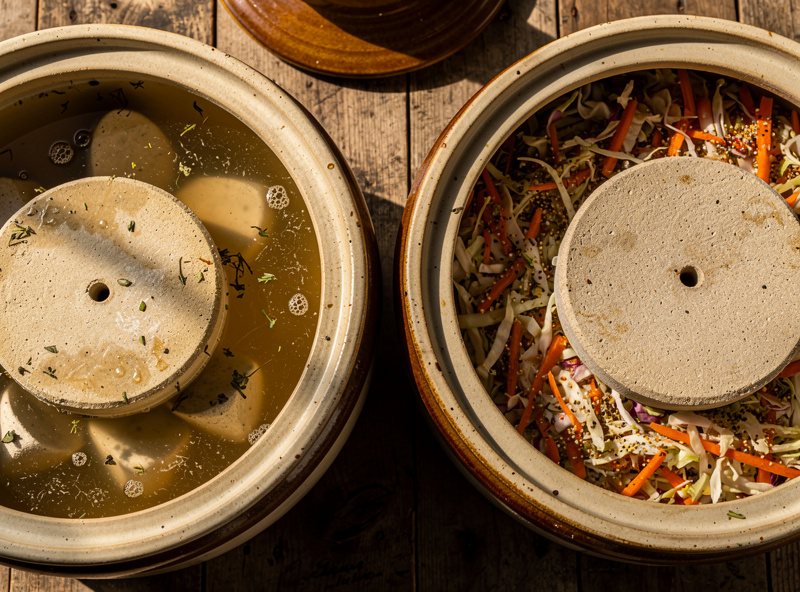
Ceramic weight notes:
- Used with stoneware fermentation crocks: Polish-style or German-style crocks come with matched ceramic weights — a stoneware fermentation crock with stones is the standard all-in-one if you want to ferment by the gallon instead of the jar.
- Two-piece interlocking design: Half-moon stones that fit together to cover the surface.
- Heavier than glass: Pushes cabbage down more aggressively; useful for stiff or chunky vegetables.
- Cleaning: hand wash only: Some glazes prefer non-dishwasher cleaning.
- Lifespan: decades with proper handling: Ceramic weights from old-stock crocks often outlive their owners.
- Cost: included with crock: Standalone ceramic weights are uncommon.
- Best for: traditional crock-style fermentation: Large batches; not for jar fermentation.
- Drawback: only fit specific crocks: Cannot use in mason jars or other vessels.
If you own a fermentation crock, the ceramic weights came with it and are the right tool. If you don’t own a crock, no reason to buy ceramic weights separately — glass weights work better in standard mason-jar setups. For solid-substrate ferments like tempeh and koji cultivation, weights are unnecessary entirely since those cultures grow in thin layers without submersion requirements — but for all brine-based vegetable ferments, weights are essential.
Ziplock Bag Method: The Free DIY Option
The ziplock bag method fills a quality plastic bag with brine (the same salt-water mix as the fermentation), seals it, and places it on top of the cabbage to weight it down. The bag conforms to the jar’s interior shape, providing complete coverage with zero gaps. Costs nothing if you already have ziplock bags and salt; works as well as commercial weights for short ferments.
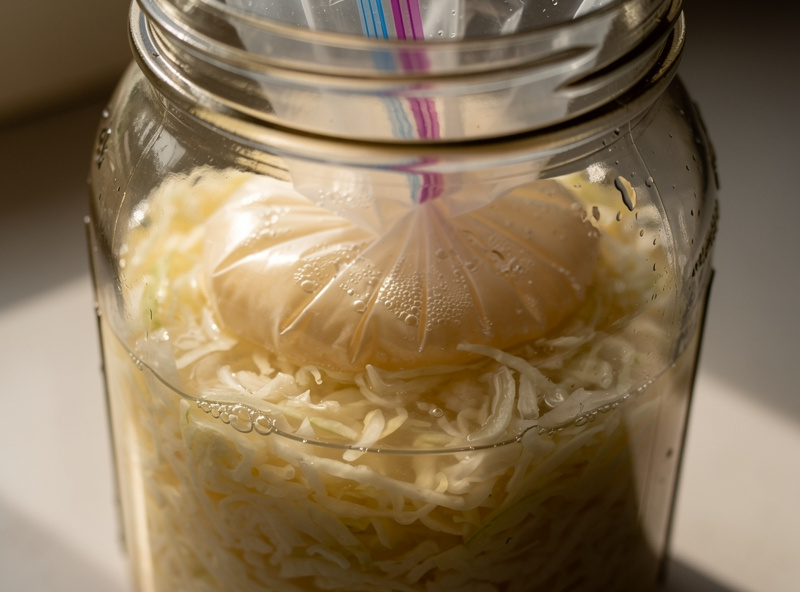
Ziplock bag method notes:
- Material: heavy-duty quart-size ziplock bag: Brand-name bags resist leaks better than generic ones.
- Fill with brine of same composition: If the bag leaks, the spilled liquid does not change the salt ratio.
- Conform to jar shape: The bag fills any gap, providing 100% surface coverage.
- Cleaning: not reusable: Discard after each ferment.
- Lifespan: single-use: Most cost is in the few cents per bag.
- Cost: under $0.10 per ferment: Essentially free.
- Best for: occasional fermenters or budget-conscious starters: Try a few ferments before investing in glass weights.
- Drawback: leaks possible: Bag tears or seal failures introduce contamination risk.
The ziplock method is genuinely effective for short-duration ferments (2-4 weeks). For even faster 3-7 day projects like fermenting hydroponic greens, the bag method is perfectly adequate and saves the upfront cost of glass weights. For longer multi-month ferments, glass weights are more reliable because plastic bags can develop micro-leaks over weeks of contact with salty acidic environment.
Comparison Table
| Method | Cost | Reusability | Best Vessel | Best For |
|---|---|---|---|---|
| Glass weights | $10-20 per pair | Hundreds of ferments | Wide-mouth mason jars | Most home fermenters |
| Ceramic weights | Included with crock ($60-200) | Decades | Stoneware fermentation crocks | Crock-based traditional fermentation |
| Ziplock bag with brine | Under $0.10 | Single-use | Any container | Beginners, budget-conscious, short ferments |
| Cabbage outer leaves | Free | Single-use | Any vessel | Traditional method; less reliable |
| Smaller jar inside larger | Free | Indefinite | Open-mouth crocks | Large-batch fermentation |
A complete setup for most home fermenters is a modest one-time cost: a glass weight 4-pack plus a backup box of heavy-duty quart ziplock bags. If you would rather buy the whole station at once, the Masontops complete fermentation kit bundles waterless airlock lids, glass pebble weights, and a vegetable tamper in a single box — pair it with a case of wide-mouth mason jars and you have everything a mason-jar fermentation station needs.
Most home fermenters end up with 2-4 glass weights as their primary tool, plus occasional ziplock-bag use for emergency one-offs. The ceramic-weight option only applies if you own a stoneware crock.
Common Mistakes With Fermentation Weights
Five mistakes show up across all weight types: too-small weights that float instead of submerging cabbage, weights set on top of brine instead of under it, metal weights (corrode in acidic environment), weights forgotten in the jar after fermentation completes, and skipping weights entirely for “quick” ferments.
Mistakes and corrections:
- Too-small weight that floats: Weight should be at least 80-90% of jar mouth diameter. Smaller weights tilt and float when cabbage releases brine.
- Weight on top of brine: Weight must SINK below the brine line. Add brine until weight is fully submerged.
- Metal weights (steel, aluminum): Acid in fermentation reacts with metal, contaminating flavor and color. Always glass, ceramic, or food-safe plastic.
- Forgetting to remove weights: When transferring to refrigeration, remove weights and clean. Salt and acid corrode any seals long-term.
- Skipping weights for short ferments: Even 24-hour ferments benefit from weights. Surface mold can develop in days when conditions allow.
- Wrong size for jar: Weights for wide-mouth jars do not fit regular-mouth jars. Match the weight to your jar size.
- Reusing single-use bags: Bags develop micro-leaks after one use; replace with fresh bag each ferment.
I once used a ziplock bag that leaked brine into the ferment — the bag had a micro-tear from a sharp cabbage seed, and by day 5 the salt concentration had diluted enough that kahm yeast formed across half the surface. The sauerkraut was salvageable after skimming, but the pH reading confirmed the brine had weakened. Glass weights eliminated that failure mode entirely and paid for themselves within two successful batches.
The reliable practice is to invest in 2-4 glass weights matching your jar size, plus keep ziplock bags as backup. Most home fermenters use 1-2 weights at a time; having spares means starting a new batch without washing the previous batch’s weights.
Conclusion
Start with glass weights. The $20 investment in two pairs eliminates the most common failure point in home fermentation — exposed vegetables above the brine line — and lasts for hundreds of batches. Ziplock bags remain a useful backup for overflow projects or sharing starter cultures, but glass weights are the tool that turns fermentation from a hit-or-miss hobby into a reliable kitchen skill. Ceramic weights are only necessary if you already own a stoneware crock.
Frequently Asked Questions
What is the best fermentation weight for mason jars?
Glass fermentation weights designed for wide-mouth mason jars are the standard choice. Brands like Mortier Pilon, Kraut Source, or generic Amazon all perform equivalently. Pairs cost 10-20 dollars and last for hundreds of ferments.
Can I use a rock or stone as a fermentation weight?
Not recommended unless the stone is food-safe (specifically labeled as such). Most rocks contain trace metals that can contaminate the ferment. Boil any stone weight before first use and avoid porous stones that absorb brine and harbor bacteria.
Do I need fermentation weights or can I just use a smaller jar?
Smaller jars filled with water and placed inside larger fermentation vessels work well for crock-style fermentation. The water-filled jar weight is essentially free. The downside is the visible jar inside ferment, which some fermenters find aesthetically less pleasing than discreet glass weights.
Why does my fermentation weight float?
Either the weight is too small for the jar (less than 80 percent diameter), or the cabbage has released too much air during early fermentation pushing the weight up. Solution: add brine to fully submerge; press the weight down once daily during the first 3-5 days to release trapped air.
How do I clean fermentation weights between ferments?
Wash with hot soapy water; rinse thoroughly. Dishwasher-safe glass weights can go in the dishwasher. Ceramic weights are usually hand-wash only. Sanitize with a brief boil if recovering from a contaminated batch; standard washing is sufficient between successful ferments.
What size weight do I need for half-gallon jars?
Half-gallon mason jars use the same wide-mouth lid size as quart jars (86mm), so any wide-mouth fermentation weight fits. Use 2 weights stacked for half-gallon jars; the additional mass keeps the larger volume of cabbage submerged more reliably than a single weight.
Related Articles
- Why Did My Sauerkraut Turn Mushy?
- Kahm Yeast Guide
- Lacto-Fermented Pickles That Stay Crunchy
- Sauerkraut Mold vs Kahm Yeast
- Easy Napa Cabbage Kimchi Recipe

About Kenny Nyhus Fadil
A home fermenter documenting brines, bubbles, and the occasional moldy tragedy.
Keep Bubbling
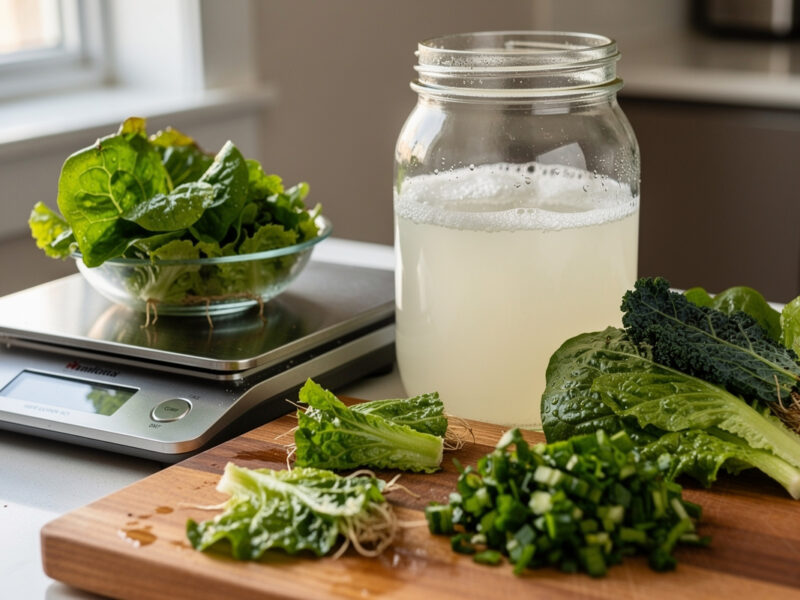
Fermenting Hydroponic Greens: Why Hydroponic Lettuce and Kale Need a Different Salt Ratio
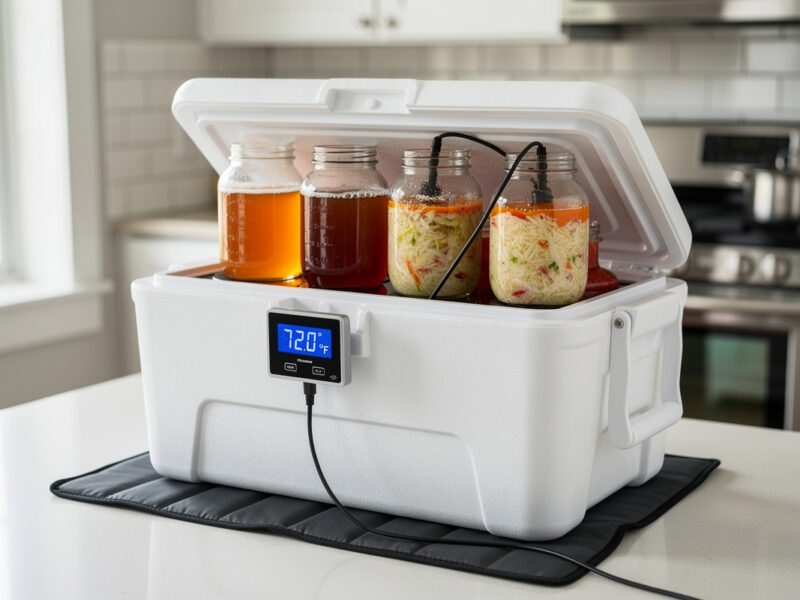
Smart Fermentation Chamber: Temperature and pH Monitoring with Home Automation Sensors