Fermenting Hydroponic Greens: Why Hydroponic Lettuce and Kale Need a Different Salt Ratio

Fermenting hydroponic greens at the standard 2% salt ratio fails roughly 30-50% of the time because their surface lactobacillus population is much smaller than soil-grown produce. Using 2.5-3.0% salt by weight plus a starter culture compensates for this difference and produces reliable ferments.
Hydroponic-greens fermenting uses the same fermentation hardware as field-grown produce — only the salt math changes; the complete equipment build lives in my fermentation equipment guide.
I grow butter lettuce and kale year-round in a 4-rack hydroponic system in my basement, and the first time I tried to ferment a batch at standard 2% salt, I opened the jar to a sulfur-smelling, mold-flecked mess on day 6. I had made kraut from store-bought cabbage for years without a problem. The fix, which I learned after ruining three batches, is three changes to the recipe: more salt (2.5-3.0% instead of 2.0%), a starter culture (a tablespoon of brine from a previous ferment per quart, or whey), and an initial 4-day phase at 60-65°F before returning to room temperature.
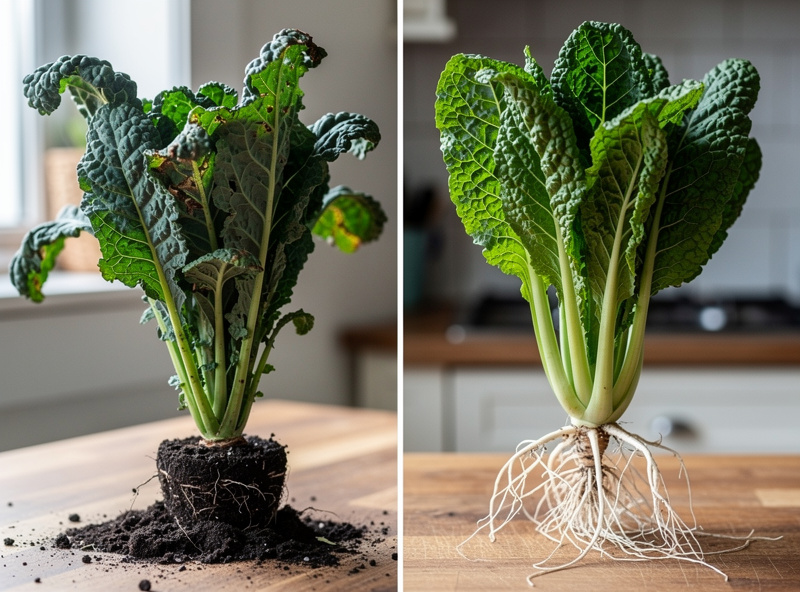
Most fermenters never think about where their lactobacillus comes from. Soil-grown produce ferments because the entire growing environment — wind, rain, soil contact, insects, even handlers — deposits a mixed population of wild lactobacillus on the leaf surface that takes over the moment the leaves hit the brine. Hydroponic produce grows in clean water with filtered air, often in fully enclosed grow tents. The plant is identical genetically; the surface microbiome is dramatically different. This guide explains how to ferment hydroponic greens reliably, the salt and starter math that compensates for the difference, and which hydroponic crops still ferment well at the soil-style 2.0% salt.
Why Hydroponic Greens Behave Differently
I learned this the hard way. Last January, I harvested a beautiful 1-pound batch of butter lettuce from my basement hydroponic setup — pristine leaves, no dirt, no bugs. I massaged in 2% salt, packed it into a quart Mason jar with my standard glass weight, and set it in my fermentation corner at 68°F. Four days passed with nothing. No bubbles. No tangy smell. By day 6, a thin white film had spread across the surface and the brine smelled like a damp basement. I tossed the entire jar. When I repeated the exact same process with 2.5% salt and a tablespoon of brine from my active sauerkraut crock, the jar was bubbling by day 3 and finished clean at 18 days. That failure taught me the recipe difference is not theoretical — it is the difference between wasting a harvest and stocking your pantry.
Three properties of hydroponic systems reduce the wild lactobacillus population on the harvested plant:
Filtered air in indoor grow setups. Most hydroponic systems run in basements, garages, or closets with filtered air intake. The airborne lactobacillus that lands on outdoor plants over a 60-day growing cycle is largely absent.
No soil contact. Soil is the primary reservoir of wild lactobacillus species. Even leaves that never touch soil pick up species from soil-borne dust, splash from watering, and earthworms. None of this happens in a Kratky bin or NFT channel.
For deeper context on hydroponic systems generally and how they affect produce surface chemistry, the SmartHydroLab complete guide to hydroponic plant growing covers the cultivation side that drives this difference. The hub is the right read if you grow hydroponically and want to understand what is and is not the same as soil produce.
Cleaner harvest handling. Hydroponic greens are usually washed less because they are cleaner — paradoxically, the lighter handling means even the small lactobacillus population from harvest tools and packaging is reduced.
A 2019 study by Medina et al. in Frontiers in Microbiology quantified the gap: total lactic acid bacteria (LAB) count on hydroponically grown lettuce was 1.2 to 1.8 log CFU/g lower than on soil-grown lettuce of the same variety, with 16S rRNA sequencing showing hydroponic samples dominated by a single Lactobacillus species at roughly one-tenth the total population of soil-grown leaves carrying three co-dominant species. This population gap is why the standard 2% salt ratio consistently underperforms with hydroponic greens — there are simply fewer friendly bacteria present to outcompete spoilage organisms in the first 72 hours.
The Adjusted Recipe for Hydroponic Lettuce and Kale
The standard 2.0% salt by weight that produces reliable sauerkraut on soil-grown cabbage is borderline for hydroponic greens. Three changes make it work:
1. Salt ratio: 2.5-3.0% by weight. The higher salt slightly inhibits competing molds while still allowing the (smaller) lactobacillus population to dominate. 2.5% is the sweet spot for hydroponic kale; 3.0% for hydroponic lettuce, which has even less starting microbiome.
2. Add a starter culture. One tablespoon of brine from a previous successful ferment per quart of new ferment, OR a commercial starter (Caldwell’s Starter Culture, Cutting Edge Cultures), OR 1 tablespoon of whey from plain unsweetened yogurt per quart. Any of these introduces the missing wild population.
3. Initial 4-day cooler phase. Run the first 4 days at 60-65 °F (slightly cooler than the standard 65-72 °F) before letting it return to room temperature. The slower start gives the lactobacillus time to establish before competing organisms can take hold.
With these three changes, hydroponic lettuce and kale ferment as reliably as soil-grown greens. Without them, expect a 30-50% failure rate (slow start, off-flavors, or surface mold).
Crops That Still Ferment at Standard 2.0% (Even from Hydro)
Three hydroponic crops have enough native fermentability that they work with the standard recipe:
Cabbage (any variety, hydroponic or soil). Cabbage’s high native sugar content and the cell rupture from shredding releases enough cellular nutrients that the existing lactobacillus population, however small, takes off quickly. Hydroponic cabbage ferments fine at 2.0%.
Peppers. Pepper surface oils inhibit competing molds independently of lactobacillus population. Hydroponic peppers ferment well at the standard 3.0% used for hot sauce. See our hot sauce hub for the broader pepper-ferment workflow.
Cucumbers. Hydroponic cucumber pickles work at 5.0% brine — same as soil-grown — because the brine strength is what drives the ferment rather than surface microbiome.
The pattern: dense, sugar-rich, or surface-protected crops ferment at standard ratios regardless of cultivation method. Leafy greens (lettuce, kale, chard, spinach) are the category that needs the adjusted recipe.
Why Bother Fermenting Hydroponic Greens At All?
Two reasons. First, hydroponic systems produce reliably year-round in climates where soil greens are seasonal — fermenting your January hydroponic kale stocks the pantry through periods when soil-grown leafy greens are out of season. Second, the volume math favors hydroponics for compact spaces: a 4-tower vertical hydroponic system in a 4×4 ft footprint produces 8-12 lb of lettuce and kale per month, which is enough to ferment 4-6 lb of finished kraut equivalent.
Bonus reason: fermented hydroponic greens taste indistinguishable from fermented soil greens once the recipe accounts for the microbiome difference. The blind taste test is cleaner than most fermenters expect. If you are new to the garden-to-jar fermentation workflow, our hub page covers the end-to-end process for cabbage, peppers, and cucumbers.
The Step-by-Step Recipe (Hydroponic Kale Sauerkraut Style)
For 1 lb of hydroponic kale (about half a 4-tower harvest):
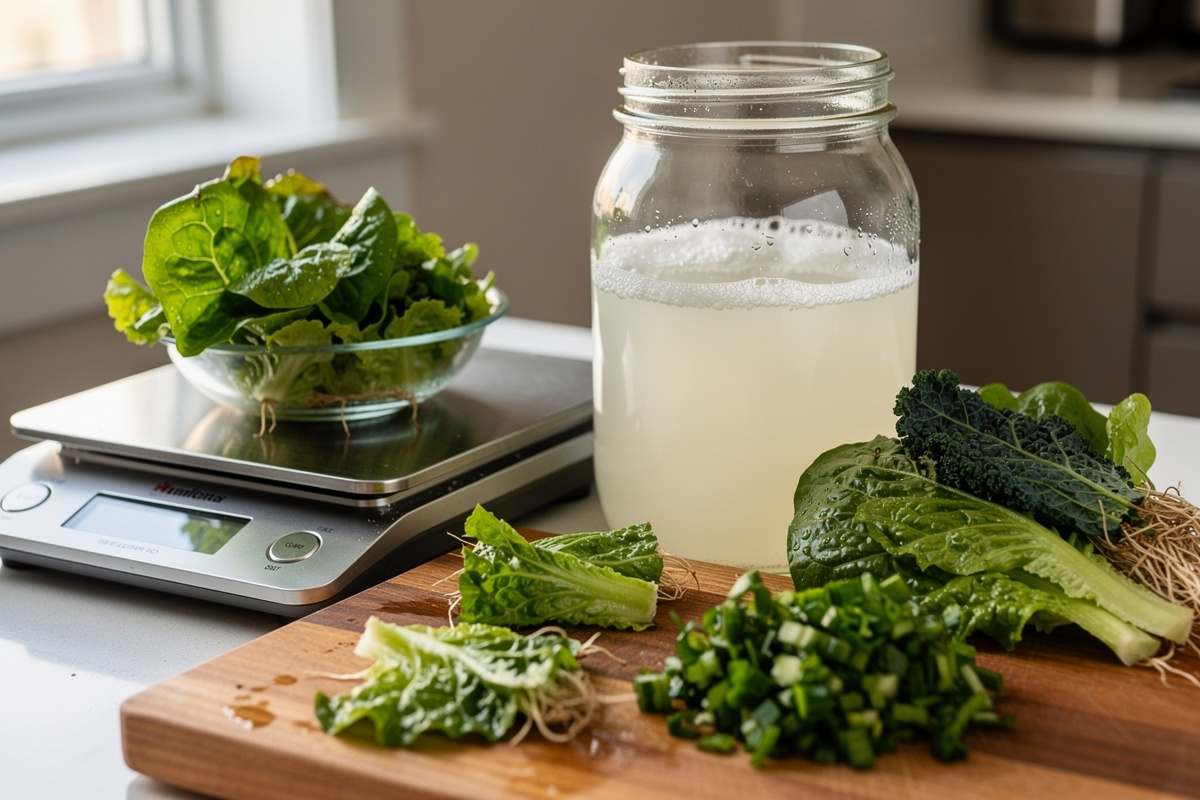
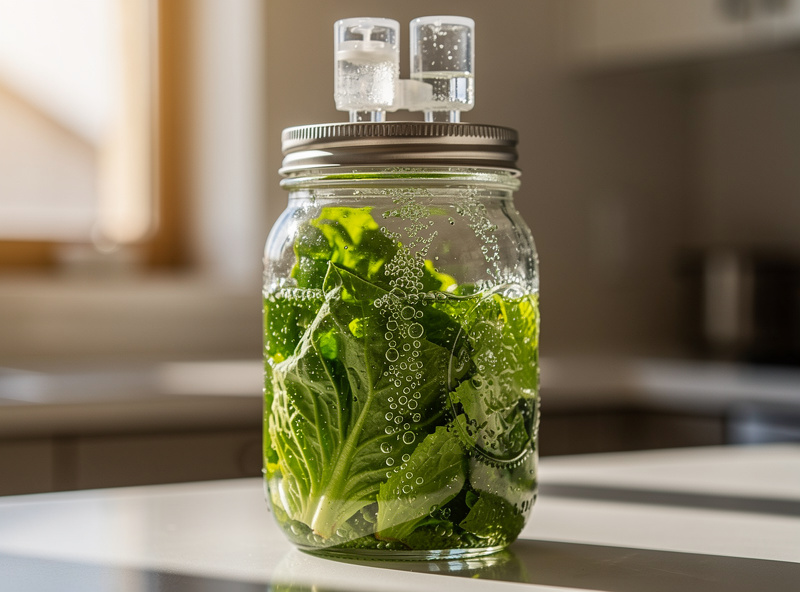
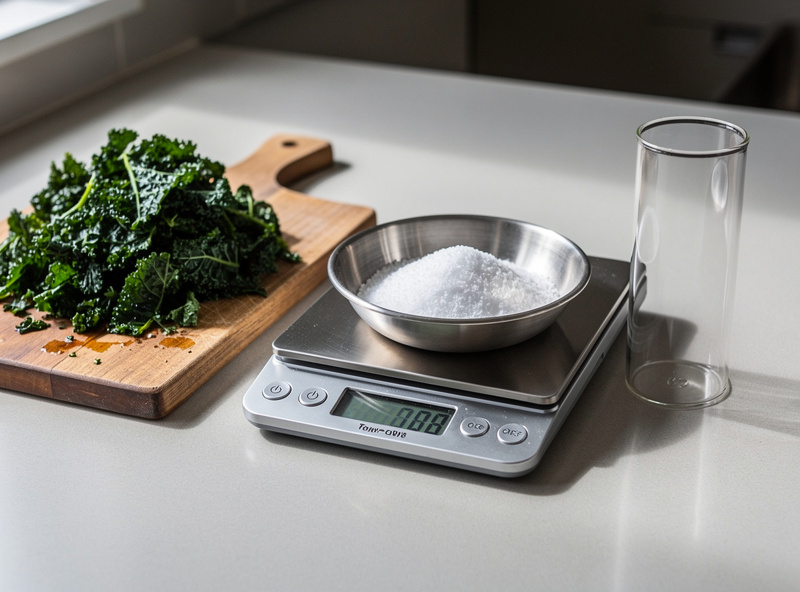
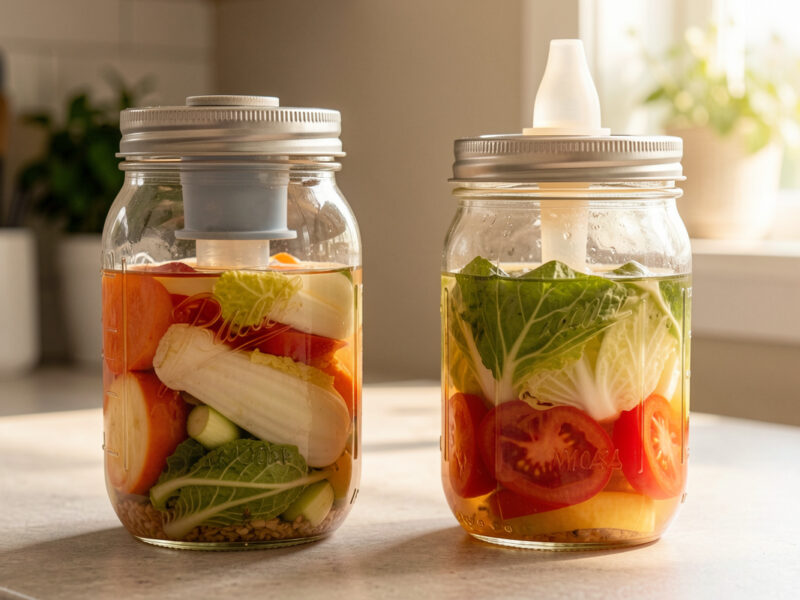
Before starting, gather your equipment: a kitchen scale that reads to 0.1-gram precision (the 2.5-3.0% salt window is narrow enough that a whole-gram scale can push you into the wrong ratio), a wide-mouth quart Mason jar, a glass fermentation weight that fits the jar, and an airlock lid. I use the Easy Fermenter lid set — the one-way valve means I never have to burp the jar, and the vacuum seal after opening keeps the ferment stable for weeks. If you are comparing weight options, our fermentation weights comparison breaks down glass, ceramic, and ziplock bag approaches.
- Wash kale lightly in cool water (do NOT use chlorinated tap water — chlorine inhibits lactobacillus).
- Remove tough stems, chop leaves into 1/2 inch ribbons.
- Weigh prepared kale on a kitchen scale: target around 450 g.
- Calculate salt: 450 g × 2.5% = 11.25 g salt. Use non-iodized salt (kosher, pickling, or sea).
- Add salt to kale, massage by hand for 5-10 minutes until liquid releases.
- Add 1 tablespoon of starter brine (or 1 tablespoon plain yogurt whey).
- Pack tightly into a wide-mouth quart Mason jar, ensuring all kale is submerged in the released liquid.
- Add a glass weight or fermentation airlock lid.
- Set in a 60-65 °F location for 4 days, then move to 65-72 °F for the remaining 2-4 weeks.
- Taste at 2 weeks; ferment is ready when sour to taste. Move to refrigerator to stop the ferment.
Salt Ratio Reference Table for Hydroponic Crops
| Hydroponic Crop | Salt % | Starter Culture | Initial Temp | Total Ferment Time |
|---|---|---|---|---|
| Lettuce (any leaf variety) | 3.0% | Required (1 tbsp/qt brine or whey) | 60-65 °F × 4 days | 2-4 weeks |
| Kale | 2.5% | Recommended | 60-65 °F × 4 days | 2-4 weeks |
| Chard | 2.5% | Recommended | 60-65 °F × 4 days | 2-4 weeks |
| Spinach | 3.0% | Required | 60-65 °F × 4 days | 1-2 weeks (shorter) |
| Cabbage (hydro or soil) | 2.0% | Optional | 65-72 °F | 2-6 weeks |
| Peppers (hydro or soil) | 3.0% | Optional | 65-72 °F | 1-3 weeks |
| Cucumbers (hydro or soil) | 5.0% brine | Optional | 65-70 °F | 1-3 weeks |
| Microgreens (any) | NOT RECOMMENDED | — | — | Too delicate for fermentation |
Common Failure Modes Specific to Hydroponic Greens
Three failure patterns show up with hydroponic produce that rarely appear with soil-grown:
1. Slow start (no bubble activity by day 4). Indicates inadequate starter culture. Add another tablespoon of starter or whey, lightly stir, ensure greens stay submerged.
2. Surface mold (kahm yeast or mold within 7 days). Indicates salt was too low for the microbiome. Skim mold, increase salt by 0.5% in the next batch.
3. Off-flavors (sulfurous or chemical taste). Indicates the wrong fermentation organism took over. Discard the batch and increase the starter culture in the next round.
For the broader troubleshooting framework, see our equipment and troubleshooting hub. For the hydroponic side specifically — what your nutrient solution and lighting affect about the resulting produce — the SmartHydroLab hydroponics vs soil comparison covers the cultivation differences that drive the recipe adjustments here.
Frequently Asked Questions
Can I ferment hydroponic vegetables?
Yes, with adjusted ratios for leafy greens. Hydroponic lettuce and kale need 2.5 to 3.0 percent salt by weight (vs 2.0 percent for soil-grown), a starter culture (1 tablespoon brine from a previous ferment, whey from yogurt, or commercial culture per quart), and an initial 4-day phase at 60 to 65 degrees F. Cabbage, peppers, and cucumbers ferment at standard ratios regardless of cultivation method.
Why do hydroponic greens need more salt to ferment?
They have a smaller native lactobacillus population on the leaf surface compared with soil-grown produce. The slightly higher salt inhibits competing molds while still allowing the smaller lactobacillus population to establish dominance. Without the increase, expect a 30 to 50 percent failure rate from slow starts, off-flavors, or surface mold.
What starter culture works best for hydroponic greens?
One tablespoon per quart of brine from a previous successful ferment is the easiest. Alternatives: 1 tablespoon plain unsweetened yogurt whey, or commercial cultures like Caldwell’s Starter or Cutting Edge Cultures. All three work; the brine-from-previous-ferment is free and passes flavor profile from batch to batch.
Will hydroponic ferments taste different from soil ferments?
Once the recipe accounts for the microbiome difference, no. Blind taste tests of hydroponic kale sauerkraut at 2.5 percent salt with starter culture vs soil-grown kale sauerkraut at 2.0 percent are typically indistinguishable. Without the recipe adjustments, hydroponic ferments taste flatter or more salty.
Can I ferment microgreens hydroponically?
No. Microgreens are too delicate — the cell structure breaks down completely under salt and ferments to mush within 2 to 3 days. Eat microgreens fresh, ferment the mature leaf-stage greens.
Is the recipe difference enough to make hydroponic fermentation harder than soil?
Marginally. Once you have the adjusted recipe and a starter culture in your refrigerator (re-using brine from each batch as the next batch’s starter), hydroponic greens ferment as reliably as soil-grown. The first batch is the harder one because you need an initial starter source.
If I were fermenting hydroponic greens for the first time today, I would start with kale — it is slightly more forgiving than lettuce — at 2.5% salt by weight, use a tablespoon of brine from a batch of sauerkraut if I had one going (or yogurt whey if not), and run the jar at 62°F for the first 4 days. The margin for error at 2.0% salt is narrow enough that a single missed variable — a colder room, slightly less vigorous greens, no starter — can push the ferment past the tipping point into a failed batch. The extra half-percent of salt plus starter culture costs nothing and buys you near-certain success. Once you have your first successful batch, reserve a tablespoon of its brine in a small jar in the refrigerator and you will never need a commercial starter again. If you are interested in exploring beyond vegetable lacto-ferments, our guide to tempeh and koji fermentation explains how controlled mold cultures open up a completely different category of fermented foods.
Related Articles
- Kahm Yeast: What It Is, How to Prevent It
- Fermentation Weights: Glass vs Ceramic vs Ziplock
- Tempeh and Koji: Where Fermentation Meets Mushrooms
- Garden to Jar: Fermenting What You Grow
- Lacto-Fermented Pickles That Stay Crunchy

About Kenny Nyhus Fadil
A home fermenter documenting brines, bubbles, and the occasional moldy tragedy.
Keep Bubbling
Adding Minerals Back: When Distilled Water Stalls a Ferment
Fermentation Airlock vs Silicone Lid: Which to Use