Injera and Teff Fermentation: A Complete Guide

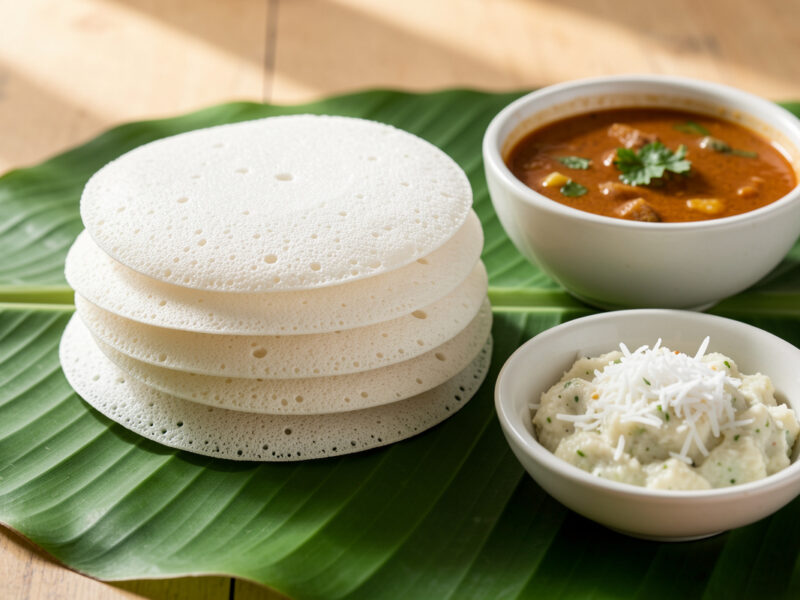
Injera is a sour teff flatbread leavened entirely by wild fermentation: teff flour and water, soured for 2 to 3 days with a back-slop starter called ersho until the batter drops to around pH 3.7, then baked into a soft, spongy round covered in tiny holes. There is no yeast packet and no baking soda — the lift and the famous tang both come from the same Lactobacillus-and-yeast culture.
Teff behaves differently from the rice in idli batter, and that difference is the whole story of injera. The grain is the smallest cultivated cereal on earth, so it is milled whole — bran, germ, and all — which means the batter ferments fast and sours hard. Managed well, that gives injera its signature edge; managed badly, it just tastes harsh. This guide is how I run a teff ferment by the same measurement-led approach I use on everything.
Teff: the grain that ferments like no other
Because teff is milled whole, every part of the grain — and all the wild flora living on it — goes into the batter. That is why injera ferments reliably with nothing but flour and water: the culture is already there. It also means teff is naturally gluten-free, so the sponginess is built entirely by fermentation gas trapped in a starch-and-protein gel, not by gluten.
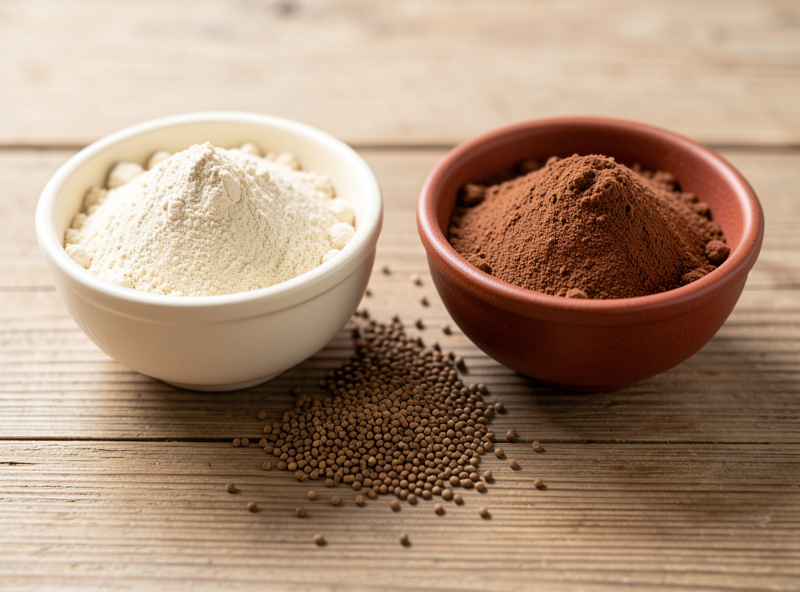
There are two teff types worth knowing, and the table below sums up the practical difference. Ivory (white) teff ferments to a milder, lighter injera and is what you most often see in restaurants. Brown or red teff is earthier, nuttier, and more robustly flavored. I keep both and blend them — mostly ivory for lightness with some brown for depth, the same way I blend flours for a sourdough starter.
| Teff type | Flavor | Injera result | Ferment speed |
|---|---|---|---|
| Ivory / white | Mild, slightly sweet | Lighter, pale, springy | Moderate |
| Brown / red | Earthy, nutty, deeper | Darker, more robust | Slightly faster |
| Blend (mostly ivory) | Balanced | Light with depth | Moderate |
Ersho: the back-slop that runs the show
Traditional injera is not a fresh ferment every time — it runs on ersho, the cloudy yellowish liquid that collects on top of a fermenting batter, saved and stirred into the next batch to inoculate it. It is exactly the same principle as the vinegar mother and SCOBY I keep alive: a proven culture you carry forward so you never start from zero.
For a first batch you have no ersho, so you ferment spontaneously: mix teff flour with about 1.5 to 2 parts water into a smooth, pourable batter, cover loosely, and leave it warm. Within a day it bubbles and a layer of ersho forms on top. From then on, pour off and save a little of that liquid each time, and your injera gets faster and more consistent with every batch. A spoon of live sourdough starter stirred into the very first batch is a reasonable shortcut to get the culture going if your kitchen is cold.
The 2-to-3-day ferment, hour by hour
Injera takes longer than an idli batter because you want it genuinely sour, not just risen. Here is the rhythm I follow at a normal room temperature of 20 to 24°C.
| Stage | What’s happening | What you’ll see |
|---|---|---|
| Day 0 | Mix teff and water, cover loosely | Smooth pourable batter |
| Day 1 | Wild LAB and yeast take hold | Bubbles, ersho liquid forms on top |
| Day 2–3 | Acid drives pH down toward 3.7 | Sharp sour smell, active bubbling |
| Bake day | Make absit, rest batter briefly | Loose, lively batter ready to pour |
Warmer ferments faster and sourer; cooler is slower and milder. I do not chase an exact hour count — I go by the smell and, when in doubt, the pH meter. Sharp, clean, and aggressively sour is the target; flat or faintly alcoholic without much sour means it needs more time or more warmth.
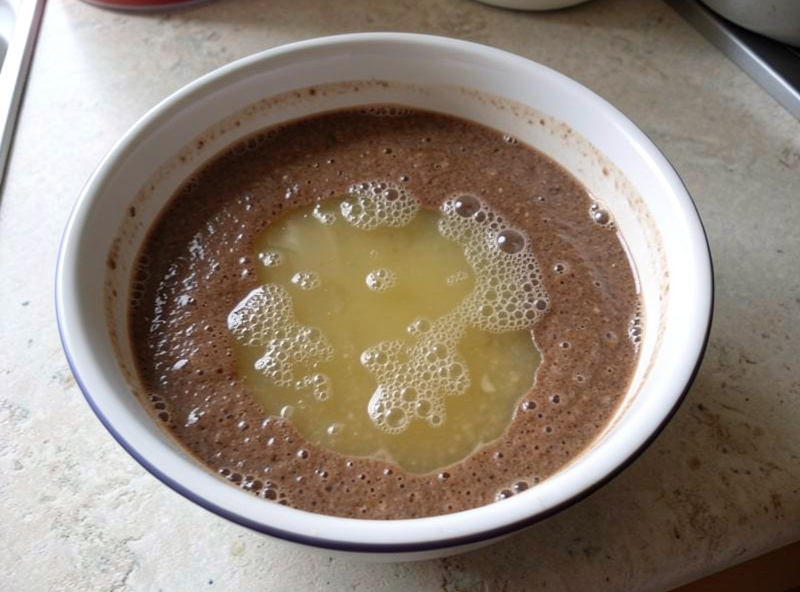
Absit: the step that makes injera spongy, not pancake-like
This is the move most home recipes skip, and it is why their injera comes out dense. Absit is a small portion of the fermented batter cooked with water into a thin gelatinized paste, then cooled slightly and stirred back into the main batter. It pre-gelatinizes some of the starch so the finished batter holds the carbon dioxide bubbles better, giving you the open, hole-riddled surface — the famous “eyes” — instead of a flat crepe.
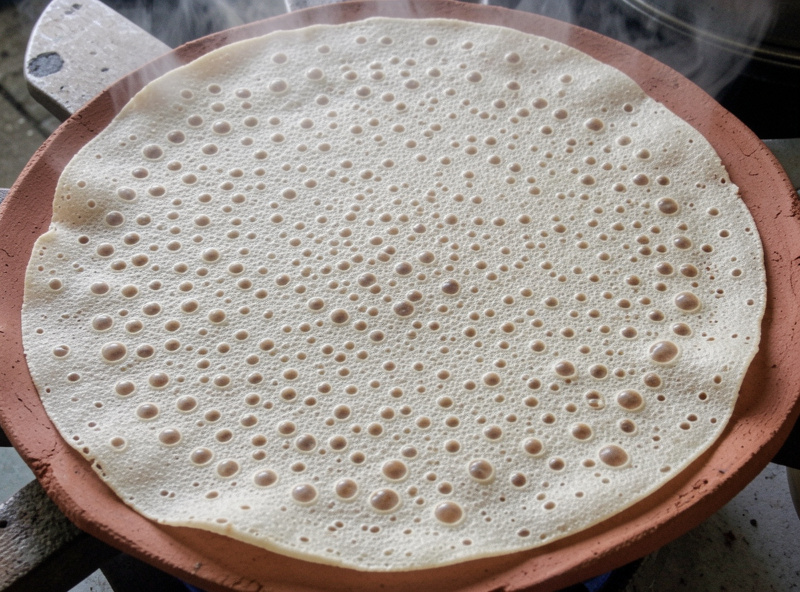
After stirring the absit back in, let the batter rest 15 to 30 minutes to loosen and rebuild a little gas, then bake. To bake, pour the batter in a spiral onto a hot dry mitad or a wide non-stick pan, starting at the edge and working in, then cover and let it steam-cook without flipping. It is done when the surface is matte and covered in eyes and the edges lift cleanly — usually 2 to 3 minutes. You cook injera on one side only; that is what keeps the top soft and spongy.
Common injera problems
If the injera has no eyes and bakes flat, the batter was under-fermented (not enough gas) or you skipped the absit (not enough gel to trap gas) — ferment longer and do not skip the absit step. If it comes out unpleasantly harsh and bitter rather than cleanly sour, it over-fermented; pour off more ersho and shorten the next batch. If the surface is fuzzy or colored, that is mold, not ersho — ersho is a flat liquid layer, mold is raised and fuzzy, and the same skim-versus-toss rule from my kraut crock applies: flat film fine, fuzzy growth gone.
Storing teff batter and keeping ersho alive
Once you have a culture going, the goal is to never lose it. After baking, I save a cup of the most active fermented batter and the poured-off ersho liquid in a jar in the fridge; the cold slows the culture to a crawl without killing it, the same way I park a sourdough starter between bakes. To wake it for the next batch, stir it into fresh teff-and-water and leave it warm overnight — it takes off far faster than a spontaneous batch.
Unfermented teff flour keeps for months in a sealed jar away from light, though whole-grain teff, being full-fat, will eventually go rancid, so I buy it in amounts I will use within a season. Fully fermented batter you are not ready to bake holds a few days in the fridge and simply gets more sour; if it separates, the clear liquid on top is just more ersho — pour off what you do not want and stir the rest back together.
Serving injera the traditional way
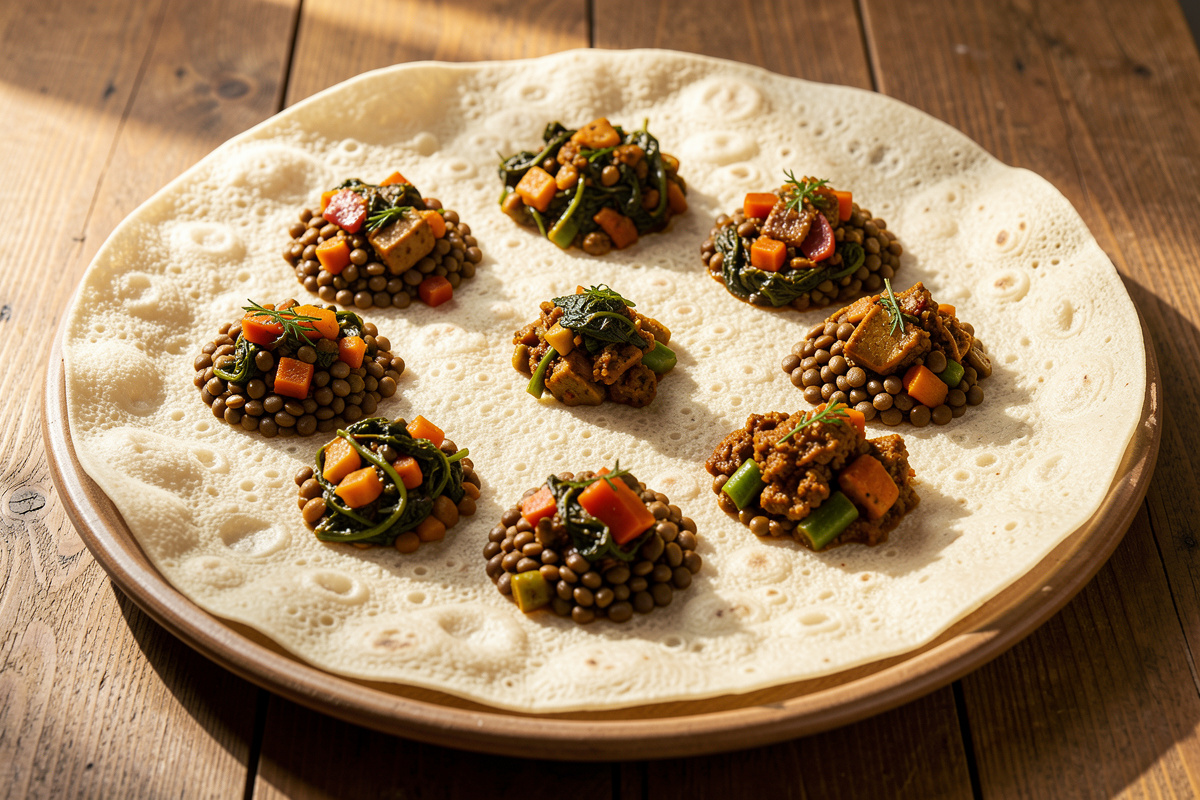
Injera is plate, utensil, and bread at once. The spongy holes are not just texture — they are designed to soak up the stews (wot) ladled on top, so a properly fermented, hole-riddled round genuinely tastes and functions better than a flat one. You lay a large injera across a platter, spoon different spiced lentil, vegetable, and meat stews around it, and tear off pieces of a second rolled injera to scoop.
The deep sourness is the point of contrast: it cuts the richness of the stews the way a sharp lacto-ferment cuts a heavy meal. That is the through-line across this whole category — the acid a wild ferment builds is not just preservation, it is a flavor tool, and teff happens to push it further than almost any other grain. If you have made a good sour dosa, you already understand what you are aiming for here; injera is just that instinct taken a day or two longer.
Frequently Asked Questions
What is ersho in injera fermentation?
Ersho is the cloudy yellowish liquid that collects on top of fermenting teff batter. You pour some off and save it, then stir it into the next batch as a back-slop starter. It carries the live culture forward, so each batch of injera ferments faster and more reliably than the last.
How long does injera batter need to ferment?
Usually 2 to 3 days at a room temperature of 20 to 24 degrees C. You want it genuinely sour, dropping toward pH 3.7, with active bubbling and a sharp clean smell. Warmer kitchens ferment faster and sourer; cooler ones take longer and stay milder.
Why does my injera have no holes?
The eyes come from trapped fermentation gas, so no holes means the batter was under-fermented or you skipped the absit step. Absit is a cooked portion of batter stirred back in to gelatinize the starch so it holds bubbles. Ferment longer and always make the absit.
Is teff gluten-free for injera?
Pure teff is naturally gluten-free, and the sponginess of injera comes from fermentation gas trapped in a starch gel rather than from gluten. Note that some commercial injera blends in wheat or barley flour, so it is only gluten-free if made from one hundred percent teff.
Do you cook injera on both sides?
No. Injera is cooked on one side only, covered, so it steams through while the top stays soft and spongy. It is done when the surface turns matte and covered in small holes and the edges lift cleanly, usually after 2 to 3 minutes on a hot mitad or pan.
Related Guides
- Fermented Grains & Legumes: The Complete Guide
- Idli and Dosa Fermentation
- Ogi: Fermented Maize and Millet Porridge
- Home Sourdough: Starter to Loaf
- Best pH Meter for Fermentation

About Kenny Nyhus Fadil
A home fermenter documenting brines, bubbles, and the occasional moldy tragedy.