Kahm Yeast: What It Is, How to Prevent It, When It Is Safe

Kahm yeast is a thin white film of harmless aerobic yeasts (Pichia, Candida species) that forms on brine surfaces when oxygen exposure happens. It is safe to skim off — unlike actual mold, kahm produces no toxins and does not harm the lactic acid bacteria doing the actual fermentation.
Kahm yeast ID is one diagnostic skill in a broader equipment-and-vessel toolkit; the full three-tier kit list and equipment-to-ferment matrix is in my fermentation equipment guide.
I still remember the first time I saw kahm on a batch of sauerkraut. The white film across the brine surface looked exactly like the food-safety warning photos I had memorized. Convinced it was mold, I poured the entire gallon down the drain — then scrubbed the jar with bleach for good measure. A year later I found a traditional German fermentation guide and realized I had thrown away a perfectly good ferment. That batch still stings to think about, and it is exactly why I tell every new fermenter: before you panic, learn the difference between kahm and mold.
As an Amazon Associate I earn from qualifying purchases.
What Kahm Yeast Actually Is
Kahm yeast is a colloquial name for a group of aerobic yeasts that grow on liquid surfaces in low-pH high-salt environments. The most common species are Pichia membranifaciens, Candida krusei, Hansenula anomala, and related strains. All are non-pathogenic — they don’t cause disease, don’t produce toxins, and are present at low levels in normal kitchen environments worldwide.
These yeasts need oxygen to grow (they’re aerobic), so they establish where oxygen meets liquid: the surface of an open or loosely-sealed brine. Below the surface, the lactic acid bacteria (LAB) that actually do fermentation are anaerobic and dominate that environment. The two communities establish in different niches and don’t compete directly.
The kahm yeast film appears as a thin white-to-cream layer 0.5 to 2 mm thick. It can cover the entire brine surface uniformly or form patches. Texture is flat and slightly wrinkled — looks like wax paper or skim milk skin. Color stays in the white-to-cream range; if you see any other color, it’s not kahm.
Why Kahm Isn’t Dangerous
The yeasts in the kahm film don’t produce the toxins associated with spoilage molds, and they don’t damage the food beneath them. University food-safety guidance on fermented vegetables classifies this surface film as a normal, expected part of an active ferment — distinct from mold, which is treated as a failed-batch signal the moment it’s confirmed, regardless of how much surface it covers (UC Davis Food Science and Technology). Kahm is a “neutral” organism that takes up surface real estate without poisoning the brine or vegetables.
I once lost a beautiful Russian-style pickle ferment to unnecessary scraping. The brine had a thin kahm film after six days, and rather than simply skimming it off, I scraped every cucumber surface with a spoon — bruising the pickles, introducing air deep into the jar, and turning what should have been a minor surface fix into a ruined batch. After that disaster I learned to rely on the smell test first: kahm smells musty but clean, while mold smells off-putting and rotten. If the ferment smells like food, it almost certainly is food. For a side-by-side visual comparison, see our Sauerkraut Mold vs Kahm Yeast guide.
The downside of kahm is sensory, not safety: the yeasts produce volatile compounds that contribute musty, “yeasty,” or slightly soapy off-flavors. These compounds slowly transfer into the ferment liquid over 5+ days. A jar with kahm present for 48 hours tastes essentially identical to one without; a jar with kahm present for 7 days has noticeable musty character.
The flavor concern is what drives most rescue protocols. Skim kahm off promptly (within 48 to 72 hours of appearance) and the ferment tastes normal. Leave kahm in place for a week and even after skimming, the off-flavor persists in the ferment. This is why skimming is the standard rescue rather than ignoring it.
Some traditional ferments actively encourage kahm. Russian solyanka and certain Eastern European pickled vegetables are routinely made with kahm yeast as a desired surface organism. The “yeasty” character is intentional in some food traditions — your culinary preference, not a safety question.
The Four Causes of Kahm Yeast
Cause 1 (most common): Vegetables not fully submerged below brine. Pieces sticking up above the brine line contact air directly and give kahm yeast a stable substrate to colonize. The film then spreads from those exposed pieces across the entire brine surface. Using proper fermentation weights eliminates this cause entirely.
Cause 2: Salt percentage below 1.5%. Below this threshold, the LAB activity is sluggish and the brine takes longer to reach the low pH that inhibits surface yeasts. Extension-verified salt ranges run 2 to 2.5% for sauerkraut, 2 to 3% for kimchi, 3.5 to 5% for hot sauce mash and other chili ferments, and 3 to 5% for pickles (Virginia Tech Food Science and Technology extension).
Cause 3: Fermentation temperature above 75°F. High temperature accelerates surface evaporation, concentrates salt at the surface in patches, and creates uneven brine zones where kahm establishes. Keep most ferments at 60 to 72°F for the first 7 to 10 days.
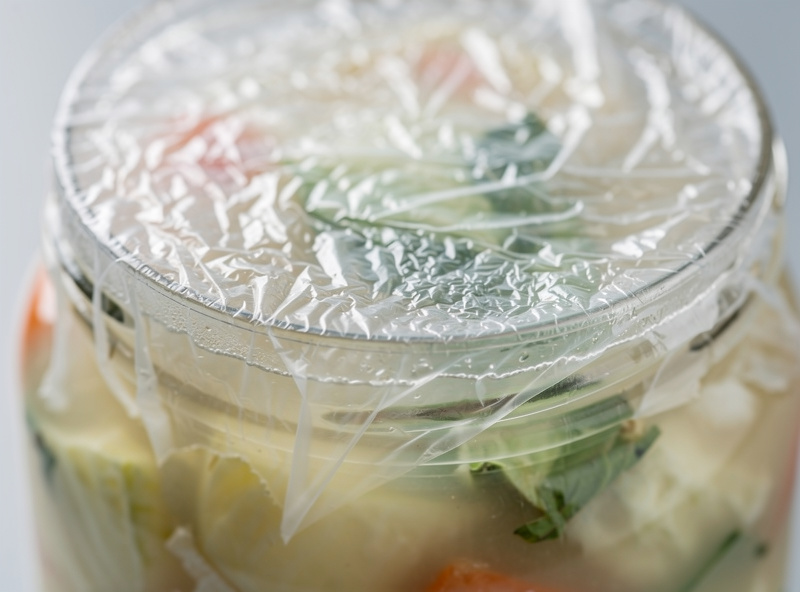
Cause 4: Open or poorly-sealed jar. Standard mason jar lids let oxygen exchange happen, which kahm needs. Even a slightly loose jar lid invites kahm. Use airlock-style lids (silicone valve, fermentation lids) that let CO2 escape without admitting fresh oxygen. The choice of vessel type affects kahm risk just as much as the lid — a detailed breakdown of crocks vs jars vs purpose-built vessels is in the fermentation vessel comparison guide.
Skim-and-Continue Rescue Protocol
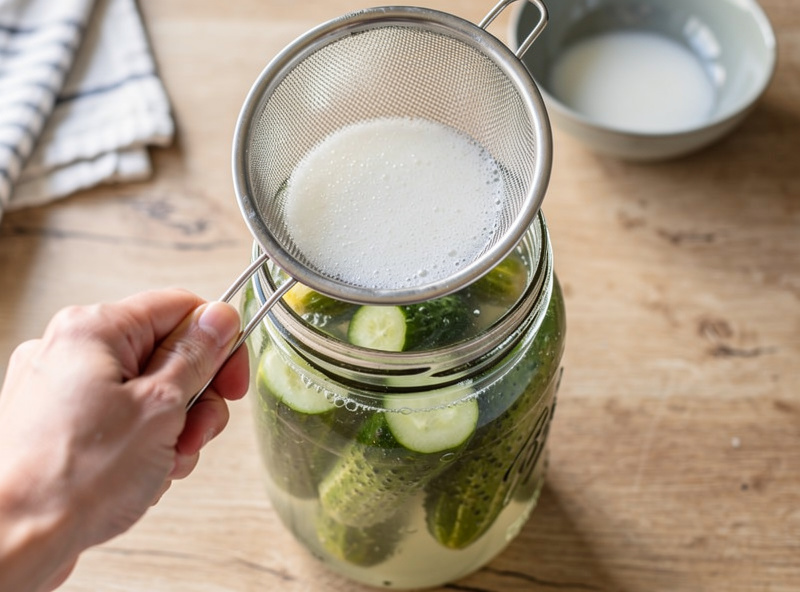
Step 1: Skim the kahm film off with a clean spoon or fine-mesh strainer. The film usually lifts off in one or two pieces. Try to remove all of it without disturbing the vegetables below. Discard the skimmed film.
Step 2: Inspect the top layer of vegetables for kahm clinging to them. Pieces that have been in contact with the film often have a thin yeast residue. Scrape these pieces off with the spoon and discard them. The vegetables 1 to 2 cm below should look and smell normal.
Step 3: Top up the brine with a 2% saltwater solution if the brine level dropped (which is often what caused the kahm). Mix 20 g salt in 1 liter of filtered water. Don’t use plain water — that dilutes the brine and creates conditions for kahm to return.
Step 4: Press a fermentation weight onto the vegetables to hold them fully submerged at least 5 mm below the brine surface. Re-seal the jar with an airlock lid or loosened mason jar lid.
Step 5: Continue fermenting normally. Check daily for 3 days to confirm kahm doesn’t return. Returning kahm within 48 hours means the underlying cause hasn’t been addressed.
Kahm vs Mold: How to Tell Them Apart
| Property | Kahm Yeast | Mold |
|---|---|---|
| Color | White to cream | Green, blue, black, pink, or fuzzy white |
| Texture | Flat, like wax paper | Fuzzy, raised, 3-dimensional |
| Coverage | Uniform across surface | Distinct patches or colonies |
| Toothpick test | Collapses immediately, slick | Resists, springs back, fibrous |
| Smell | Musty, slightly yeasty | Off, alcoholic, sometimes sweet-rotten |
| Toxicity | None — non-pathogenic | Some species produce mycotoxins |
| Action | Skim and continue | Discard the batch — no small-spot exception |
| Where it grows | Brine surface only | Surface or in vegetables above brine |
The toothpick test described above is the most reliable field method for telling kahm apart from mold. Once you’ve confirmed mold rather than kahm, there’s no small-spot exception — the whole batch goes, the same standard UC Davis Food Science and Technology teaches for home fermenters. For a photographic guide with side-by-side examples across multiple ferments, see our sauerkraut mold vs kahm yeast visual ID guide — photos make the difference instantly clear.
Why Kahm Looks Different on Different Ferments
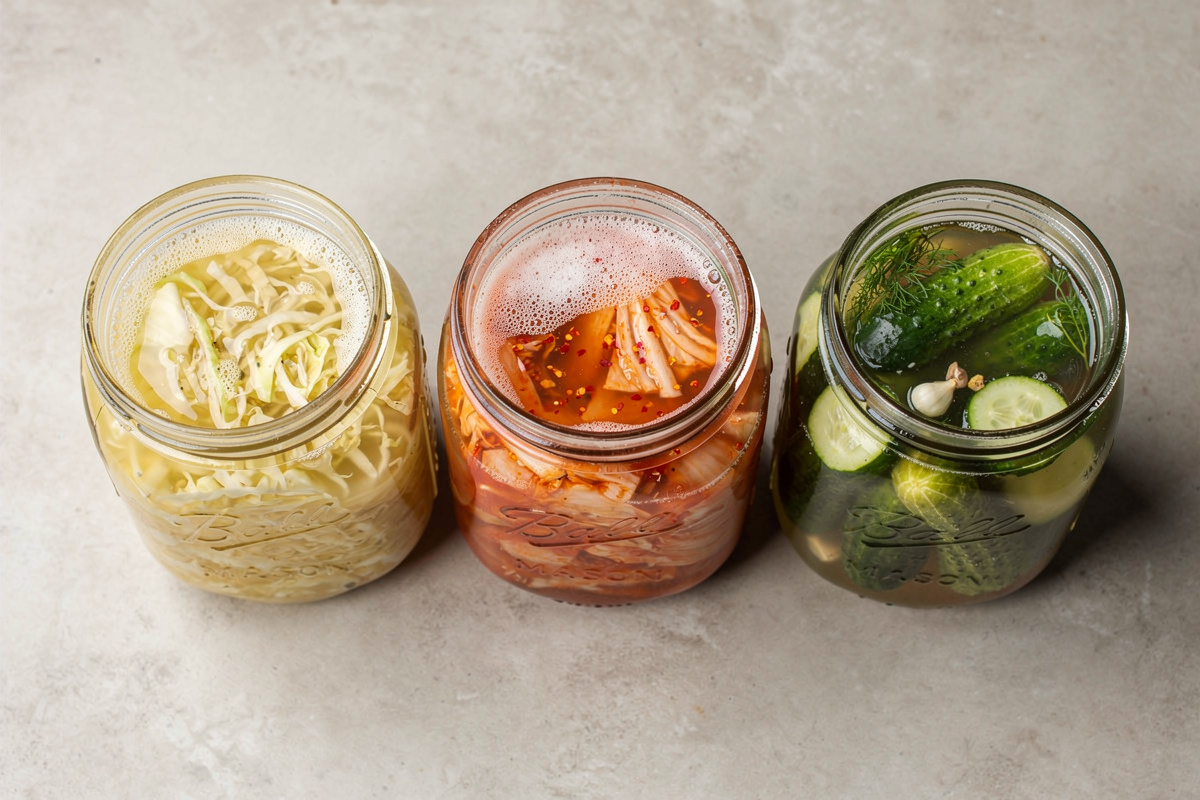
Kahm yeast on sauerkraut: thin uniform white film over the entire brine surface, easy to spot against the pale green-yellow brine. Most beginner fermenters mistake their first kahm for mold because they’re not used to seeing surface organisms in any food.
Kahm yeast on kimchi: same white film, but harder to see against the red-orange brine. Look for the slight texture change at the surface — a flat film vs the normal liquid surface. Photograph in good light from a side angle to see clearly.
Kahm yeast on hot sauce mash: appears against the bright red brine surface as a thin pale film, often partial coverage only. Hot sauce ferments are more mold-resistant overall (capsaicin antifungal effect plus fast pH drop), so kahm here is less common than other ferments.
Kahm yeast on pickles or fermented vegetables (carrots, beets, peppers): most visible because the brine is typically clear or pale. Easy to spot, easy to skim. The lacto-fermented vegetables cluster covers ferment-specific kahm patterns.
Prevention: The Three-Part Setup
Part 1 — Submersion. Use a fermentation weight every time. Glass discs, ceramic weights, or simply a small zip-top bag filled with 2% brine all work. Press the weight onto the vegetables so all pieces sit at least 5 mm below the brine surface. This single change prevents most kahm appearances.
Part 2 — Salt percentage. Use a digital scale and weigh both vegetables and salt. Target 2 to 2.5% salt by total weight for most ferments, 2 to 3% for kimchi, 3.5 to 5% for whole-pepper hot sauce mash. Volume measurements (teaspoons per pound) vary too much based on salt crystal size to be reliable. For precision verification, a Milwaukee MW102 pH meter (typically $180 to $200) lets you confirm brine pH has dropped below 4.0 — the threshold where kahm growth is strongly suppressed by acidity alone. Between full meter calibrations I keep a pack of pH test strips in the ferment drawer for a quick daily sanity check.
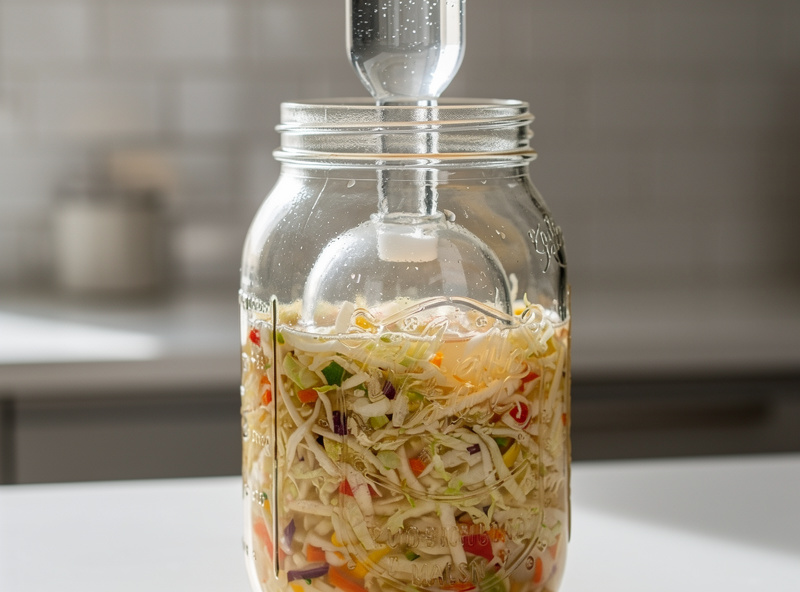
Part 3 — Airlock. Use silicone airlock fermentation lids ($8 to $20 for a set of 4). They let CO2 escape during active fermentation without letting oxygen enter. Standard mason jar 2-piece lids work as a partial substitute if loosened slightly, but airlock lids are the better solution.
Combined, these three changes are what took kahm from a batch I’d fight almost every run to something I see maybe once or twice a year. The fermentation equipment cluster covers brand-specific recommendations.
When Kahm Yeast Becomes a Problem
Kahm yeast left in place for 5+ days starts producing more pronounced off-flavors that transfer into the ferment. The musty character compounds and even after skimming, the ferment carries the off-flavor through to finished product. This is the practical reason kahm should be skimmed within 48 to 72 hours.
Kahm that returns repeatedly across multiple batches indicates a chronic environment problem: kitchen temperature too warm, jar not sealing properly, salt scale calibration drift, or insufficient submersion technique. Treat repeated kahm appearances as a diagnostic signal pointing to a process issue rather than as random luck.
Kahm under refrigeration (38 to 42°F): rare, but possible with cold-tolerant strains. Same skim-and-continue rescue applies. If kahm appears on refrigerated ferments, the brine level may have dropped from evaporation — top up with fresh brine and the problem usually doesn’t return.
If I were teaching a new fermenter about kahm, I would show them one photo and tell them one rule: flat is fine, fuzzy is failure. Everything else is details.
Frequently Asked Questions
Is kahm yeast safe to eat?
The kahm yeast itself is non-pathogenic and doesn’t produce toxins, so dietary exposure is safe. But the practical advice is to skim it off because the yeasts produce musty off-flavors that transfer into the ferment over 5+ days. Skimming within 48 hours preserves normal flavor.
How do I tell kahm yeast from mold?
Kahm yeast is a thin flat white film on the brine surface — looks like wax paper or skim milk. Mold is fuzzy, raised, three-dimensional, and almost always colored (green, blue, black, pink). Press a clean toothpick into the growth: kahm collapses; mold resists.
What causes kahm yeast on fermented vegetables?
Four causes: vegetables not fully submerged below the brine (most common), salt percentage below 1.5 percent, fermentation temperature above 75 degrees F, and open or loosely-sealed jar allowing oxygen exchange. Address all four for the next batch and kahm becomes rare.
How do I rescue a ferment with kahm yeast?
Skim the white film off with a clean spoon, scrape any visibly affected vegetables off the surface, top up brine with 2 percent saltwater (20g salt per liter), press vegetables back below the brine with a fermentation weight, and re-seal. The ferment continues normally.
Will kahm yeast ruin my ferment?
Not if caught early. Kahm yeast left for 48 to 72 hours has minimal flavor impact; left for 5+ days creates a persistent musty off-flavor in the finished ferment. Skim promptly and the ferment tastes normal. Kahm itself is safe — the rescue is about flavor preservation.
Does kahm yeast happen with kombucha or sourdough?
Kombucha rarely gets kahm because the SCOBY occupies the brine surface and outcompetes other surface yeasts. Sourdough doesn’t get kahm because the dough surface isn’t a liquid film. Kahm is specifically a vegetable-fermentation phenomenon — sauerkraut, kimchi, pickles, hot sauce.
Related Articles
- Sauerkraut Mold vs Kahm Yeast: Visual ID Guide
- Lacto-Fermented Pickles That Stay Crunchy
- Fermentation Weights: Glass vs Ceramic vs Ziplock
- Garden to Jar: Fermenting What You Grow
- Easy Napa Cabbage Kimchi Recipe

About Kenny Nyhus Fadil
A home fermenter documenting brines, bubbles, and the occasional moldy tragedy.
Keep Bubbling
Fermenting in Summer Heat: How to Slow a Runaway Batch
Vegetable Fermentation Troubleshooting: The Complete Fix Guide