Fermenting in Summer Heat: How to Slow a Runaway Batch

When the kitchen climbs past 24°C, fermentation stops being a slow, forgiving process and turns into a sprint. A sauerkraut that takes two comfortable weeks at 20°C can be fully sour and starting to soften in just five or six days at 27°C, because fermentation roughly doubles in speed for every 10°C of warmth. In a summer heatwave the goal flips: instead of coaxing a ferment along, you’re trying to slow a runaway batch down before it over-sours or goes mushy.
I ferment through Swedish summers where the kitchen can sit at 26°C for days, and I’ve lost enough hot-weather batches to have a system now. The core idea is simple: heat is an accelerator, so summer fermenting is about braking — cooler spots, more salt, tighter monitoring, and knowing when to move a batch to the fridge. This is exactly the seasonal problem I map out in my fermentation temperature by season hub, and here I’m going deep on the hot end.
What Heat Actually Does to a Ferment
Heat accelerates every reaction at once, but not evenly — and that’s the problem. Above about 24°C, the pectin-degrading enzymes that soften vegetables speed up faster than acid production can set the texture, so a warm ferment eats its own crunch. On my pH meter, a hot batch also races past the ideal sour point; a kraut I’d normally pull at pH 3.6 blows through it in a day if I’m not watching.
Warmth also shifts which microbes dominate. The clean, crisp Lactobacillus strains that thrive at 20°C give ground to heat-tolerant strains and to surface yeasts, which is why summer batches throw kahm yeast so readily — that thin wrinkled film shows up in two days instead of two weeks. None of this makes the food unsafe if your salt and pH are right, but it does make it worse: softer, sharper, and more prone to a fuzzy surface. Understanding the texture side is worth a full read in why warm ferments go soft and cold ferments stall.
Find the Coolest Spot in the House
The single most effective summer move is free: move the ferment somewhere cooler than the kitchen. Heat rises and collects near ceilings and near appliances, so the best spots are low and away from the stove. In my house the reliable cool zones are a north-facing pantry, the basement (which stays near 18°C even in July), a tiled bathroom floor, and the bottom shelf of a cool cupboard on an exterior wall.
The difference is bigger than people expect. My kitchen counter might read 26°C while the basement floor two meters below sits at 18°C — that’s the gap between a five-day mushy sprint and a clean two-week ferment. This is why measuring the actual spot matters more than the wall thermostat; I keep a min/max thermometer in whatever corner I’m using so I know how warm it really got overnight. If you don’t have a basement, the coolest interior room, a shaded closet, or even a picnic cooler (unpowered, as insulation) will buffer the daily swing.
Raise the Salt to Buy a Margin
Salt and temperature are the two dials that share the safety and texture load, so when heat pushes on one, I push back with the other. In summer I move salinity toward the top of each ferment’s safe range: sauerkraut goes from 2% up to 2.5% by weight, kimchi toward 3%, and lacto pickle brines toward the 5% end. The extra salt slows Lactobacillus slightly, firms the vegetable’s texture by strengthening cell walls, and widens the margin against softening and off-organisms during those critical first hot days.
This is never guesswork — I weigh salt to 0.1 g against the vegetable weight every time, using the method in my salt and brine math guide and the tested ratios in sauerkraut salt percentage. The table below shows how I shift both salt and expected timeline as the room heats up.
| Kitchen temp | Sauerkraut salt | Approx. finish time | My summer action |
|---|---|---|---|
| 18–20°C | 2.0% | 10–14 days | Standard, low monitoring |
| 21–23°C | 2.25% | 7–10 days | Check every 2 days |
| 24–26°C | 2.5% | 5–7 days | Check daily, plan to cold-crash |
| 27°C+ | 2.5% + coolest spot | 4–6 days | Small batch or wait for cooler week |
Watch It Daily and Cold-Crash Early
In summer the whole timeline compresses, so my checking rhythm compresses with it. A cool-kitchen ferment I might glance at twice a week; a 26°C batch I taste every single day, because the window between “perfectly sour and crisp” and “over-soured and soft” can be 24 hours. The moment a hot batch tastes right, I don’t leave it “just one more day” — I move it to the fridge.
The refrigerator is your emergency brake. Dropping a ferment to 2–4°C slows the microbes to a near-halt without harming safety, provided the batch has already crossed below pH 4.6 (which any properly salted vegetable ferment does within the first couple of days). This is the technique that saves summer batches, and it’s worth doing deliberately rather than in a panic — I cover the full method, including how far it actually slows things, in cold-crashing a ferment.
The Ferments That Love Summer
Not everything suffers in the heat — some of my ferments are only easy in summer. Kombucha is the obvious one: its Acetobacter-and-yeast partnership wants 24–29°C, so my continuous brew that crawls through winter finishes an F1 in five or six days in July. Koji (Aspergillus oryzae) and tempeh, which normally force me onto a heat mat, get noticeably easier when the ambient is already warm. And quick fruit ferments like tepache and wild sodas absolutely rip in the heat.
The catch with those fast fruit and sugar ferments is pressure and alcohol. A warm tepache can build enough CO2 to overflow or over-carbonate in a day, and warmth also pushes them toward more alcohol, faster. In summer I burp bottles daily, use smaller batches, and taste early. If you brew kombucha, summer is the season to lean in — my kombucha brewing guide covers reading a fast F1.
What to Avoid Fermenting in a Heatwave
Some ferments simply aren’t worth starting in extreme heat, and knowing which to postpone is part of the skill. Big, dense cabbage ferments and delicate cucumber pickles are the most heat-sensitive for texture — a large kraut crock started at 27°C is very likely to soften before it’s sour, and summer cucumbers famously go to mush. If I want crunchy pickles in July, I make a small batch, salt it firmly, use the tannin trick, and cold-crash aggressively; the full crunch strategy is in lacto-fermented pickles that stay crunchy.
My honest advice for a genuine heatwave is to scale down and shift focus: make small vegetable batches you’ll eat quickly, lean into kombucha and fruit sodas, and save the big kraut crocks for autumn when the kitchen settles back to 18–20°C on its own. Fighting a 28°C kitchen to make a perfect large kraut is a losing battle — better to plan around it, which is the whole point of a year-round fermentation schedule.
Frequently Asked Questions
Is it safe to ferment in hot weather?
Yes, as long as your salt and pH are correct. Heat makes ferments faster and softer, not unsafe, provided a properly salted batch drops below pH 4.6 in the first couple of days. Raise salt toward the top of the range and cold-crash once sour.
Why does my ferment finish so fast in summer?
Fermentation roughly doubles in speed for every 10 degrees Celsius of warmth. A batch at 27 degrees runs at nearly twice the metabolic rate of one at 17 degrees, so a two-week kraut can be done in five or six days.
How do I stop a ferment from going mushy in the heat?
Ferment in the coolest spot in your home, raise salt toward 2.5 percent for kraut, use tannin sources or calcium for pickles, and move the batch to the refrigerator the moment it tastes properly sour rather than leaving it out longer.
Should I use more salt when fermenting in summer?
Yes. Nudging salinity toward the top of the safe range slows Lactobacillus slightly and firms texture. I move sauerkraut from 2 percent to 2.5 percent by weight and pickle brines toward 5 percent during hot spells.
Can I ferment in the refrigerator during a heatwave?
You can, but the fridge is really for slowing a ferment that has already started, not beginning one. Start the batch at a cool room spot to get Lactobacillus established, then cold-crash it in the fridge once it reaches the sourness you want.
Related Articles
- Fermentation Temperature by Season: The Complete Guide
- Cold-Crashing a Ferment: When and How to Slow It Down
- Why Warm Ferments Go Soft and Cold Ferments Stall
- Ideal Temperature for Sauerkraut, Kimchi, and Lacto Pickles
- Why Did My Sauerkraut Turn Mushy? 7 Fixes That Work

About Kenny Nyhus Fadil
A home fermenter documenting brines, bubbles, and the occasional moldy tragedy.
Keep Bubbling
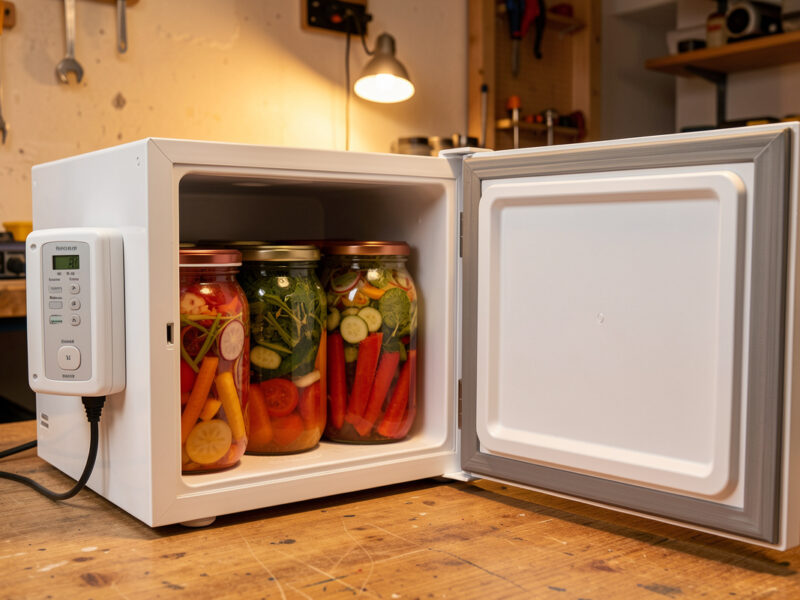
DIY Fermentation Chamber: Build a Temperature-Controlled Box
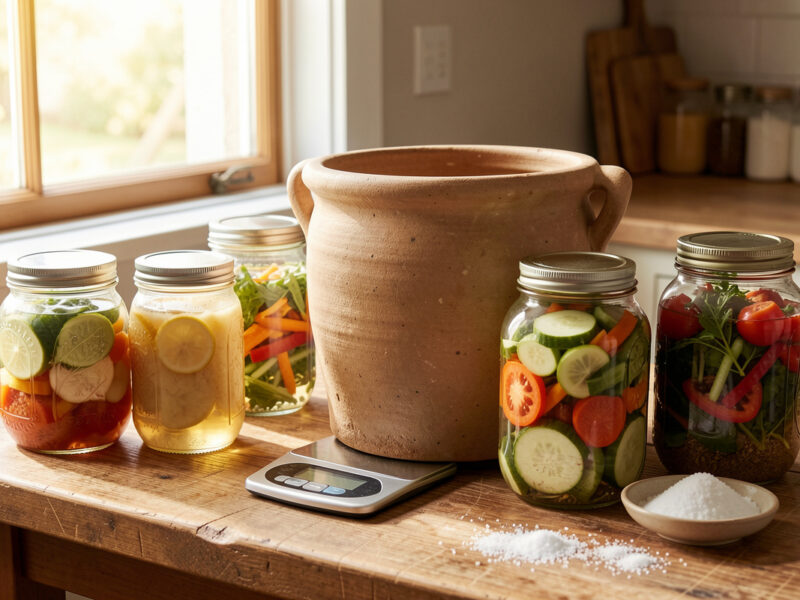
Salt and Brine Math: The Complete Fermentation Salinity Guide