Fermented Condiments and Pastes: The Complete Guide

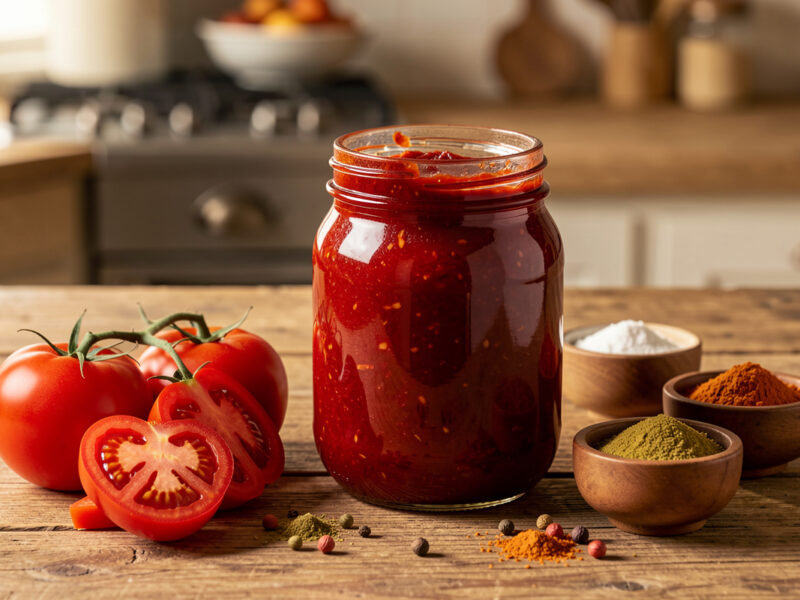
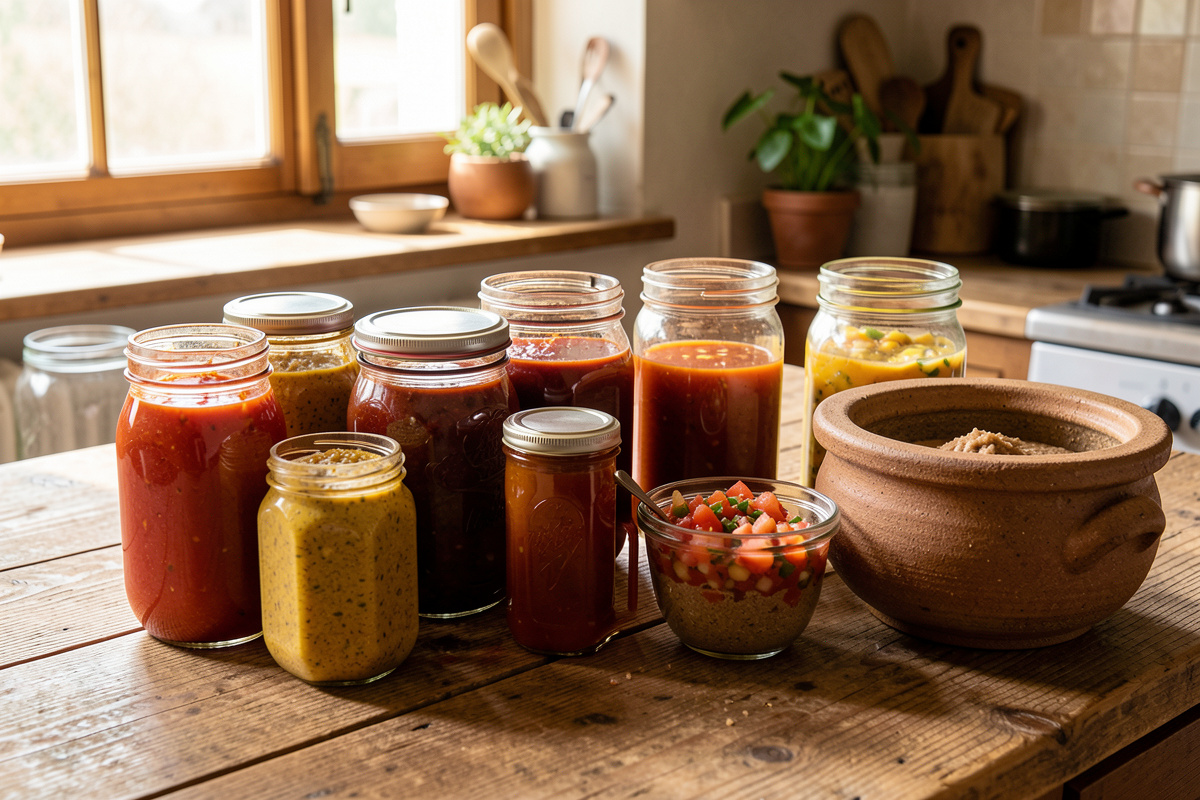
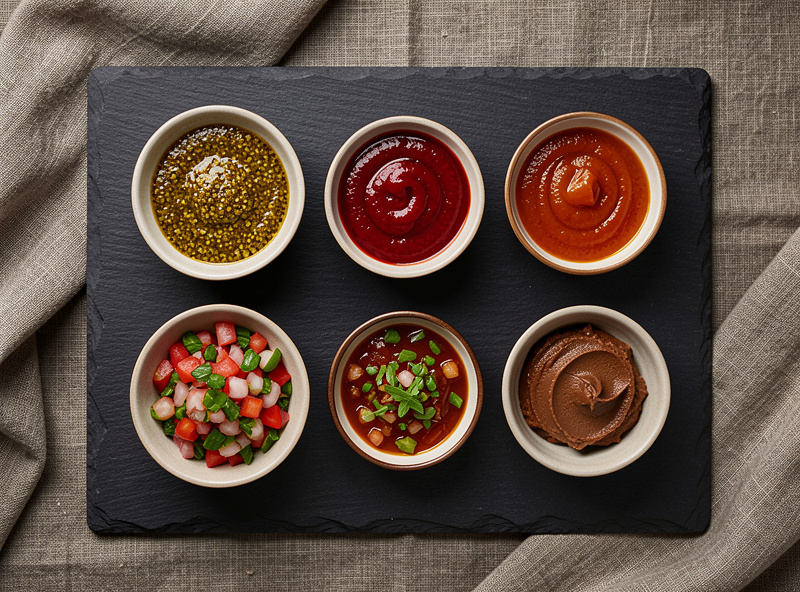
A fermented condiment is any sauce, paste, or relish whose flavor is built by microbes dropping the pH instead of by vinegar poured from a bottle. In my kitchen that covers hot sauce, ketchup, mustard, salsa, garum, and Korean doenjang, and every one of them comes down to two numbers: salt percentage by weight and finished pH. Get those right and the rest is patience.
I have run all of these side by side for years, on the same bench, with the same calibrated pH meter and the same 0.1 gram scale that does every salt calculation. This guide is the map: what counts as a fermented condiment, the salt-and-acid logic that keeps each one safe, and where to go deep on each individual sauce. The folklore version of condiment fermentation is “add salt and wait.” The version I actually trust has numbers on it.
What Counts as a Fermented Condiment
A fermented condiment earns its tang from live Lactobacillus or, in the case of fish sauce and garum, from enzymes and halophilic microbes working in heavy salt. The defining line is that the acidity is grown, not added. A quick blender hot sauce sharpened with distilled vinegar is a fine sauce, but it is not fermented. A pepper mash that sat under brine for three weeks until my meter read 3.4 is.
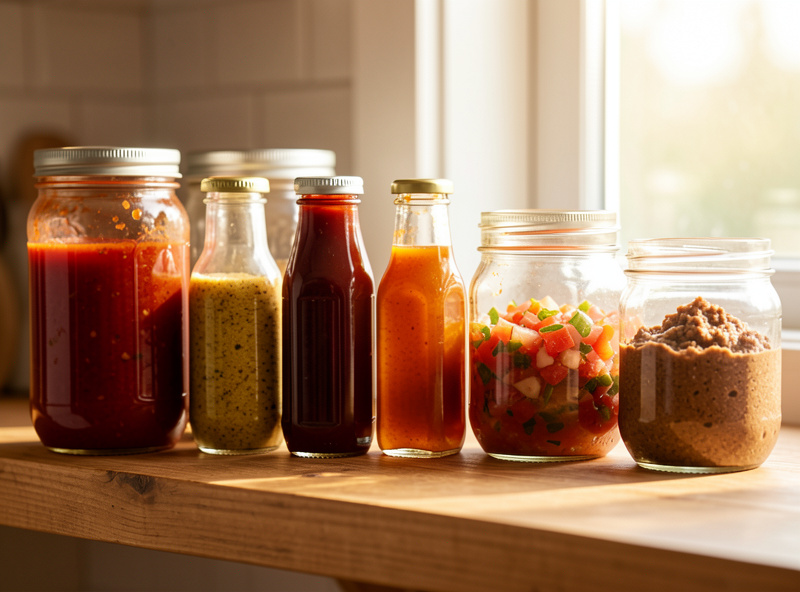
That distinction matters because grown acidity comes with grown flavor: the glutamates, the rounded sourness, the depth that no splash of vinegar reproduces. Across the condiments I keep going, the family splits into three chemistries. Lacto-fermented sauces (hot sauce, salsa, ketchup, many mustards) rely on Lactobacillus dropping the pH under an anaerobic brine. Enzymatic ferments (garum, fish sauce) use salt-tolerant enzymes to break protein into savory amino acids over months. And koji-driven pastes (doenjang, miso) recruit Aspergillus oryzae to pre-digest soybeans before a long salt cure. Same goal, three very different sets of rules.
The Two Dials: Salt Percentage and pH
Every condiment on my bench is controlled by two dials. Salt percentage by weight sets who is allowed to grow; pH measures how far the safe ones have pushed. For a lacto condiment I want salt high enough to favor Lactobacillus over spoilage organisms (roughly 2 percent for a soft salsa, 3.5 to 5 percent for a pepper mash) and a finished pH at or below 4.2 for comfortable shelf life. The hard floor that matters for everyone is pH 4.6, the line below which Clostridium botulinum cannot produce toxin.
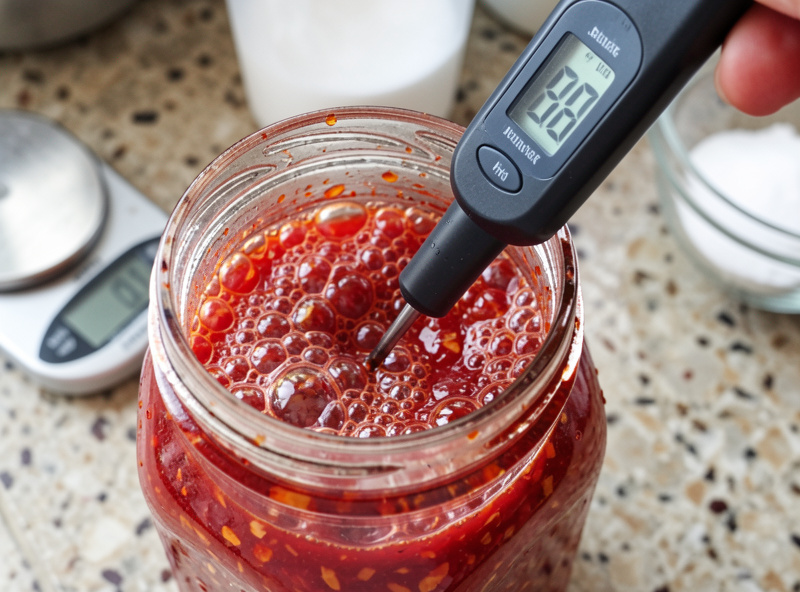
I never guess at either number. I weigh vegetables and salt on a 0.1 gram scale, then calculate salt as a percentage of the total weight, and I confirm the finish on a calibrated pH meter rather than trusting how sour something tastes. Taste lies; a meter does not. The salt does two jobs at once: it suppresses the organisms that would rot your sauce in the first 48 hours, and it draws water out of the vegetables to make the anaerobic brine that Lactobacillus needs. Too little salt and you get a mushy, off-smelling failure; far too much and the ferment simply stalls because even the lactic bacteria cannot work. The window is wider than beginners fear and narrower than the “just add a handful” crowd pretends. For the deeper reasoning on why 2 percent versus 2.5 percent changes everything, my tested breakdown of sauerkraut salt percentages applies directly to soft condiments too, and the guide to which salt to actually use matters here because iodized table salt can inhibit your culture.
Condiment-by-Condiment: Salt, Time, and Safe pH
The table below is the cheat sheet I wish I had when I started. It collects the working salt percentage, the typical ferment window, and the safe finished pH for each condiment I make. These are the numbers I run, and the food-safety targets are not negotiable: the salt floors and the 4.6 pH line exist because they keep you out of the hospital, not because tradition says so. For the underlying home-preservation science, the National Center for Home Food Preservation is the authority I cross-check my own numbers against.
| Condiment | Chemistry | Working Salt (by weight) | Typical Ferment Time | Safe Finished pH |
|---|---|---|---|---|
| Fermented hot sauce | Lacto (pepper mash) | 3.5 to 5 percent | 1 to 4 weeks | 3.4 or below for bottling |
| Fermented salsa | Lacto (soft vegetable) | 2 percent | 2 to 4 days | 4.0 or below |
| Fermented ketchup | Lacto (tomato base) | 2 to 2.5 percent | 3 to 5 days | 4.0 or below |
| Fermented mustard | Lacto (seed and brine) | 2 percent brine | 3 to 7 days | 3.8 or below (mustard self-acidifies) |
| Garum / fish sauce | Enzymatic (halophilic) | 15 to 20 percent (or 12 percent with koji) | 2 to 12 months | Salt-preserved, pH varies |
| Doenjang | Koji + long salt cure | 12 to 14 percent paste | 6 to 18 months | Salt-preserved, pH 4.5 to 5.5 |
Notice how the salt climbs as the ferment lengthens. A four-day salsa can live on 2 percent because it is done before spoilage organisms gain a foothold; a year-long doenjang needs 12 percent or more because that salt has to hold the line for months while koji enzymes slowly do their work. Time and salt trade off against each other, and pH is how you read the scoreboard.
Temperature and Water: The Variables Behind the Two Dials
Salt and pH get the headlines, but two background variables quietly decide how a ferment behaves: temperature and water. Temperature sets the speed. Lactobacillus is most active around 18 to 22 °C, the range of a normal kitchen counter, and within that band a few degrees noticeably moves the clock. A salsa that takes four days at 18 °C can finish in two at 24 °C, and the warmer ferment tends to taste sharper and less complex because it races through its sugars. I lean cool and slow for the lacto condiments I want depth from, and warm only when I want speed. The enzymatic and koji ferments flip this: garum and doenjang actively want warmth to drive their slow enzyme work, which is why I hold a koji garum on a seedling heat mat rather than a cool counter. Seasons matter too; my Swedish kitchen swings from a cool 16 °C in winter to a warm 23 °C in high summer, and I adjust expected ferment times to the room rather than trusting a fixed recipe number.
Water is the variable beginners overlook entirely. Chlorinated tap water can stall a ferment outright, because the chlorine that keeps municipal water safe to drink also suppresses the Lactobacillus you are trying to grow. I either use filtered water or leave tap water out overnight so the chlorine off-gasses before I mix a brine. Chloramine, used by some water systems, does not off-gas and needs filtering or a campden tablet to remove. Hard water and mineral content rarely cause real trouble at condiment scale, but chlorine is worth respecting: a ferment that simply refuses to get going despite a correct salt level is very often a chlorinated-water failure rather than a salt or temperature one.
The practical upshot is a simple order of operations I run on every batch: weigh and calculate the salt first, fix the water and temperature second, and read the pH last to confirm the result. When a ferment misbehaves I troubleshoot in that same order, and nine times out of ten the culprit is one of those four levers rather than anything exotic. None of it requires a lab, just a scale, a meter, and the willingness to write down what you actually did.
Lacto-Fermented Sauces: Hot Sauce, Salsa, Ketchup
The lacto condiments are where most people start, and for good reason: they are forgiving, fast, and the safety margins are generous once you respect the salt floor. Fermented hot sauce is the flagship. A pepper mash held under brine for two to four weeks develops a depth that fresh-blended sauce cannot touch, and because peppers ferment readily I treat it as the gateway condiment. I have a full complete guide to fermented hot sauce covering the mash, plus focused pieces on the no-brine pepper mash method, which peppers to choose, and the all-important safe pH levels for shelf-stable bottling. If you want a specific style, my fermented sriracha recipe and fruit-based hot sauces are good next steps, and when something goes white on top, the mold versus kahm guide tells you whether to scrape or toss.
Fermented salsa is the fastest payoff in this whole category. At 2 percent salt a chopped tomato, onion, and chili salsa is ready in two to four days at room temperature, sour and fizzy and alive. I keep the ferment short on purpose because long fermentation turns fresh salsa soft and dull; the goal is a bright tang, not a sauerkraut. My lacto-fermented salsa recipe walks through the timing. Fermented ketchup is the sleeper hit: a base of tomato paste, a little sweetener, and a 2 to 2.5 percent salt level fermented for three to five days, then optionally cooked down. It loses the cloying flatness of the bottled stuff and gains a savory tang. My dedicated fermented ketchup recipe guide covers raw versus cooked finishes and how to keep the color.
Mustard: The Cold-Loving Outlier
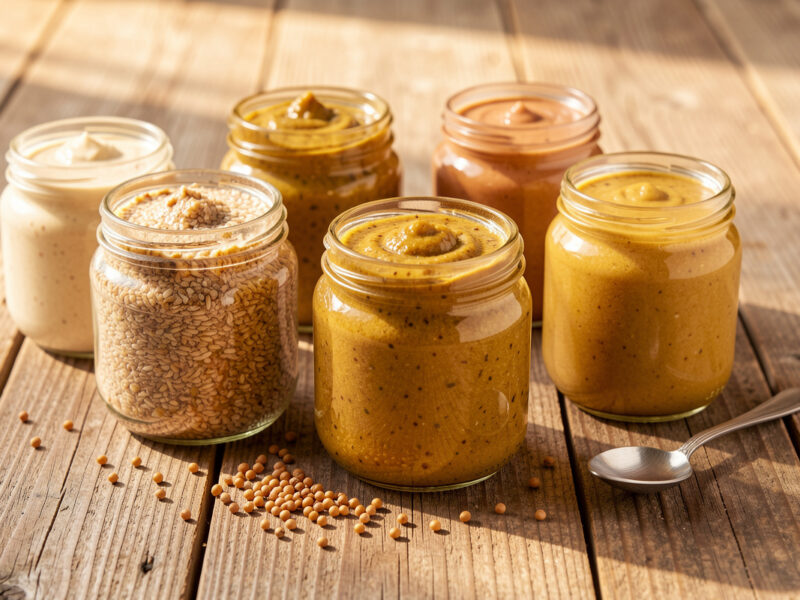
Fermented mustard breaks the usual rules in two ways that are worth knowing before you start. First, mustard seeds are naturally antimicrobial, so the ferment is gentler and slower than a vegetable lacto, and I keep the salt modest at around 2 percent brine. Second, and this is the part nobody warns you about, mustard’s pungent heat is destroyed by warmth. The isothiocyanates that make mustard sharp are volatile, so a mustard fermented and stored cold stays fierce, while one left warm goes mellow and almost sweet.
That gives you a dial most condiments do not have: ferment cool for bite, ferment warm for a rounder, nuttier mustard. I soak the seeds, ferment the brine for three to seven days, then blend and let the flavor settle in the fridge for a few days before judging it (fresh-ground mustard is brutally hot and needs time to calm down). My fermented mustard recipe guide covers seed ratios, the warm-versus-cold heat trick, and why you should never boil a finished mustard. It pairs naturally with the same brine logic I use everywhere else on this site.
Garum and Fish Sauce: Enzymatic, Not Lactic
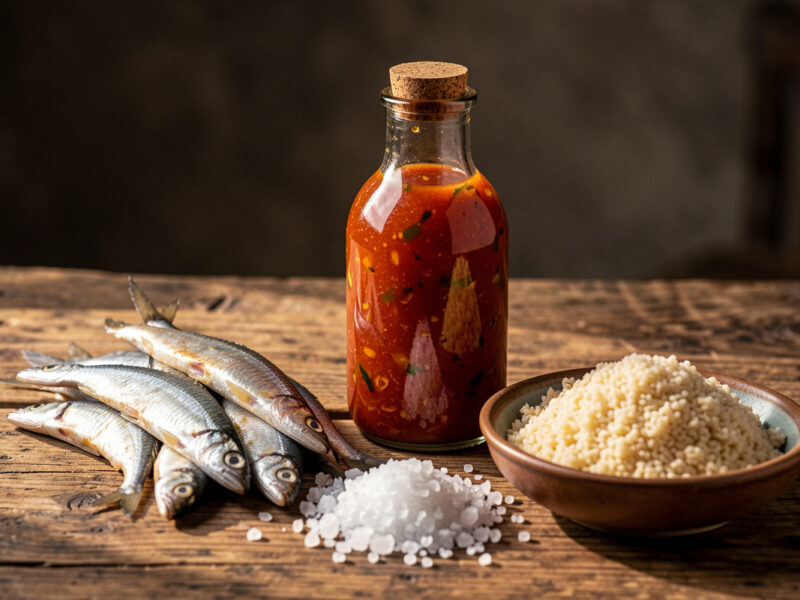
Garum and fish sauce are a different animal entirely. There is no Lactobacillus here and the acidity is not the point. Instead, heavy salt (15 to 20 percent of the fish weight) suppresses everything dangerous while the fish’s own enzymes, plus salt-tolerant microbes, slowly break protein down into free glutamates and amino acids. The result after months is a clear, intensely savory amber liquid that is essentially concentrated umami. The salt is the entire safety system, which is why I never cut it below the floor: at 15 to 20 percent there is no botulism risk because nothing pathogenic grows in that environment.
The modern shortcut, popularized by Noma’s fermentation work, is to add koji to the mix, which supplies a flood of protein-digesting enzymes and lets you drop to around 12 percent salt while finishing in weeks rather than a year. I run both: a traditional high-salt anchovy colatura and a faster koji garum off the same Aspergillus oryzae rotation I keep for miso. My garum and fish sauce guide covers the salt math, the koji acceleration, and how to tell a finished, safe ferment from one that has gone wrong. If you want to understand the koji side first, my complete koji guide is the foundation.
Korean Pastes: Doenjang and the Koji Family
Doenjang sits at the deep end of the condiment pool. It is a fermented soybean paste built much like miso but with a distinctly Korean process: cooked soybeans are pounded and formed into meju blocks, dried and aged until they grow their own culture, then submerged in brine for months. The liquid that results becomes Korean soy sauce (ganjang) and the solids become doenjang. It is a long, patient build with a paste salt level around 12 to 14 percent that holds it safe through a six to eighteen month cure.
This is where fermentation stops being a weekend project and becomes a season-long relationship. The same Aspergillus oryzae and the same temperature-hold discipline that govern my miso rotation apply here. My homemade doenjang guide walks through meju formation, the brine separation that gives you two condiments at once, and the aging numbers. For the broader paste context, the koji fermentation guide ties doenjang to miso, shio koji, and tempeh, and shows why koji is the single most useful organism to learn if you want to make serious pastes.
Choosing a Vessel and Keeping the Brine Anaerobic
Most condiment failures are not flavor failures, they are headspace failures. Lactobacillus works without oxygen; mold and kahm yeast need it. So the whole game with a lacto condiment is keeping the solids submerged under brine and limiting the air above. For small batches of hot sauce, salsa, and ketchup I use wide-mouth Mason jars with a glass weight and a silicone waterless-airlock lid, which vents CO2 without letting air back in. For larger pepper-mash runs I move to a water-sealed stoneware crock whose moat channel does the same job at scale. My crock versus jar versus vacuum bag comparison lays out which to choose, and the same headspace logic carries over to every ferment on this site.
For the enzymatic and koji ferments the vessel concern shifts. Garum lives in a sealed jar or container where the salt does the protecting, and doenjang traditionally ages in onggi, breathable earthenware crocks. The principle that never changes is that you match the vessel to the chemistry: anaerobic-and-weighted for lacto, salt-sealed for enzymatic, breathable-and-patient for long paste cures.
Kahm Yeast Versus Mold on Condiments
Sooner or later something will grow on the surface of a condiment ferment, and knowing the difference between harmless and dangerous is the single most useful safety skill in this hobby. Kahm yeast is a thin, flat, white or cream-colored film, sometimes wrinkled, with a faintly funky smell. It is harmless. I skim it off, make sure everything is back under brine, and carry on. Real mold is different: it is fuzzy, raised, and colored (blue, green, black, pink, or fuzzy white with texture). On a high-moisture lacto condiment, colored fuzzy mold means I toss the batch, because the visible growth is only the part you can see.
The reason I can be calm about this is that I am reading the right signals. A properly salted, properly submerged lacto ferment that has dropped below pH 4.0 is a hostile place for pathogens, and a thin kahm film on top of an otherwise sound ferment is a cosmetic nuisance, not a hazard. The danger lives in under-salted, exposed-to-air, above-pH-4.6 conditions, which is exactly what good technique prevents. The same scrape-versus-toss judgment I use here is detailed for chili sauces specifically in my hot sauce mold guide.
Storage, Shelf Life, and When a Condiment Turns
Once a lacto condiment hits its target pH I cold-crash it. Refrigeration slows the Lactobacillus to a crawl, locking in the flavor at the point I like it; left warm, the sauce keeps souring and softening. A finished hot sauce below pH 3.4 is genuinely shelf-stable and can be bottled, which is why bottling rules hinge on that number rather than on refrigeration. Salsa and ketchup, fermented short and kept raw, live in the fridge and are best within a few weeks; cooked-down ketchup keeps longer. Garum and doenjang, protected by their heavy salt, keep for a year or more, improving as they age.
A condiment that has turned tells you clearly: an off, putrid, or yeasty-alcoholic smell (versus clean sour), slime, or fuzzy colored mold. Clean lactic sourness, fizz, and a slow mellowing are all normal. When in doubt I check pH; a sauce reading below 4.0 that smells clean is almost certainly fine, and one drifting above 4.6 with off smells goes in the bin. The same patience that watches a sourdough starter rise and a vinegar mother thicken watches a doenjang darken over a year. If vinegar interests you as the next step, my home vinegar making guide and guide to the mother of vinegar pick up where acidic condiments leave off, and the broader kimchi guide and sauerkraut guide share the same brine math.
Frequently Asked Questions
What makes a condiment fermented instead of just pickled?
A fermented condiment gets its acidity from live Lactobacillus or enzymes dropping the pH over days or months, not from vinegar added at the end. Quick-pickled or vinegar-sharpened sauces are acidified, not fermented, and lack the grown glutamates and rounded sourness that fermentation produces.
How much salt does a fermented condiment need to be safe?
It depends on the chemistry. A soft salsa works at 2 percent salt by weight because it ferments in days; a pepper mash wants 3.5 to 5 percent; garum and fish sauce need 15 to 20 percent because they cure for months. The salt favors Lactobacillus and suppresses spoilage organisms.
What pH is safe for a fermented condiment?
The hard floor is pH 4.6, below which Clostridium botulinum cannot produce toxin. I aim lower for comfort: 4.0 or below for salsa and ketchup, and 3.4 or below for hot sauce I plan to bottle. Always confirm with a calibrated pH meter, not by taste.
Is the white film on my fermented sauce dangerous?
A thin, flat, white or cream-colored film is almost always kahm yeast, which is harmless. Skim it, re-submerge everything under brine, and continue. Fuzzy, raised, colored growth (blue, green, black, pink) is mold, and on a high-moisture condiment that means discard the batch.
Which fermented condiment should a beginner make first?
Fermented hot sauce or fermented salsa. Both are forgiving and fast: a salsa at 2 percent salt is done in two to four days, and a pepper mash ferments reliably in two to four weeks. Garum and doenjang are months-long projects better saved for after you trust your salt and pH technique.
Can I ferment ketchup and mustard, or only vegetables?
Yes. Fermented ketchup uses a tomato base at 2 to 2.5 percent salt fermented three to five days, and fermented mustard uses a roughly 2 percent brine over the seeds. Mustard is a special case because its heat is destroyed by warmth, so ferment and store it cold to keep the bite.
Related Guides
- Fermented Hot Sauce: The Complete Home Brewer Guide
- Fermented Mustard Recipe Guide
- Fermented Ketchup Recipe Guide
- Garum and Fish Sauce Guide
- Homemade Doenjang Guide
- Lacto-Fermented Salsa Recipe
- Koji Fermentation: The Complete Guide

About Kenny Nyhus Fadil
A home fermenter documenting brines, bubbles, and the occasional moldy tragedy.
Keep Bubbling
Homemade Garum and Fish Sauce: A Safe Guide
Fermented Mustard Recipe: Seeds, Brine, and Heat